
Offshore wind farms are generally considered symbols of the European energy transition. Large steel structures installed offshore to produce clean electricity and reduce emissions. But off the coast of Portugal something happened that surprised even marine biologists: an offshore wind farm ended up being a refuge for hundreds of marine species.
The case corresponds to the WindFloat Atlantic park, located off the coast of Viana do Castelo, in the north of Portugal. There, recent research detected more than 270 species living around the park’s floating platforms and submerged structures. Among them are crustaceans, fish, mollusks, such as octopuses, and filter-feeding organisms that found a kind of artificial reef in these facilities.
The news attracted attention because for years there was fear that this type of infrastructure would damage sensitive marine ecosystems. However, several scientific studies show that, under certain conditions, the underwater bases of wind farms can be transformed into complex habitats for marine fauna.
How a wind farm ended up functioning as an artificial reef
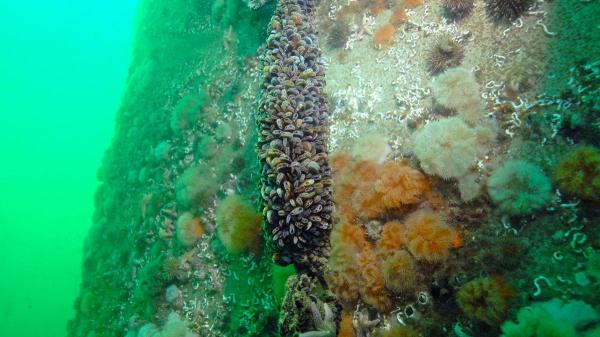
The phenomenon has a relatively simple explanation from an ecological point of view. In many marine areas, especially sandy or degraded bottoms, hard structures are scarce. When piles, chains, platforms or metal bases appear, numerous organisms quickly begin to colonize them.
First, algae, mussels and small invertebrates adhere to the surfaces arrive. Then crustaceans, small fish and predators appear, attracted by the availability of food. Over time, a much more complex ecological network is formed.
The European Commission explains that some offshore wind farms can act as “involuntary fishing exclusion zones”, since they restrict part of industrial activity and generate relatively protected areas for marine fauna.
In the Portuguese case, researchers identified species associated with rocky reefs living around structures that did not originally exist in the local ecosystem.
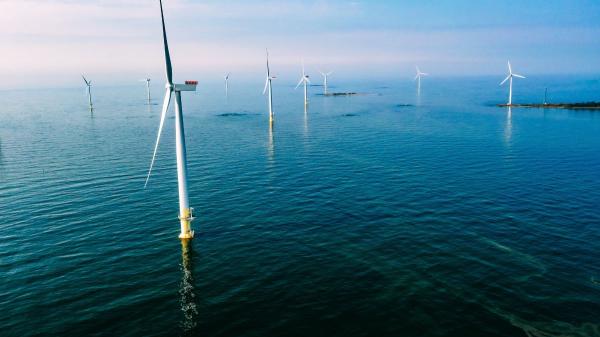
Octopuses, fish and more unexpected biodiversity in this Portuguese offshore wind farm
One of the most striking findings was the abundance of cephalopods, such as octopuses, in the area. These animals usually look for complex shelters where they can hide from predators and protect eggs or resting areas. The cavities and structures generated by the wind farm offered just that type of environment.
In addition to octopuses, the studies recorded a greater variety of species, such as other mollusks, benthic fish, crustaceans, sea sponges, anemones and filter-feeding organisms.
Some research related to wind farms in the North Sea had observed similar phenomena years ago. A study published in Frontiers in Marine Science described that these infrastructures can locally increase marine biodiversity by generating complex three-dimensional habitats.
Not all scientists are equally optimistic
Still, researchers caution that the ecological impact of offshore wind farms is not automatically positive.
The effect depends on factors such as location, type of seabed, underwater noise, migratory routes, intensity of works and maintenance and the behavior of birds and marine mammals.
The European Environment Agency points out that the massive expansion of offshore parks must be carefully planned to avoid cumulative negative impacts on marine biodiversity.
Species sensitive to underwater noise, such as cetaceans or some migratory fish, are of particular concern. During the construction of piles and foundations, intense vibrations are produced that can alter navigation, feeding and reproduction behaviors.
What is special about the WindFloat Atlantic offshore wind farm
The Portuguese park is also interesting because it uses floating technology, different from traditional offshore parks fixed directly to the seabed.
WindFloat platforms are anchored by chains and floating mooring systems capable of operating in deeper waters.
That partially changes the interaction with the ecosystem. By requiring less rigid foundations, some alterations to the bottom could be reduced compared to conventional infrastructures. Portugal especially opted for this model due to the depth of its Atlantic coasts.
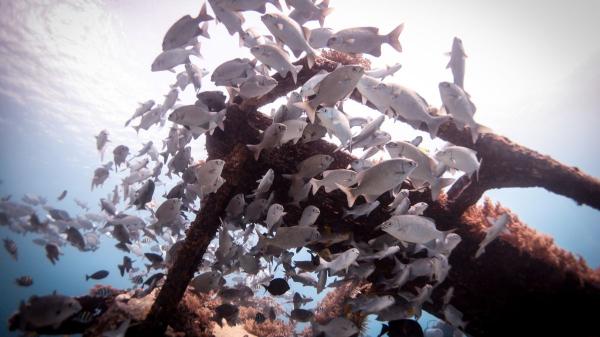
Regarding the role of “artificial reefs”, it has been verified that sunken ships, abandoned oil platforms and underwater structures often end up colonized by marine organisms. In some countries, artificial reefs are even deliberately built to recover biodiversity or promote fishing populations.
The US NOAA explains that these reefs can increase refuges and feeding surfaces for numerous species. However, there are also ecological risks. Some structures favor invasive species, such as lionfish, or alter local food chains.
That is why scientists insist on analyzing each case independently and not automatically assuming that all marine infrastructure will have positive effects.
The rise of offshore wind energy in Europe and the situation in Spain
Europe is currently experiencing an accelerated expansion of offshore wind farms. The European Union considers this technology key to achieving climate objectives and reducing dependence on fossil fuels. The European strategy seeks to greatly multiply the installed capacity of marine energy before 2050. Spain is also studying accelerating floating projects in the Canary Islands, Galicia and the Mediterranean.
In 2023, the Ministry for the Ecological Transition approved the Maritime Space Management Plans (POEM), which delimit potential areas for future offshore wind farms.
Future Spanish offshore wind farms could generate similar biological colonization phenomena, especially in floating structures.
However, Spanish scientists ask for caution. Institutions such as the Spanish Institute of Oceanography remember that each ecosystem responds differently and that there are still many questions about long-term impacts.
In any case, the Portuguese example shows something unexpected: infrastructures designed to produce energy can also end up becoming complex habitats for marine life.
If you want to read more articles similar to Marine biologists did not expect it: this wind farm has become a refuge for octopuses and more than 270 marine species, we recommend that you enter our Biodiversity category.
