
Planting trees to protect river banks seemed like a difficult decision to question. During the 19th century, the United States began to introduce different species of tamarisk (Tamarix spp.), also known as saltcedarcoming from Eurasia and Africa. They were used as ornamental plants, windbreaks and, especially, to stabilize land and combat erosion.
Its extraordinary ability to survive, precisely the characteristic that made the tamarisk attractive, ended up becoming a problem. Over the decades, it colonized rivers, wetlands and reservoirs in the American West until it became one of the most difficult invasive plants to manage.
The case is especially interesting because science has shown that the story is much more complex than that of an exotic species that simply displaces native species. Human modification of rivers, the construction of dams, salinization, fires and even hybridization between different species of Tamarix They helped create the perfect conditions for its expansion.
From stopping erosion to invading the banks of the United States
Tamarisks began to be marketed in the United States during the 19th century. The US Forest Service documents specimens available in New York as early as 1823 and in Philadelphia in 1828, while in California they were sold at least since 1856.
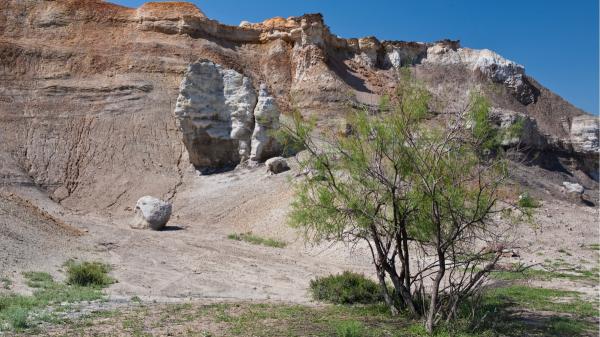
Its subsequent expansion was extraordinary and served to help stop soil erosion. By the end of the 19th century, naturalized populations already existed, and during the 20th century, tamarisk became established in much of the arid and semi-arid river systems of the West, including the Colorado, Grande, Gila, and Pecos rivers.
Several biological characteristics explain its success. It tolerates droughts, floods and soils with high salinity, it can develop root systems capable of accessing groundwater and recovering after different disturbances. Its small seeds can move by wind and water and germinate quickly when they encounter moist sediments.
Additionally, removing the visible part of the plant does not necessarily solve the problem. Tamarisks can resprout vigorously from the root crown after being cut or affected by fire.
Genetics revealed that invasive tamarisks were hybrids
One of the most interesting discoveries came thanks to genetics. In 2002, researchers John F. Gaskin and Barbara A. Schaal demonstrated that a large part of the American invasion was carried out by hybrids of Tamarix ramosissima and Tamarix chinensisspecies native to Asia.
Later research reinforced that conclusion. Some analyzes estimated that between 83% and 87% of the specimens studied in different areas of North America were hybrids between both species.
A study published in 2026 in the scientific journal Hereditarybased on genomic data from 319 individuals, once again shows that introduced populations present a broad genetic mix. The researchers also found signs of an expansion of the ecological niche with respect to the original parental populations.
Hybridization can generate new genetic combinations and increase the variability on which natural selection acts. It does not mean that any hybrid is automatically more invasive, but in the case of tamarisk it could have contributed, along with multiple introductions and other processes, to facilitating its establishment and expansion.
The alterations of the rivers also favored its expansion
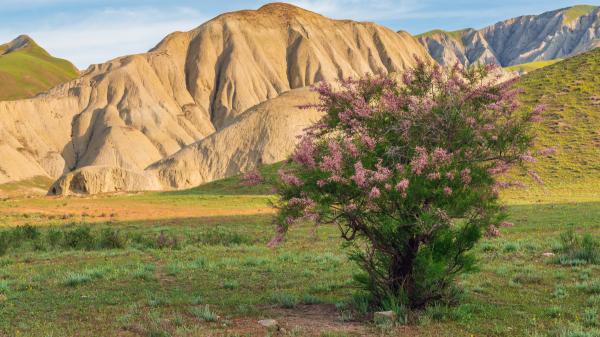
Blaming the tree exclusively would hide another fundamental part of the story. The river ecosystems of the western United States were profoundly modified by dams, canalization, water extraction, agriculture, and flood regulation.
Native poplars and willows depend on certain flood cycles to regenerate. Floods leave wet surfaces where their seeds germinate. When prey modify these cycles, some of the conditions that favor these species decrease.
Tamarisk, on the other hand, better withstands many of the resulting altered environments. For this reason, different investigations indicate that its dominance cannot be understood solely as a consequence of biological superiority: it also benefited from ecosystems previously transformed by human activities.
Something similar happens with salinity. The tamarisk tolerates salt concentrations that harm other plants and can contribute to the accumulation of salts, but the salinization of certain banks is also related to previous hydrological alterations. Cause and consequence can feed back.
Eliminating the tamarisk does not guarantee recovering the banks
The United States has been trying to control its expansion for decades through mechanical methods, herbicides and biological control. According to published studies, since 2001 beetles of the genus Diorhabda, specialized in feeding on tamarisk foliage, have been released in different states.
The insects managed to defoliate large areas, although their ecological consequences are not identical in all places. The United States Geological Survey (USGS) warns that the full effects of biological control on ecosystems remain the subject of research.
A claim repeated for years has also been revised: that eliminating tamarisks would allow enormous amounts of water to be recovered. Studies show that water savings may be much less than expected and depend on local conditions and, especially, what vegetation subsequently replaces the invader.
Restoration doesn’t end when the tree disappears either. If dams, changes in floods, lowering of the water table, salinity or other alterations that initially favored their establishment continue, another invasive species may occupy the freed space.
The tamarisk thus leaves an important ecological lesson. Fighting a biological invasion does not always consist of eliminating the invading organism. In deeply modified ecosystems, recovering the functioning of rivers can be as important as removing the species that learned to take advantage of these transformations.
If you want to read more articles similar to 200 years ago they planted it to stop river erosion: the invasive tree in the US that they still cannot eliminate, we recommend that you enter our Ecosystems category.
