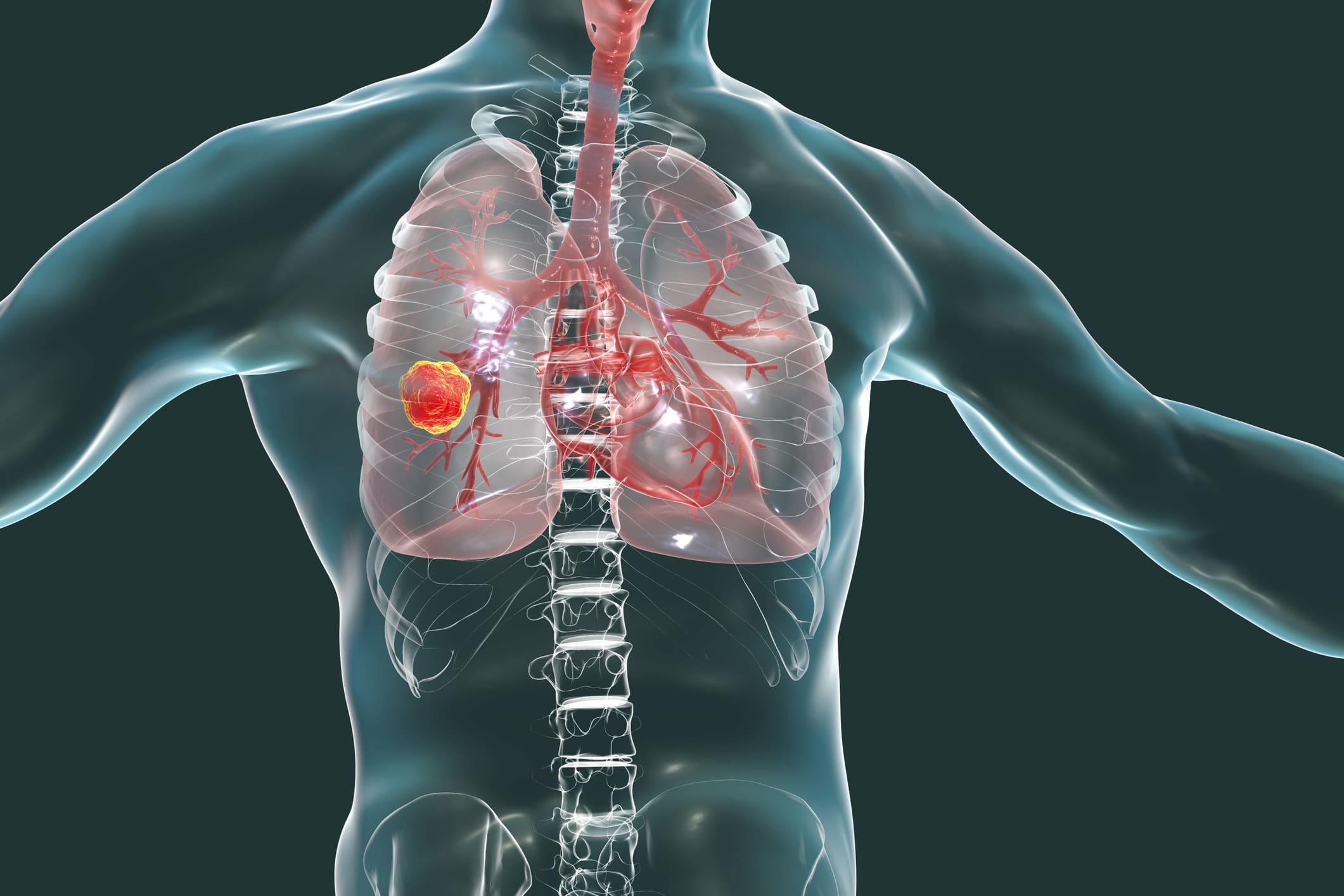
There is an inherited variant that significantly increases the chance of adenocarcinoma even in those who have never smoked. A fundamental discovery to improve the early diagnosis of lung tumors.
The genetic mechanisms that can favor lung cancer in those who have never smoked are still unclear, but now a study published in Science adds a bit of knowledge about this (on the rise) form of cancer. A rare inherited genetic mutation significantly increases the risk of lung adenocarcinoma, especially in non-smokers.
The goal of early diagnosis
In approximately 8 out of 10 cases, new lung cancer diagnoses concern people with a history of, or current history of, cigarette smoking. However, the number of new cases in those who have never smoked is anything but negligible: in Italy, there are around 6100 per year. If the attention for this form of cancer in smokers is high, in non-smokers the diagnosis of lung cancer often arrives late, when the treatments are more complex and the hopes of recovery are lower.
Which variant are we talking about?
A group of scientists from the Dana-Farber Cancer Institute in the United States drew on the genetic database 23andMe genomic data from 3.3 million participants of European origin to understand how a rare genetic variant identified a couple of decades ago, EGFR T790Malready associated with an increased risk of lung cancer, increased the probability of developing the disease in smokers and non-smokers.
The analysis found that carrying the EGFR T790M mutation was generally associated with a 25-fold higher risk of lung adenocarcinoma. However, the association was even more evident in non-smokers: among these, carriers of the rare mutation had a 62-fold higher risk of lung cancer. In smokers who carry this mutation, the risk of lung cancer increases approximately 4 times compared to that caused by smoking “alone”.
Inconvenient legacy
Since the study was conducted in the United States, it was also interesting to note that carriers of the mutation were disproportionately located in the southern Appalachian region (especially in Tennessee and Alabama), where the European-derived mutation would have landed with English and Irish settlers, sometime between the 17th and 18th centuries. From that moment it would have spread to those relatively isolated populations.
Beyond the specific case, the study shows how approaches like this could help understand which dangerous genetic mutations continue to circulate in various populations, thus guiding prevention policies and early diagnoses.
