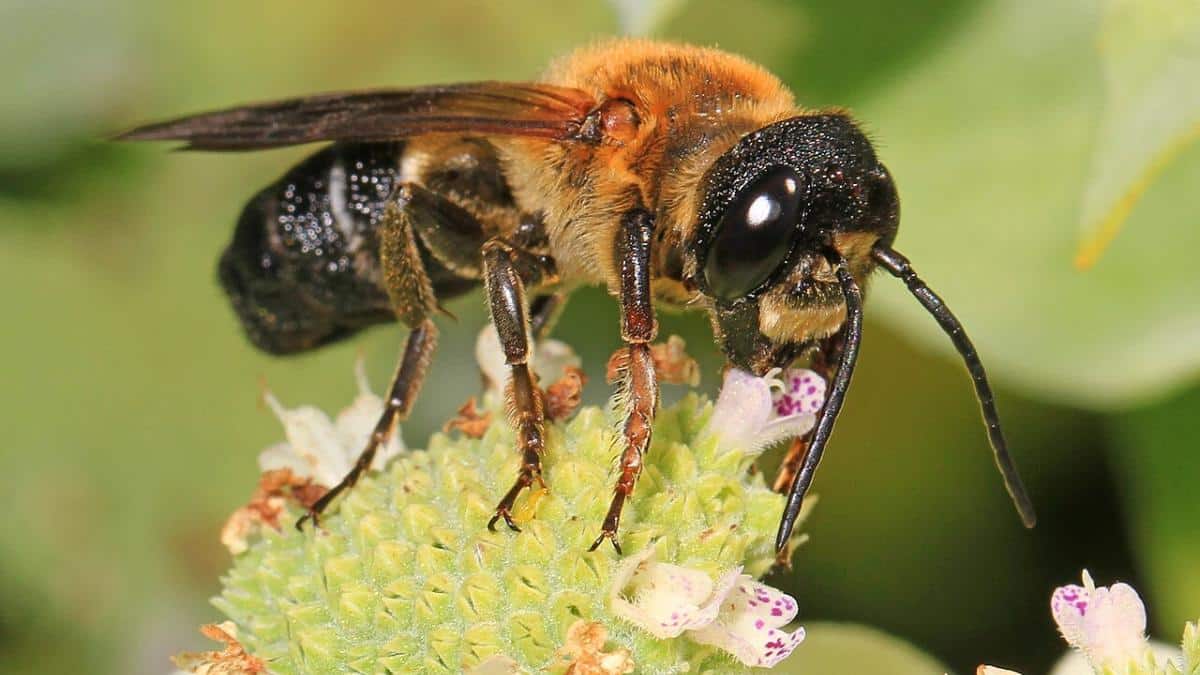
A tree commonly used to decorate streets, parks and gardens could be playing an unexpected role in the expansion of a species of bee that arrived from Asia. This is the sophora, also known as false Japanese acacia, an ornamental tree that can be found in numerous Spanish cities.
The relationship has been studied by a team of researchers from the Autonomous University of Barcelona (UAB), who has analyzed the distribution of this tree and that of the giant resin bee (Megachile sculpturalis) in Catalonia. Their results suggest that the presence of sophora can make it easier for this exotic species to find food and establish itself in new territories.
Sophora has become a key resource for this giant bee
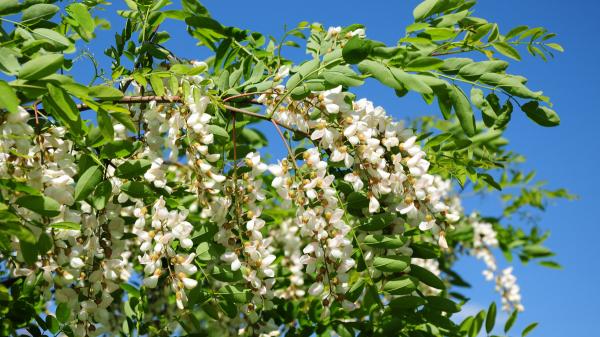
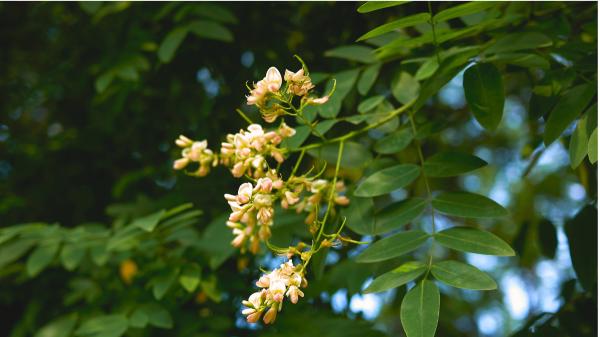
The sophoraStyphnolobium japonicum) is a tree native to Asia that has been used for decades as an ornamental species in cities. Its presence is especially important in this case because it blooms during the summer, just when the giant resin bee is active.
The tree produces abundant flowers that provide pollen for insects. In its area of origin, the bee uses different plant species as a food source, but outside Asia the situation is different. Analyzes carried out in different areas of Europe have found that sophora pollen constitutes one of its main food sources and, in some studies, even the predominant source.
The phenomenon can also be observed in Catalan cities. According to the UAB, Barcelona has about 11,000 copies of sóphora and Viladecans has around 1,000. This high presence makes the tree an especially accessible resource for a bee that is mainly concentrated in urban environments outside its area of origin.
The researchers analyzed 150 records of the bee and more than 21,000 records of the sophora in Catalonia to check to what extent the presence of the tree could explain the distribution of the insect.
The first invasive bee documented in Europe arrived from Asia
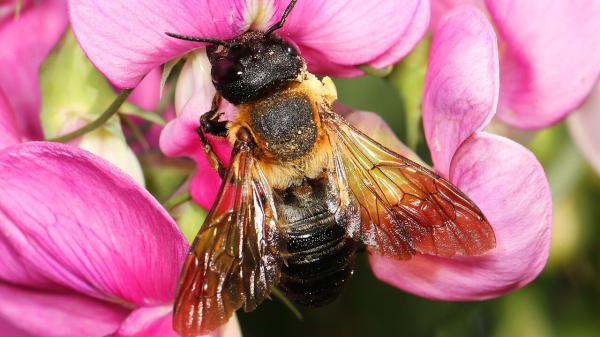
The protagonist of this research is Megachile sculpturalisknown as giant resin bee. It is a species native to Eastern Asia and has a striking appearance due to its size: it can reach approximately 2 centimeters in length.
Unlike honey bees, they do not live in large colonies. It is a solitary bee and the females build and occupy their own nests. The species was first observed outside its natural range in the United States in 1994 and later arrived in Europe. The first European registration occurred in France in 2008.
In the Iberian Peninsula it was detected for the first time in 2018, in several parts of Catalonia. Since then it has spread to different areas of Europe and is currently considered an invasive species, although the researchers themselves point out that the evidence on its negative ecological impacts is still preliminary.
One of the aspects that has caught the most attention of scientists is precisely their preference for cities. Outside Asia, the bee frequently appears in urban environments, where it can find suitable nesting sites and, especially, abundant floral resources.
Two exotic species that can benefit each other
The research published in Oikos poses an unusual interaction between a plant and a pollinator introduced outside its natural range.
The scientists compared the presence of the bee with different variables, including climatic conditions and the availability of sophora. The results indicate that both factors influence the distribution of Megachile sculpturalisbut the availability of the tree has an importance at least comparable to the climatic suitability. Furthermore, the results suggest that climatic conditions may be of greater importance when sophora is present.
The explanation is relatively simple: where there is a sufficient quantity of this ornamental tree, the bee has a particularly important food resource during the period in which it is active.
The authors describe this interaction as a possible “invasional meltdown,” a concept used to explain situations in which a non-native species facilitates the expansion of another introduced species. In this case, an ornamental plant could be creating favorable conditions for an exotic bee to establish itself and advance through a territory.
This does not mean that the sophora is the only one responsible for the expansion of the bee. The study itself considers other factors, such as climate and introduction routes related to human activity.
Urban trees can have consequences that are not always seen
The sophora case raises a broader question about the way cities are designed. An ornamental tree may seem like a choice exclusively related to shade, aesthetics or its ability to adapt to urban conditions, but it is also part of an ecological network.
When an exotic plant species is planted very abundantly, it can end up providing food or shelter to other organisms that have also arrived from distant places. Under certain circumstances, this interaction can make it easier for a species to establish itself.
UAB researchers consider that these types of relationships should be taken into account when planning urban trees and propose giving greater prominence to native species in the ecological restoration processes of cities.
The issue is especially relevant at a time when European cities are trying to increase their green spaces and improve their biodiversity. Planting more trees can bring many benefits, but the choice of species can also determine which organisms find new opportunities to expand.
Therefore, the case of sophora and the giant resin bee is not limited to a curious relationship between a tree and an insect. It also shows how a seemingly simple decision, such as choosing an ornamental species for a street or garden, can end up having much broader ecological consequences than expected.
If you want to read more articles similar to The ornamental tree that is helping the first invasive bee in Europe to expand: it is very common in gardens and cities, we recommend that you enter our Ecosystems category.
