
Climate change is transforming the oceans and its effects are already being felt in species of great importance for fishing. Octopus and sardines are especially vulnerable to sea warming, a situation that is changing the areas in which they are found and which poses new challenges for the fishing sector.
This is what Sebastián Villasante, a researcher specialized in ocean economics and sustainability, warns in an interview with the newspaper The Progress. The scientist points out that changes in the distribution of these species are having repercussions on the availability of marine resources, especially relevant for the fishing economy of Galicia.
Villasante, professor of Applied Economics at the University of Santiago de Compostela (USC) and researcher at the Center for Interdisciplinary Research in Environmental Technologies (CRETUS), has a track record of more than 200 scientific publications. Their work focuses on understanding how the oceans evolve and what consequences their transformations have for the people who depend on them.
Octopus and sardines, increasingly affected by climate change
One of the most notable aspects of the interview is the transformation that the areas in which certain marine species are distributed are undergoing. When asked about the effects of climate change on the Galician fishing economy, Villasante points out two especially relevant examples: octopus and sardines.
“There are very important changes. First of all, in the availability of species. For example, the case of octopus or sardines. These are species that are very vulnerable to the effects of climate change and their distribution range is changing more and more,” explains the researcher.
These statements focus on one of the consequences of global warming on marine ecosystems: environmental conditions are changing and, with them, so are the areas in which different species can find a suitable environment.
Water temperature is one of the factors that influence the distribution of marine life. When conditions change, some species may modify their presence in certain areas, while other areas may become more important for their development.
However, these processes are not the same for all species nor do they necessarily respond to a single cause. To understand how octopus and sardine populations evolve, it is necessary to also analyze other environmental factors and the characteristics of each ecosystem.
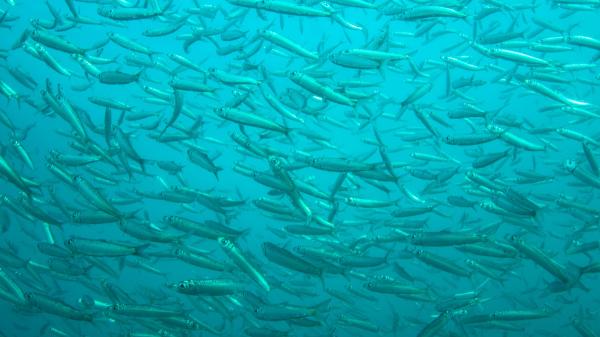
Galicia already notices the consequences in its fishing activity
Changes in the distribution of species are not exclusively an environmental issue. They also have economic and social consequences in territories whose activity depends on fishing and other marine resources.
In Galicia, octopus and sardines are part of a fishing activity with important economic and cultural weight. Therefore, any change in its availability can affect catches and the people who work in the sector.
Villasante warns that this transformation is not limited to the Galician coasts. “They are very important species for most of the resources we capture, but this is not only happening in Galicia, it will continue to happen more and more,” he says in the interview.
The researcher also draws attention to the effects of climate change on shellfish harvesting. As he explains, “climate change is seriously affecting the productivity and abundance we have in the estuaries.”
This question broadens the scope of the problem. Environmental alterations can impact different marine resources and compromise the activities of those who depend on them. Furthermore, the effects do not have to manifest themselves in the same way in all estuaries or affect all species equally.
Therefore, knowing how ecosystems evolve and anticipating their changes is essential to improve resource management and promote the adaptation of the fishing sector.
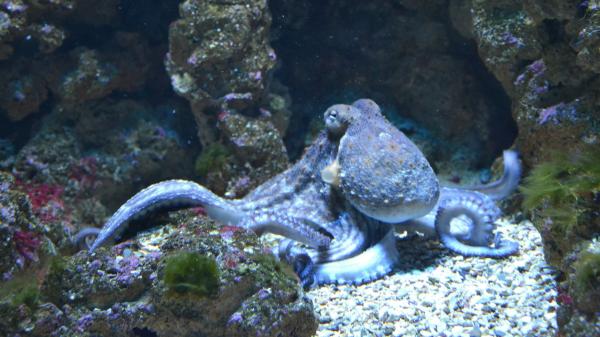
The future of the oceans also depends on how its resources are managed
The interview also addresses the relationship between scientific research, fisheries policies and sustainability. For Villasante, understanding how the oceans function requires studying not only the species and their habitats, but also the economic activity that takes place around them.
The researcher recalls that his work includes analyzing how political decisions affect the fishing sector and how the benefits generated by the oceans are distributed. In this sense, it is considered important to study both the resources that provide food and other benefits linked to tourism, aquaculture and coastal activities.
Its work is framed within a broad vision of marine sustainability, which takes into account environmental, economic and social dimensions. The objective is to understand how the different activities that depend on the sea can coexist without compromising their future.
In this context, climate change adds another challenge: the conditions under which certain activities have traditionally been carried out may no longer be the same. If the distribution of species changes, it will also be necessary to adapt the way resources are managed and used.
Villasante’s warning points, therefore, to a transformation that goes beyond octopus and sardines. Ocean warming is modifying marine ecosystems and requires attention to both its ecological consequences and its impact on fishing communities. Understanding these changes will be essential to meet the challenges of fisheries and marine sustainability in the coming years.
If you want to read more articles similar to Sebastián Villasante, expert in ocean sustainability: “Octopus and sardines are very vulnerable to climate change and their distribution is changing”, we recommend that you enter our Ecosystems category.
