
In 1949, staff at the weather station on Marion Island, a subantarctic territory administered by South Africa, introduced five domestic cats to control mice roaming the facility. The rodents, in turn, had arrived accidentally with seal hunters at the beginning of the 19th century. In an ecosystem without terrestrial predatory mammals, cats found much easier prey: seabirds that nested on the ground or in burrows and had not developed defenses against them.
The feline population became feral and reached around 2,000 individuals by the 1970s. It is estimated that it killed around 450,000 petrels each year. After a long control campaign, the last cats were eliminated in 1991. The episode shows one of the main dangers of artificially intervening on an island: a species introduced to solve a specific problem can escape control and become a greater threat than the original.
Eliminating the cats did not solve the problem: the mice became even more dangerous
Removing the cats reduced devastating pressure on the birds, but did not automatically restore the previous balance. Mice remained the only introduced mammal and continued to alter the ecological network.
It is advisable to avoid an explanation that is too simple: science does not attribute its expansion solely to the withdrawal of cats. A study published in Ecological Applications estimated that the maximum annual mouse population increased by 430% between 1979-1980 and 2008-2011, largely due to longer breeding seasons associated with warmer conditions.
Mice consume invertebrates essential for the decomposition of organic matter and recycling of nutrients. Later, they expanded their diet to eggs, chicks and adult birds. Cameras installed in 55 burrows between 2012 and 2016 recorded fatal attacks on baby gray petrels and great-winged petrels. Later research even documented the deaths of large adult albatrosses, an especially serious escalation in long-lived and slow-reproducing species.
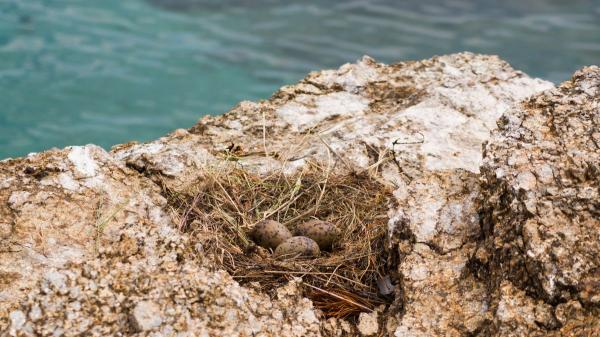
Why a small mistake can destroy an entire island ecosystem
Island species usually evolve with few predators and within limited territories. This uniqueness favors the emergence of unique species, but also allows an introduced cat, rat or mouse to cause disproportionate impacts.
The absence of defensive responses, nesting on land and the small size of some populations can turn a seemingly minor human decision into an alteration that spreads for decades.
Marion’s case also warns against improvised “biological control”: introducing a generalist predator does not guarantee that it will primarily consume the target pest. It may prefer more accessible native animals, compete with other species, and modify entire food chains.
On a global scale, cats, rats, and other invasive mammals are closely linked to island extinctions; Therefore, prevention, quarantines and biosecurity are much safer than repairing the damage once it is consolidated.
The experience accumulated on different islands around the world has led specialists to insist on a basic principle of conservation: prevention is always more effective and less expensive than correction.
The International Union for Conservation of Nature (IUCN) considers invasive alien species one of the main causes of biodiversity loss on a global scale, especially in island ecosystems, where they have contributed to numerous extinctions of birds, reptiles and small mammals.
That is why, before introducing any organism for biological control purposes, modern projects require risk assessments, environmental impact studies and long-term monitoring plans that allow us to anticipate possible unwanted effects on the ecosystem.
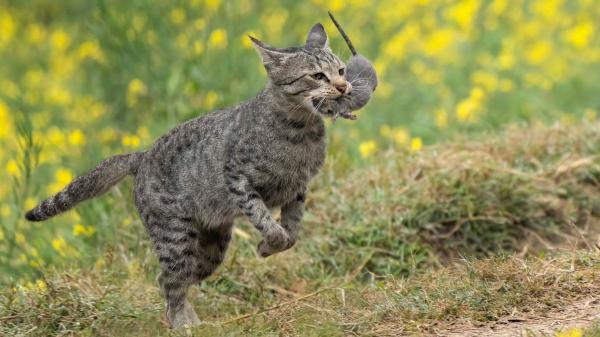
Now they want to eliminate the mice, but this time with a very different strategy
The Mouse-Free Marion project is now preparing to eradicate mice using rodenticide baits distributed from helicopters. However, the most recent official information corrects some dates published in the media: between April and May 2027, an aerial test will be carried out over 975 hectares, while the comprehensive operation is planned for 2029, conditional on financing, environmental permits and the results of previous tests.
This action also entails risks and should not be presented as a harmless solution. The dispersion of toxicants requires adjusting the dose, avoiding untreated areas, limiting the exposure of non-target species and controlling drift or fragmentation of the pellets.
The difference compared to the introduction of cats is in the method: feasibility studies, seasonal trials, calibrations, monitoring and review of failed operations. Global evidence indicates that eradicating invasive mammals can produce great benefits for native fauna, but only when the entire ecosystem is considered and not just the urgency of eliminating a pest.
If you want to read more articles similar to Five cats were introduced to an island to end a plague of mice and unleashed an ecological catastrophe, we recommend that you enter our Biodiversity category.
- Nature Communications: global impact of invasive mammals on island vertebrates. Available at: https://www.nature.com/articles/ncomms12488
