
Ports are essential infrastructure for transportation, fishing and tourism, but they also constitute some of the coastal ecosystems most transformed by human activity. The poor circulation of water in certain docks can favor the accumulation of pollutants, while docks, dredging and other constructions profoundly modify natural habitats.
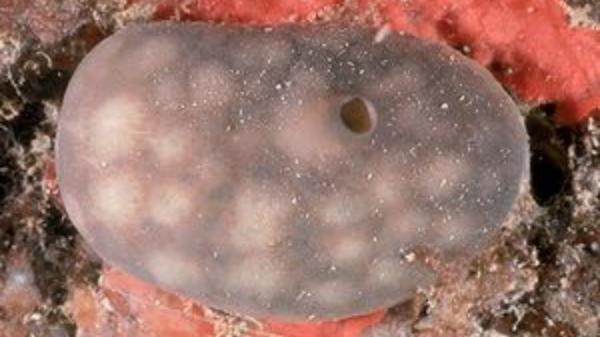
A team from the Center for Advanced Studies of Blanes (CEAB-CSIC), in collaboration with the company Ocean Ecostructures, has decided to look for allies where perhaps they were least expected: marine sponges. The study published in Frontiers in Marine Science analyzed five Mediterranean species to find out which ones could withstand being transported from a natural environment to a degraded port. After 455 days of tracking, one clearly stood out above all the others: Chondrosia reniformispopularly known as chicken kidney sponge.
The objective of bringing 42 sea sponges to the port: recover part of the lost life
The research, directed by Manuel Maldonado and Carlota Escarré, took place in Marina Palamós, Girona. The scientists selected five species: Chondrosia reniformis, Corticium candelabrum, Crambe crambe, Scalarispongia scalaris and Ircinia golds.
The sea sponge specimens were collected in waters near Blanes. After a preparation phase, they were fixed on plates that were subsequently installed in submerged structures specially designed to promote colonization by marine organisms.
In total 42 specimens were used in the experiment, although Corticium candelabrum It was not transferred to the port because its individuals died during laboratory preparation. The other species had very different results.
Crambe crambe, Scalarispongia scalaris and Ircinia golds They progressively reduced their size and their specimens ended up dying between 20 and 165 days after the transfer.
Chondrosia reniformis or chicken kidney sponge, on the other hand, responded in an extraordinary way. 91.7% of the original specimens survived during the 455 days. The experimental population consisted of 24 individuals and some were divided to produce clones, temporarily reaching 40 individuals.
Four species could not withstand the contaminated port and died in a few months
One of the most surprising features of Chondrosia reniformis It is its ability to move slowly over the substrate. The researchers recorded cumulative movements of up to 12.7 centimeters, an ability that can be decisive in a changing environment.
If conditions worsen, these animals can modify their position and seek spaces that are more protected from sediment, solar radiation, predators or competition with other organisms.
They also have a remarkable capacity for regeneration. The study documented specimens affected by episodes of disease that subsequently managed to recover their tissues.
Added to this is asexual reproduction by fragmentation. During the warm months, some of these poriferans divided and generated clones, allowing a population to expand without researchers having to continually introduce new individuals.
Scientists also want to study another possible secret of its resistance: Chondrosia reniformis It harbors a high concentration of symbiotic microorganisms in its tissues. One of the next lines of research will be to determine if this microbiome contributes to its ability to withstand contaminated environments.
Why sponges can help recover degraded water
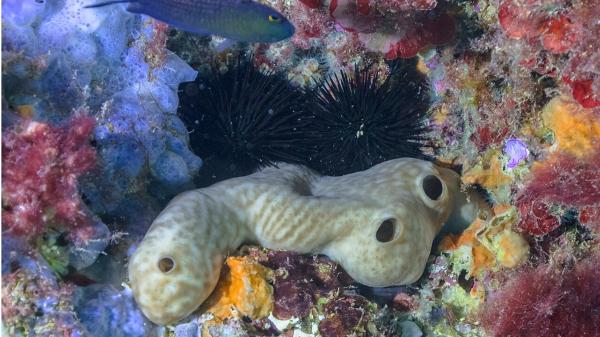
Sponges are much more than immobile organisms attached to rocks. They function as authentic biological filters, continuously circulating water through their bodies and capturing particles and microorganisms.
Its possible use against pollution is not only based on the new Spanish experiment. A study published in Science of the Total Environment verified that sponges installed in marina infrastructure could accumulate organic and inorganic contaminants and proposed their use as a biomonitoring tool and as a nature-based solution.
Other research published in Mediterranean Marine Science analyzed the ability of Axinella damicornis to retain lead and cadmium. The results showed a significant accumulation of these metals in their tissues, although they also revealed that high concentrations can cause stress and necrosis in the animals.
More recently, a work published in Environmental Science & Technology has observed that certain Mediterranean sponges can remove some volatile organic compounds from the water, probably thanks in part to the activity of the microorganisms that live associated with them.
A promising solution that cannot clean a port on its own
The researchers insist on an important distinction: the experiment does not prove that Chondrosia reniformis can decontaminate a port on its own. Its objective was prior to that phase: to find species resistant enough to later incorporate them into ecological restoration projects.
The idea is to combine sponges with other organisms and structures that allow them to progressively recover some lost ecological functions. These animals can filter water, recycle nutrients and provide microhabitats for other living beings, becoming true “ecosystem engineers.”
The success observed in Palamós thus opens up an interesting possibility: using resistant native organisms to return biodiversity and natural functions to coastal spaces deeply modified by humans.
If you want to read more articles similar to Scientists place 42 sea sponges in a polluted Spanish port and a species surprises after 455 days, we recommend that you enter our Ecosystems category.
