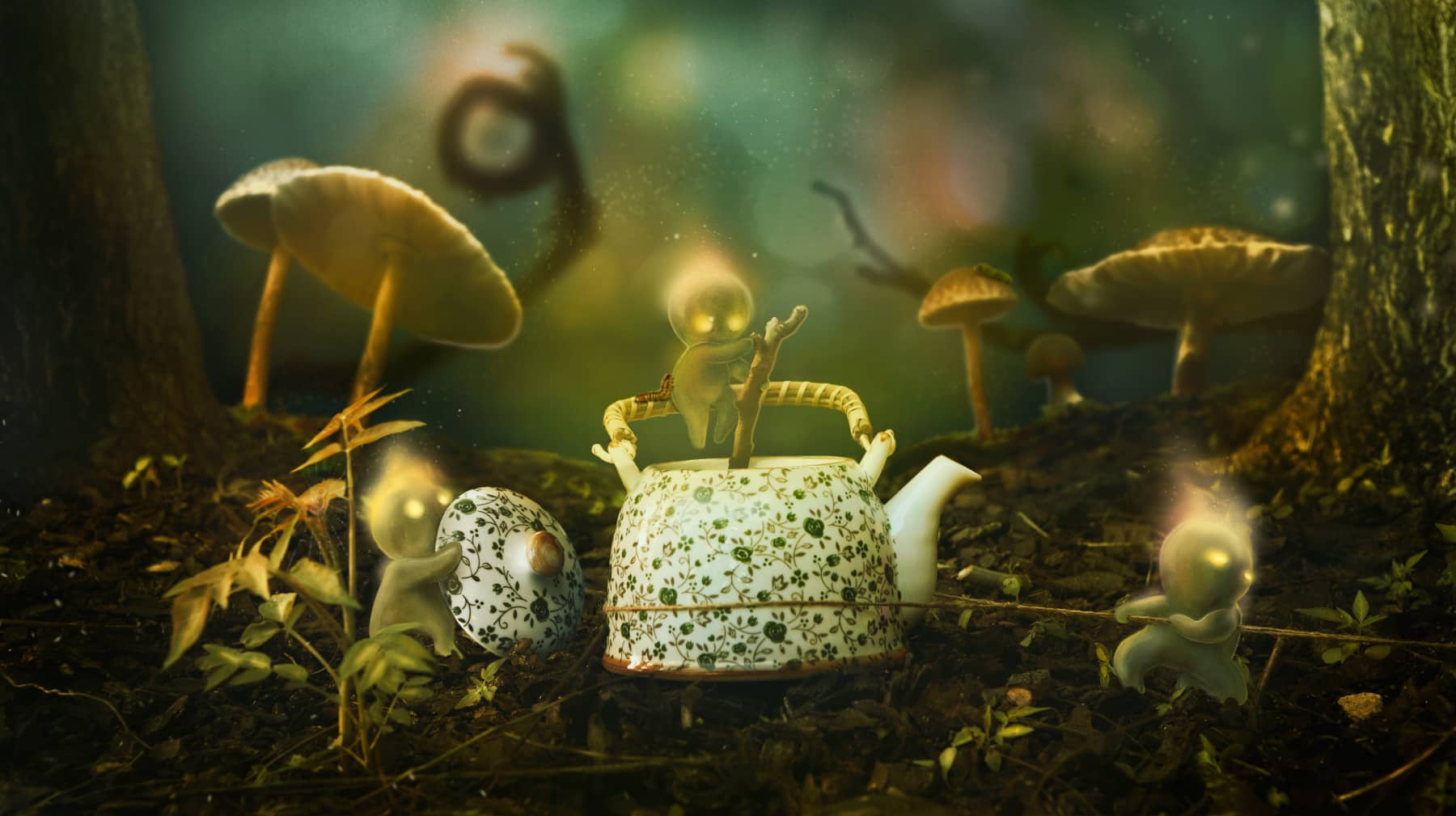
Lilliputian hallucinations are one of the most bizarre phenomena linked to the already very strange world of mushrooms. It is a phenomenon that has been known for almost a century: in 1934, in Papua New Guinea, some anthropologists heard for the first time about people who, after eating certain mushrooms, saw the surrounding world populated by miniature creatures, very colorful and similar to elves or gnomes.
Once dismissed as a byproduct of superstition and folklore, Lilliputian hallucinations have returned to the attention of science in 2024, and now, in a study published in Mycologywe have for the first time the name and surname of the fungus responsible for these visions – although we still don’t know how it causes them.
Mushroom madness
After the first discoveries in the 1930s, following which the phenomenon was called “mushroom madness”, Lilliputian hallucinations came back into fashion in the 1950s and 1960s, but the research of anthropologists and mycologists did not lead to definitive answers: the mushroom analyzed and suspected of being responsible for the phenomenon did not contain any known psychedelic substance, as demonstrated among other things by the analyzes of Albert Hofmann, the discoverer of LSD.
It was at this point that it was decided that Lilliputian hallucinations were a cultural phenomenon, and the mushroom had nothing to do with it.
In the nineties, however, testimonies of visions of colored men also arrived from China, and in 2024 Colin Donmauer, first author of the study, discovered that a similar phenomenon was also known in the Philippines. He then began to investigate, identifying at least three different places (and very distant from each other) where the phenomenon of Lilliputian hallucinations had been recorded: Papua New Guinea, south-eastern China and the Philippines.
Donmauer and his colleague Bryn Dentinger therefore decided to get to the bottom of the matter, carrying out fungal censuses in the three regions and identifying the person responsible for the phenomenon: the fungus Asian Lanmaoawhich was thought to exist only in China and which was instead discovered to also be widespread in the Philippines. Confirmation is still lacking in Papua New Guinea, but it is very likely that the same fungus causes the hallucinations there too.
The culprit of the hallucinations.
The most striking thing about the phenomenon of Lilliputian hallucinations is how similar the stories from different corners of the world are: in particular, the fact that the tiny figurines interact directly with reality, avoiding obstacles, sitting on the edge of tables and chairs.
This suggests that the mushroom interacts in some way with vision and with the way in which we use it to “reconstruct” reality, but to understand it better we would need to know what the substance is present in Asian Lanmaoa.
And here, at least for now, the problem falls: researchers have not yet managed to identify this substance, which is still unknown and does not resemble any of the other psychotropic compounds present in hallucinogenic mushrooms.
Needless to say, this is the next step in the study of Lilliputian hallucinations: the not so hidden hope is that this mysterious substance, in addition to making us see elves and gnomes, could also have some medical applications.
