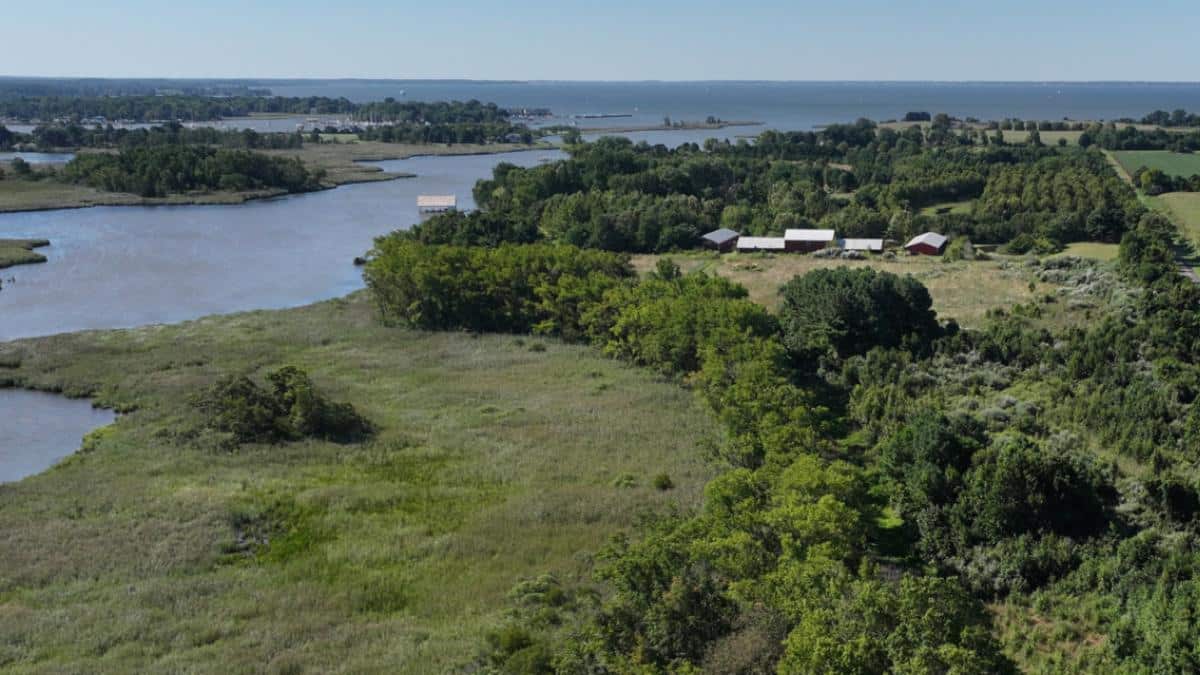
When Louise and John Durocher purchased a large rural property in Kent County, Maryland, United States, their initial purpose was quite different from the one that would come to define the land’s future. The 116-acre estate was to be used primarily for hunting.
As time passed, however, the family’s relationship with that landscape changed. Approximately 20 years ago they stopped cultivating part of the land and began a progressive process of vegetation recovery. They planted native grasses, wildflowers, shrubs and thousands of trees.
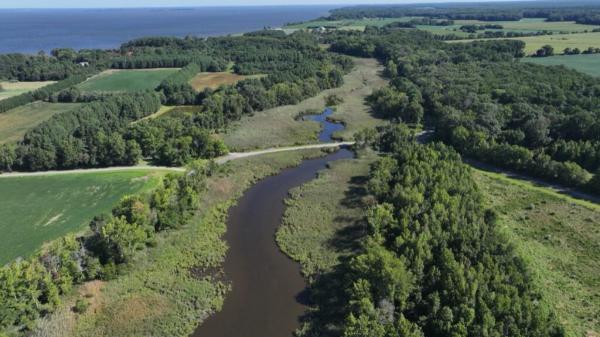
Today, Tavern Creek Farm has become a mosaic of grasslands, forests and wetlands that provides food and shelter for numerous species. And the family has taken an additional step: it has legally protected the 47 hectares to prevent that work from disappearing in the future.
From hunting ground to wildlife refuge
The transformation was not simply about abandoning crops. The Durochers were replacing part of the agricultural landscape with different natural environments and planting species such as river birch (Betula nigra), Virginia tulip tree (Liriodendron tulipifera), American sycamore (Platanus occidentalis), white oak (Quercus alba), loblolly pine (Pinus taeda), black walnut (Juglans nigra) and asimina (Asimina triloba).
Louise Durocher especially remembers the first year they planted wildflowers: the coreopsis covered about five acres, about two hectares, in yellow.
The current result is much more complex than a plot dominated by a single crop. According to the Eastern Shore Land Conservancy (ESLC), the farm has 9.7 hectares of forest, 10.5 hectares of wetlands and more than 7.3 hectares of conservation cover.
The meadows are also connected to the forests by long hedges. This variety currently allows you to find beavers, otters, opossums, muskrats and numerous resident and migratory birds.
The benefits of returning native vegetation to the fields
Tavern Creek Farm’s experience fits with something that research has observed in agricultural landscapes: you don’t necessarily need to convert an entire farm to wilderness to achieve significant improvements.
An experiment on farmland in Iowa, for example, found that dedicating about 10% of corn and soybean plots to strips of native prairie vegetation increased insect and bird richness and significantly reduced water runoff and soil loss.
The explanation lies in the functions that this vegetation performs. Flowers provide food for pollinators; The hedges serve as shelter and corridors for different animals; The roots help hold the soil; and vegetated strips can intercept some of the water and sediment that would leave the fields.
At Tavern Creek this issue is especially important because of its proximity to water. More than 31 acres of the property have been included in conservation practices linked to the US federal agricultural program for more than a decade. Forests and wetlands help protect Tavern Creek and, ultimately, the Chesapeake Bay, one of the largest estuarine areas in the United States.
What this transformation has in common with the Spanish fields
The American case has interesting parallels with the strategies that are being promoted in Spain to recover biodiversity within agricultural landscapes.
The Ministry for the Ecological Transition (MITECO) recalls that around 45% of the Spanish surface is destined for agricultural and livestock uses and points out that intensification has caused, among other effects, the progressive disappearance of spaces of natural vegetation that provided food, shelter and reproduction places for fauna.
Reclaiming those small spaces can have significant consequences. A scientific synthesis in which the National Museum of Natural Sciences-CSIC participated found that agricultural landscapes with a higher density of borders could host up to 70% more pollinating arthropods and more than 40% more arthropods related to natural pest control.
In Spain, solutions such as herbaceous covers, hedges, floral margins, ponds and recovery of unproductive crop areas are also being tested. Projects such as Olivares Vivos, developed by SEO/BirdLife, have applied several of these actions in Spanish olive groves to increase the complexity of the landscape and promote the recovery of biodiversity.
Protection designed to last longer than its owners
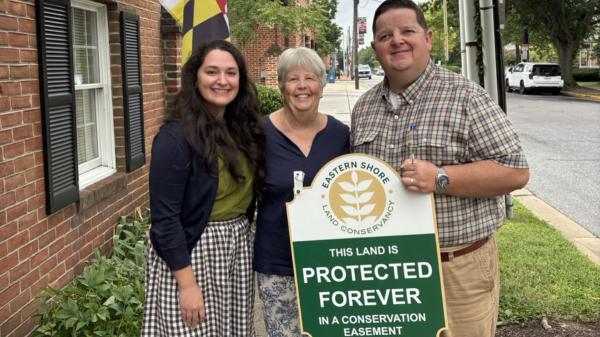
The Durochers’ last decision is perhaps the most important to understand the story. In 2026, Tavern Creek Farm’s 116 acres were placed under a permanent conservation easement, funded through a program involving the United States Department of Agriculture (USDA) and the state of Maryland.
This mechanism permanently limits certain uses and prevents the property from being subsequently transformed through urbanization, guaranteeing the conservation of its natural values.
Management is now in the hands of Sarah Starman, granddaughter of Louise and John Durocher. Their intention is that subsequent generations can continue to find forests, wetlands and meadows there.
The property that began as a place acquired for hunting thus ends up telling a different story: that of how twenty years of small decisions about what to plant, what to let grow and what to protect can completely transform a landscape.
If you want to read more articles similar to They bought 47 hectares in Maryland for hunting and 20 years later they had turned it into a refuge for wildlife with trees, flowers and wetlands, we recommend that you enter our Ecosystems category.
