
Chernobyl has been associated with the worst nuclear catastrophe in history. The explosion of reactor number 4 at the Ukrainian power plant on April 26, 1986, forced the evacuation of more than 100,000 people and created an exclusion zone of about 2,600 square kilometers that, for years, was considered practically incompatible with life.
Four decades later, this landscape of abandoned towns, buildings invaded by vegetation and deserted roads has become one of the most fascinating ecological experiments on the planet. Wolves, lynxes, elks, deer, wild boars, beavers, brown bears and even Przewalski’s horses live today in a territory where human presence is minimal.
This apparent contradiction has led numerous researchers to talk about the great “Chernobyl paradox”: a place still contaminated by radionuclides houses a much higher biodiversity than what existed when the area was inhabited.
Now, scientists insist on a fundamental idea: radiation has not benefited nature. What has happened is much more complex and, probably, much more revealing about the impact that humans have on ecosystems.
Scientists believe this was the real reason for Chernobyl recovery
The explanation that meets the greatest consensus among specialists is surprisingly simple: when almost all human activity disappeared, nature recovered an immense territory.
Before the accident, this region of northern Ukraine was occupied by villages, farms, roads, industries and intense forestry activity. After the evacuation, agriculture, hunting, urbanization and much of the road traffic ceased. Forests began to expand and many species recovered ecological corridors that had remained fragmented for decades.
The Chernobyl Exclusion Zone and adjacent nature reserves in Belarus today constitute one of the best-preserved continuous areas of nature in Eastern Europe. Populations of wolves, elk, roe deer, deer, wild boar and numerous birds of prey thrive there thanks, above all, to the almost total absence of human pressure.
This idea has just been reinforced with a study published in Proceedings of the Royal Society Bwhich concludes that restricted human access has been the main factor that has allowed the recolonization of large mammals, above the negative effect of radioactive contamination.
In other words, Chernobyl demonstrates that many species respond extraordinarily quickly when hunting, roads, noise, intensive agriculture, and landscape transformation disappear.
Wolves, bears and wild horses: the species that have conquered Chernobyl
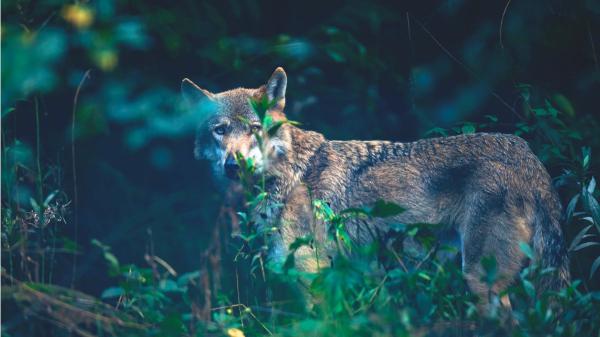
One of the most striking examples is that of the wolf. The population density of this species within the exclusion zone is much higher than that recorded in nearby protected areas. In some sectors, populations have been estimated to be several times higher than those existing before the accident. But they are not the only protagonists.
In recent decades, moose, roe deer, deer, wild boars, beavers and numerous species of birds have also increased. Even the brown bear, long missing from the region, has been spotted again.
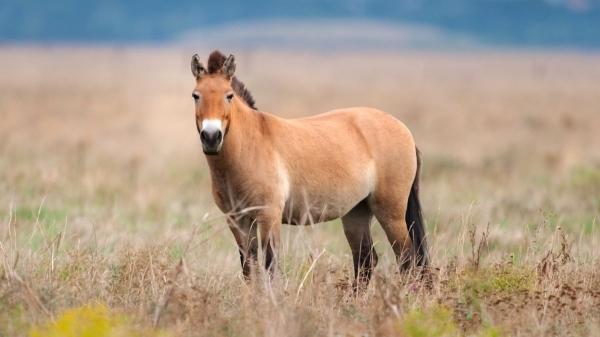
Another especially symbolic case is that of the Przewalski’s horse, a species considered extinct in the wild during the 20th century. Experimentally introduced into the exclusion zone in 1998, today it maintains a stable population and constitutes one of the greatest conservation successes associated with this unique natural laboratory.
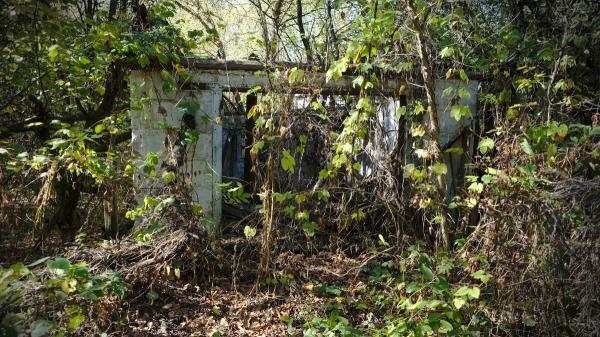
The vegetation has also undergone a radical transformation. Streets, buildings and old infrastructure have been completely colonized by trees and bushes, generating new habitats for numerous species.
Radiation continues to leave its mark on Chernobyl’s fauna
Just because fauna has increased does not mean that radiation has stopped being a problem. Researchers insist that the success of animal populations does not eliminate the biological effects derived from radioactive contamination.
The International Atomic Energy Agency (IAEA) itself highlights that, after the accident, many populations of plants and animals suffered significant damage and that genetic and cytogenetic alterations are still observed in certain species today, although the majority of populations progressively recovered thanks to reproduction and the arrival of individuals from less contaminated areas.
Cataracts in birds, reproductive alterations, immunological changes and changes in pigmentation have been documented in some frogs that live in areas with higher levels of radiation. These effects tend to appear especially in organisms that remain continually exposed to the most contaminated points.
For this reason, experts warn that it would be a mistake to interpret Chernobyl as a demonstration that radiation is harmless to biodiversity.
The war once again changed the behavior of the Chernobyl fauna
The Russian invasion that began in 2022 opened a new chapter for the exclusion zone. Researchers from the University of Freiburg and the Doñana Biological Station (CSIC) have shown that military activity modified the behavior of numerous mammal species. Thanks to a network of camera traps installed before the conflict, they verified that animals such as deer, elk or foxes altered their activity patterns due to the passage of military vehicles, explosions and increased noise.
This work constitutes one of the first direct evidence of how a war can affect the behavior of wild fauna even in a space where hardly any people live.
The great lesson that Chernobyl leaves about the impact of human beings
Almost forty years after the accident, Chernobyl has become a unique natural laboratory for understanding how ecosystems respond when human pressure is removed. Scientists insist that the recovery of flora and fauna does not mean that radiation is beneficial or harmless, but rather it highlights the enormous impact that human activities such as agriculture, urbanization, hunting or the construction of infrastructure have on biodiversity.
The so-called “Chernobyl paradox” thus leaves one of the most relevant lessons for conservation: when a territory recovers space and tranquility, many species are capable of recolonizing it with surprising speed. Without downplaying the seriousness of the consequences of the nuclear accident, this case demonstrates the extent to which reducing human pressure can favor the recovery of ecosystems and wildlife.
If you want to read more articles similar to Scientists explain the great paradox of Chernobyl: today it is home to more wildlife than before the accident, we recommend that you enter our Biodiversity category.
