
Long before air conditioning became a common household appliance, Spanish homes already had their own strategies to combat the heat. The orientation of the house, ventilation during the cooler hours and the materials used in its construction were essential.
But there was another detail that may go unnoticed today: the materials with which the ground was covered also changed with the seasons.
During the warm months, heavy winter rugs could be replaced by much lighter mats and pieces made from plant fibers. Esparto grass, reeds and straw were common materials in much of the Spanish territory, especially in Mediterranean areas.
And although it may seem simply a decorative issue, behind this custom there is an explanation related to the way in which the materials of a home absorb and release heat.
The change came with the summer: out with the thick carpets and in with the mats
The first idea that should be clarified is that the mat does not work as a natural air conditioner. What can help maintain a more comfortable room is, to a large extent, the floor itself.
Materials such as stone, clay or certain tiles have a high thermal inertia. This means that they do not change temperature as quickly as air: they can absorb heat progressively during the day and release it little by little later.
Therefore, in a home protected from solar radiation, a floor made of these materials can remain relatively cool for a good part of the day.
The problem is that a thick rug can act as an insulating layer and make it difficult for our feet to come into contact with that cool surface. Hence, during the summer it made sense to remove heavy fabrics and replace them with thinner and more breathable ones.
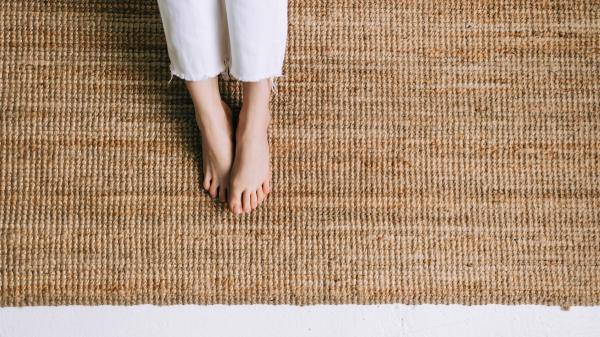
It was not just a Spanish custom: mats had been used for centuries to combat the heat
This custom was not exclusive to Spain. For example, in France, as explained by media such as The Journal of Womenduring much of the 20th century the practice of replacing thick winter rugs with thin mats and rugs made from natural fibers such as jute, bamboo, seagrass or cotton spread.
But the use of this type of coating is still much older. A study published in the journal Persee, It includes the use of reed mats as floor and wall coverings in French homes from the Middle Ages to the 18th century.
The logic was simple: in winter it was interesting to create a layer that protected from the cold, while in summer it was preferable to use light materials that did not trap as much heat and made it possible to take better advantage of the characteristics of the pavement.
In addition, plant fibers are breathable and can interact with environmental humidity. Some are capable of absorbing some of the water vapor when the environment is stuffy and releasing it later when the air becomes drier.
Esparto and reed: the fibers that replaced carpets when the heat arrived in Spain
Spain also has its own tradition linked to the use of plant fibers. Esparto grass, straw and reed have been used for generations to make baskets, mats, rugs and other domestic objects using different braiding techniques.
In many homes, especially in Mediterranean areas, esparto mats were a practical solution for the warm months. They were light, resistant and allowed certain areas of the house to be covered without resorting to the thick fabrics associated with winter.
It was not, therefore, about creating artificial cold. Traditional architecture sought to make the most of the cold that already existed, while preventing the home from accumulating more heat than necessary.
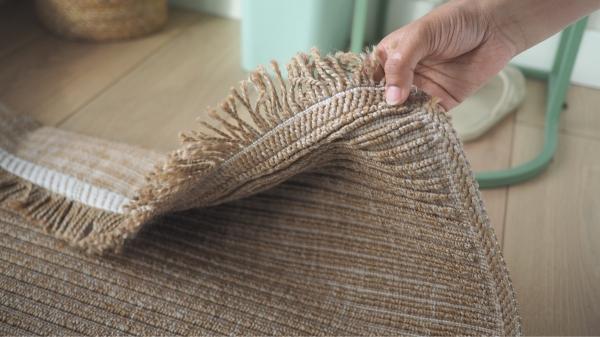
Does it make sense to recover this old custom in a modern home?
The idea can be perfectly transferred to a current home, although with an important precision: placing a mat on the floor will not lower the temperature of a room by several degrees.
Its usefulness depends a lot on the characteristics of the house. If the pavement receives direct sunlight through a window, for example, it will hardly be able to stay cool. On the other hand, a stone, clay or tile floor protected from solar radiation can maintain a more pleasant temperature during hot hours.
In that case, using very thick rugs during the summer can prevent us from enjoying that cool surface. A mat of natural fibers allows you to cover the floor without creating the same feeling of insulation.
And there is another advantage: this type of materials fits with a much broader strategy to combat the heat without depending exclusively on air conditioning.
Blinds, shade and ventilation: the other tricks that kept houses cool
The mat was just one piece of a much larger system. Before modern air conditioning, homes were designed taking into account factors such as orientation, ventilation and construction materials.
One of the simplest strategies is still to ventilate when it is cooler outside and keep the windows closed when the heat arrives, especially if solar radiation enters directly.
It is also essential to block the sun before it enters the home using blinds, awnings, shutters or appropriate curtains.
In other words, the secret was not in a single miraculous object. Traditional houses took advantage of the properties of the materials and the conditions of the environment to delay the entry of heat and preserve the freshness accumulated during the night for longer.
Therefore, that old custom of changing thick rugs for light mats in summer still has a certain logic. It does not replace air conditioning, but it does remind us of an idea that is still valid: to combat the heat, sometimes it is as important to prevent the house from heating up as it is to try to cool it down afterwards.
If you want to read more articles similar to Before air conditioning, in Spain there was a trick to keep the house cool: it still works, we recommend that you enter our Energy Savings category.
