
Climate change is altering more than just ocean temperatures. A new study has found that global warming is weakening the climate connection that for centuries linked the Pacific Ocean to the Indian Ocean.
Researchers have reconstructed how this relationship worked over the last few centuries and have verified that the weakening observed in recent decades is exceptional compared to the variability recorded during the last millennium. The change is modifying the way both basins respond to each other.
The disruption may have consequences that go beyond the oceans. This connection influences the atmospheric circulation patterns that determine rainfall and droughts in different regions of Africa, Asia and Australia, and its weakening could make some climate predictions difficult.
For centuries, the Pacific and the Indian Ocean were much more connected than it seems
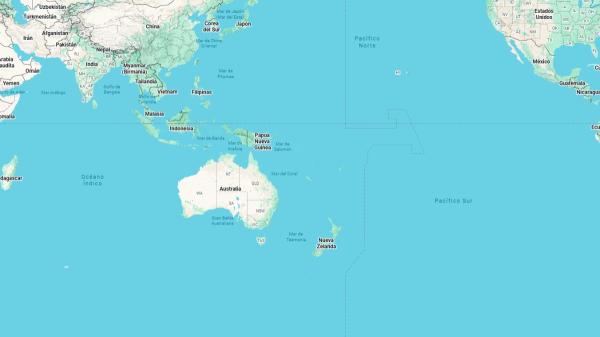
The Pacific Ocean and Indian Ocean do not function as completely independent systems. For centuries, their climatic conditions have been closely linked through the atmospheric and oceanic circulation that connects both basins, especially in the tropical Indo-Pacific region.
This relationship means that the changes that occur in the Pacific can influence the behavior of the Indian Ocean and vice versa. Sea surface temperature, winds and movements of air masses are part of an interconnected system that helps determine the distribution of rainfall and other weather patterns over large areas of the planet.
Available climate records show that this connection remained relatively stable for much of the last few centuries. To see how exceptional the behavior observed in recent decades is, a team of researchers turned to modern instrumental records, climate models and evidence of past climate obtained from corals, tree rings and stalagmites.
The result made it possible to reconstruct the relationship between both oceans much further back than modern meteorological records allow. And there appears one of the keys to the investigation. Although this connection had already experienced specific alterations, especially after large volcanic eruptions, the weakening observed in recent decades presents much more exceptional characteristics.
The warming of the Indian Ocean is weakening the influence of the Pacific
The problem is not only that the Indian Ocean is warming, but that this warming is changing the balance that for centuries allowed the Pacific and Indian Oceans to respond in a relatively coordinated manner.
The tropical Indian Ocean has warmed by about 0.1°C per decade since the 1950s, paralleling rising greenhouse gas concentrations. This persistent warming is changing the conditions that regulate the interaction between both oceans.
The consequence is that the influence that the Pacific traditionally exerted on the Indian Ocean is losing strength in the face of the new thermal conditions caused by global warming. In other words, the Indian Ocean no longer responds in the same way to the variations of the Pacific as it did for much of the last few centuries.
This alteration especially affects the relationship between the Pacific Walker circulation and the Indian Ocean Basin Mode. The first depends on ocean temperature differences to organize the upward and downward movements of air and tropical winds. When thermal conditions change in a sustained manner, this atmospheric exchange between the two basins can also be modified.
The researchers believe that this change does not fit easily with known natural variability. When comparing the behavior recorded between 1945 and 2025 with climate reconstructions and simulations from the last millennium, the relationship between both oceans was outside the observed range in 95% of the comparable periods.
The 19th century left a clue: volcanoes can also weaken this connection
The relationship between the Pacific and the Indian Ocean has not been completely stable throughout history. The researchers found periods in which this connection was temporarily weakened, and one of the factors behind some of these episodes is large volcanic eruptions.
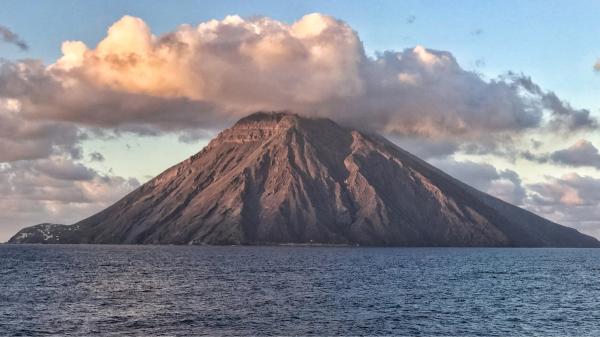
One of the most important examples occurred during the first half of the 19th century. Between approximately 1810 and 1850, the connection between the two ocean basins weakened coinciding with several large tropical eruptions. Among them, the eruption of Mount Tambora, in Indonesia, in 1815 stood out, considered one of the largest volcanic eruptions recorded.
Large eruptions can introduce huge quantities of particles and gases into the atmosphere, causing temporary alterations in the climate system. In the case studied, the models indicate that the intensity of the interruption of the connection between the Pacific and the Indian Ocean depended on both the magnitude of the eruption and the climatic conditions existing at that time.
Decoupling may make it harder to predict rains and droughts
For centuries, the relationship between both basins provided a certain predictability. The variations in the Pacific could offer clues about what would later happen in the Indian Ocean. However, as this link is reduced, signals from the Pacific are no longer as useful for interpreting the behavior of the Indian Ocean.
This is especially relevant because the interactions between the two oceans are related to the distribution of precipitation and drought episodes in different regions. Africa, Asia and Australia could be affected by a reduced ability to anticipate certain weather patterns with the same precision as in the past.
The research published in Nature Communications points out that the relationship between the Pacific and the Indian Ocean was maintained for much of the last four centuries, while the behavior observed since the middle of the 20th century stands out even when compared with previous periods of strong volcanic activity. Researchers consider that this modern decoupling is associated with forcing produced by greenhouse gases.
The finding therefore raises a question that goes beyond the increase in temperatures. If climate change is changing the connections that for centuries helped keep the climate system coordinated, the models and tools used to make predictions will also have to adapt to a scenario in which the Indian Ocean may behave in an increasingly independent way.
If you want to read more articles similar to Climate change is not only warming the oceans: it is weakening a connection between the Pacific and the Indian Ocean that has worked for centuries, we recommend that you enter our Climate Change category.
