
In 2000, a group of volunteers planted just 100 branches and small trees in a practically bare valley in southern Scotland. He also made a key decision: remove thousands of sheep that were preventing vegetation from growing back.
25 years later, the transformation is hard to believe. Where once dominated by slopes degraded by centuries of grazing, Carrifran Glen is now home to around 750,000 native trees and continues to slowly recover its ancient ecosystem.
This is what the Scottish valley looked like before one of its most surprising transformations began
At the end of the 20th century, Carrifran Glen, a valley located in the Moffat Hills in southern Scotland, looked very different from today. Its slopes were practically bare as a result of centuries of livestock activity and intense pressure on the vegetation. Erosion had also left a deep mark on the landscape.
The change began on January 1, 2000, when a group of volunteers decided to launch an ecological restoration project. On that first day, barely a hundred branches and young specimens were planted, a small number for a territory that had lost a good part of its forest cover.
More than a quarter of a century later, the result is difficult to imagine from that first plantation. Carrifran Glen currently has around 750,000 native trees and continues to move towards the recovery of a natural forest.
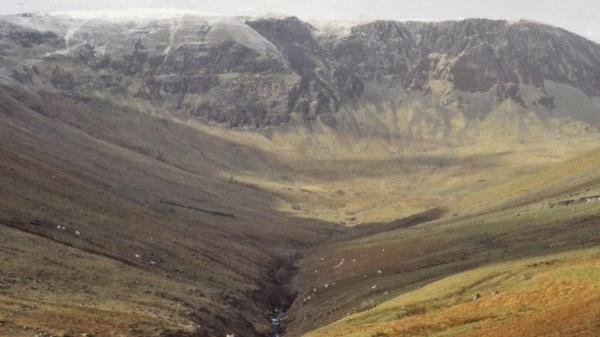
The story began in the 90s: 600 people joined together to recover the ancient forest
Although the first plantings were carried out in 2000, the idea of recovering the ancient forest landscape of Carrifran Glen had begun to take shape during the 1990s. Naturalists and scientists studied the possibility of returning to the valley some of the appearance it had had before centuries of human intervention. The challenge was considerable, since the area had lost practically all of its tree cover and livestock farming had conditioned the vegetation’s capacity for regeneration for generations.
To make the project a reality it was necessary to acquire about 660 hectares of land. Its promoters resorted to contributions from individuals and managed to mobilize around 600 people, whose collaboration made it possible to gather the necessary resources to launch the initiative.
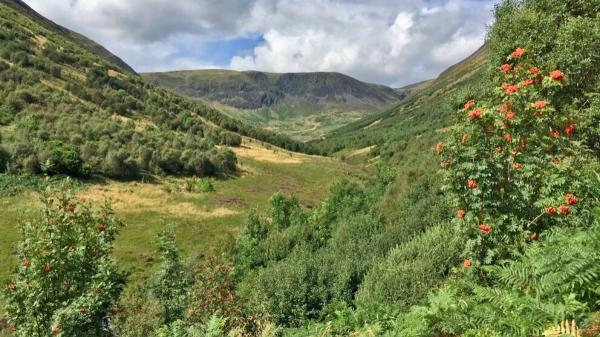
The decisive change was to remove thousands of sheep so that the trees could grow again
Planting trees was only part of the problem. In order for the new specimens to grow, it was also necessary to reduce the pressure that for centuries had prevented natural regeneration.
One of the main obstacles to the recovery of the forest was the presence of thousands of sheep. For decades, intensive grazing had prevented young trees and other plant species from developing normally, by keeping the vegetation under constant pressure.
For this reason, the restoration of Carrifran Glen was not just about planting trees. It was also necessary to remove the sheep from the valley and put an end to the intensive grazing that had conditioned the landscape for generations. Without this measure, a good part of the new shoots would have had difficulties surviving and growing.
The reduction in livestock activity allowed the vegetation and natural processes of the ecosystem to begin to progressively recover. The trees planted during the first years were able to develop and, over time, natural regeneration also began to occur in different areas of the valley.
The transformation did not only seek to create a forest. The objective was to recover a more complete ecosystem, including wetlands, degraded peatlands, wild plants and different species of fauna typical of this region of Scotland.
Flowers, bushes and animals gradually returned to a valley that had been degraded for centuries
As the years passed, the slopes that had remained practically bare began to be covered with young trees and bushes. At the same time, numerous wildflowers reappeared and the diversity of the environment increased.
The recovery of vegetation also generated new conditions for fauna. Trees and shrubs provided shelter and food, while the improvement of the ecosystem allowed different species to once again find more suitable habitat.
The process was not immediate. It was not about transforming the valley overnight, but rather letting a combination of initial plantings and natural processes progressively modify the landscape.
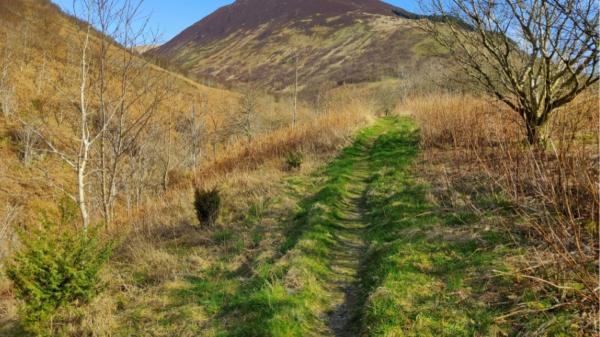
25 years later, where there were bare slopes, a forest of 750,000 trees is already growing
Today, Carrifran Glen has become one of the most striking examples of ecological restoration in Scotland. What began with around 100 branches and young specimens has been transformed, more than 25 years later, into a space with around 750,000 native trees.
The project is not yet considered finished. The intention is to continue promoting the evolution of the valley towards a native forest capable of maintaining its own natural processes. The story of Carrifran Glen thus demonstrates that the recovery of an ecosystem can take decades, but also that a landscape deeply altered by human activity can change radically when part of the pressure that prevented its regeneration is removed.
In the year 2000 there were barely a hundred branches and small specimens. Today, that starting point is part of a landscape with hundreds of thousands of trees where bare slopes previously predominated.
If you want to read more articles similar to In the year 2000 they planted only 100 branches and drove away thousands of sheep in Scotland: 25 years later, it has become a forest of 750,000 trees, we recommend that you enter our Ecosystems category.
https://www.elimparcial.com/locurioso/2026/08/14/plantaron-los-primeros-100-arboles-y-retiraron-1200-ovejas-para-reforestar-un-valle-y-25-anos-despues-lograron-que-crecieran-mas-de-750-mil-arboles-nativos/
https://www.cronista.com/espana/actualidad-es/plantaron-100-arboles-y-retiraron-a-1200-ovejas-para-recuperar-un-valle-sin-vegetacion-25-anos-despues-tiene-mas-de-750000-arboles/
