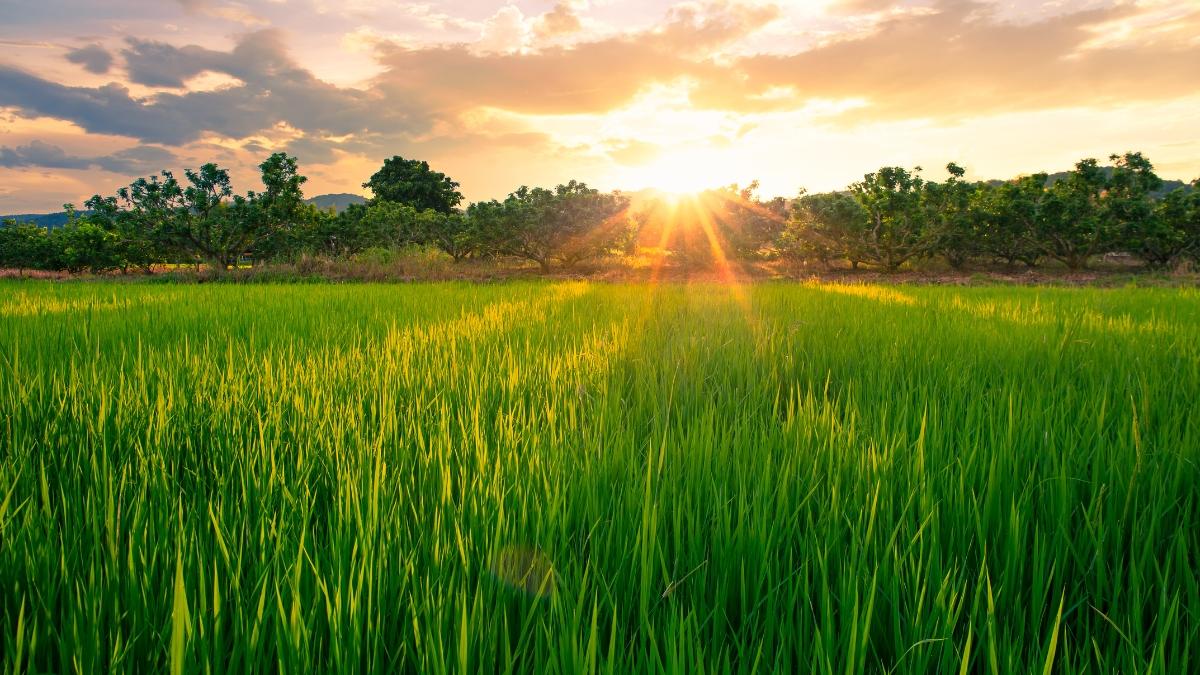
In 1988, English farmer Hugh White made a decision that would completely change the future of his land: he stopped growing wheat on Strawberry Hill, a 152-hectare farm located in Bedfordshire, England. What were then agricultural fields began to transform over the years until they became a space of great value for fauna.
Without crops or the constant work of agricultural machinery, the vegetation was recovering ground. Meadows, bushes and young trees little by little occupied the property and created new habitats for different species.
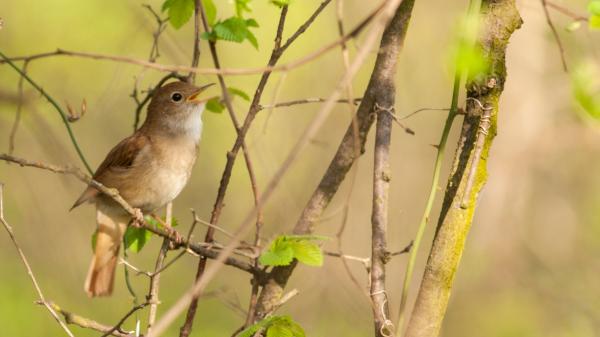
Almost four decades later, Strawberry Hill is home to a significant population of nightingales, as well as turtle doves, warblers, small mammals, insects and up to 11 species of bats.
This is how the 152-hectare farm changed after almost four decades without crops
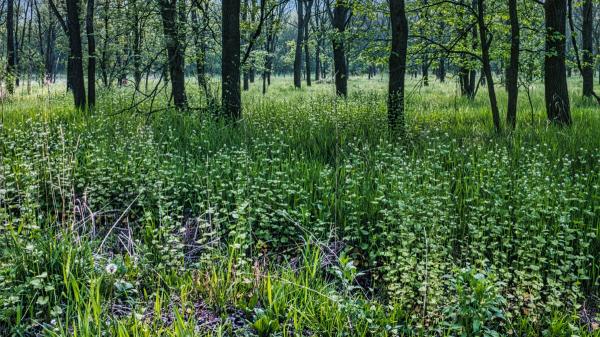
When the land stopped being plowed and cultivated, vegetation began to progressively occupy the space that was previously destined for agriculture. The old agricultural plots gave way to a combination of grasslands, bushes and areas with young trees.
This process allowed the creation of a mosaic of habitats very different from that offered by agricultural fields. Instead of an area dominated by a single crop, the land began to have different environments in which species with very different needs could settle.
The change was especially important for birds. Records made at Strawberry Hill indicate the presence of nightingales, turtle doves, warblers and other species, as well as numerous insects and small mammals.
One of the most striking facts has to do precisely with nightingales. According to studies and observations carried out in the area, a very significant proportion of Bedfordshire’s breeding specimens are concentrated in these lands.
The land has also become an interesting space for bats. 11 different species have been identified, along with a wide variety of wildflowers.
Why stopping cultivating a piece of land can favor the recovery of vegetation and fauna
The transformation of Strawberry Hill was not immediate. Ecological recovery occurred over decades, as vegetation developed and animals found new conditions to settle.
The result demonstrates how agricultural land can undergo a profound transformation when its use changes. Grasslands provide food and open areas, while shrubs and young trees offer places where different species can shelter or breed.
In this case, furthermore, the size of the farm allowed the process to have a considerable dimension. 152 hectares is equivalent to an area large enough for different types of habitat to develop and for fauna to have areas connected to each other.
The story of Strawberry Hill also focuses on an increasingly relevant question: what happens to agricultural land when it is no longer used intensively. Abandonment alone does not guarantee that any space will automatically become a high-value ecosystem, but certain conditions can favor a natural recovery of vegetation and fauna.
In this English estate, the passage of time precisely allowed the emergence of an environment with notable interest for conservation.
When the farmer died, his children had to decide what to do with the land he had left behind
After the death of Hugh White and his wife, his children faced an important decision: what to do with land that had changed radically since it stopped farming.
The family chose to keep the land in its natural state and prevent Strawberry Hill from returning to the intensive farming model. In this way, the landscape that had been developed over decades could continue to offer a space for fauna.
The decision made it possible to preserve the result of a process that began in 1988. Over the next 38 years, the land had gone from being an agricultural operation to becoming a place of special interest for local biodiversity.
But maintaining a surface of these dimensions also requires resources. For this reason, the definitive conservation of the land ended up being linked to a campaign promoted by the Wildlife Trust for Bedfordshire, Cambridgeshire and Northamptonshire, an organization dedicated to the protection of nature in the region.
How the conservation of the 152 hectares that had become a refuge for wildlife was financed
The organization launched a campaign to raise £1.5 million to ensure the protection of the parts of Strawberry Hill that were not yet secured.
The citizen response made it possible to raise an important part of that amount. More than 3,800 people made donations totaling around £500,000, while the rest of the money came from different funds, organizations and a large private contribution.
With the funding raised, the Wildlife Trust was able to definitively acquire the land and ensure its conservation as a nature reserve.
In this way, the story of Strawberry Hill ended up taking an unexpected turn. What began in 1988 as a farmer’s decision to stop growing wheat turned into a nature conservation project almost four decades later.
The farm is now an example of how a change in the use of a territory can favor the recovery of certain habitats and create new opportunities for fauna. Nightingales, bats, insects, small mammals and wild plants have found a space in these former agricultural lands to thrive.
If you want to read more articles similar to A farmer abandoned the cultivation of a 152-hectare farm in 1988: 38 years later it has become a shelter for animals, we recommend that you enter our Ecosystems category.
