Today is World Food Day: 2026 has been a difficult year for the availability and accessibility of food.
Today is World Food Day (World Food Day), the opportunity to celebrate the birthday of the Food and Agriculture Organization (the FAO, founded on 16 October 1945) but above all to return to talking about how to reduce world hunger, improve nutrition and transform the agricultural systems that feed us in a direction of greater sustainability and resilience.
The 2026 edition falls in a phase of profound stress for global food production. A year marked by wars, extreme climatic events, instability in the logistics of food distribution and with the shadow of a super El Niño influencing the coming months.
Instability means higher prices
FAO’s invitation is to look with confidence at innovation in agri-food systems, which “can reduce risks before crises occur (…), strengthen resilience and avoid much higher costs once crises occur”. The word “crisis”, in 2026, translates to conflicts, violence, heat waves, floods, anomalous rainfall and the onset of an El Niño event of unusual proportions.
These pressures translate into increased shopping cart costs for consumers, especially in countries heavily dependent on food imports. Global food prices in September 2026 rose, due to the three factors mentioned, to their highest level in almost 4 years.
The FAO Food Price Index (FFPI), a metric that measures the monthly change in international prices of a basket of food products, stood at an average of 136.0 points in September 2026, the highest value since November 2022. It depends on rising prices of cereals, vegetable oils and sugar.
Ships targeted
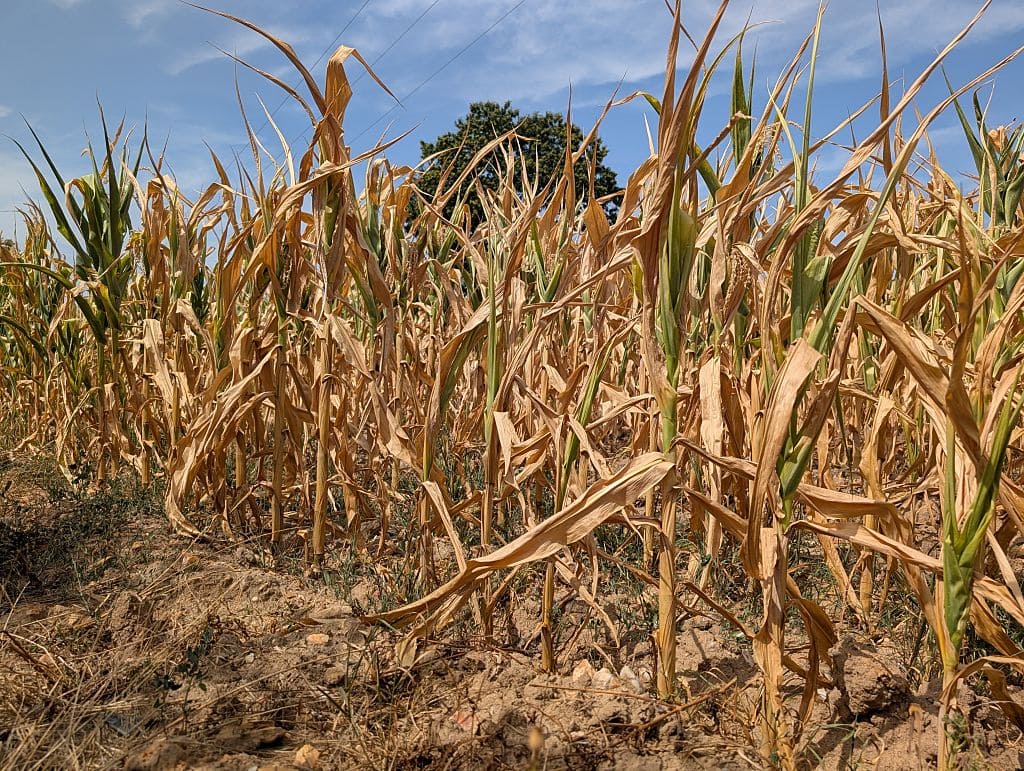
The collapse of trade in the Black Sea due to the war between Russia and Ukraine is weighing on cereal trade: drone attacks on merchant ships threaten international wheat trade, at a time when a reduction in corn yields linked to drought is expected.
Concerns about the consequences of El Niño in the countries where sugar is produced have caused the prices of this commodity to rise to the highest levels in 18 months; fears over the risks of palm oil production linked to El Niño in South-East Asia have instead contributed to the rise in vegetable oil prices.
Max Torero, FAO chief economist, explains: «We are witnessing a persistent and increasingly widespread rise in global raw material prices: disruptions in the Strait of Hormuz and the Black Sea add to climate shocks, putting pressure on energy, transport and main basic food products».
The state of hunger in the world
Precisely the dual influence of wars and climate on global nutrition is at the center of the 21st edition of the Global Hunger Index, the 2026 Global Hunger Index, edited by CESVI for the Italian edition and drawn up by Welthungerhilfe (WHH), Institute for International Law of Peace and Armed Conflict (IFHV) and Helvetas, an independent development cooperation organisation.
According to the document, one of the main international reports on the measurement of world hunger, wars and climate starve 645 million people in the world, a number equivalent to almost the entire European population.
In 2025, 65 armed conflicts were recorded, the highest number since the Second World War, and 358 disasters linked to natural events, both climatic (droughts, floods, storms) and geological such as earthquakes, with over 110 million people involved. In 2026, the United Nations Office for the Coordination of Humanitarian Affairs has already recorded 64 emergencies related to extreme climate events.
For these reasons, the 2026 global GHI score is 18.1 (“moderate level”, on a scale from 0 to 100 where higher scores represent a worse nutritional status): a higher score than that of 2018, an interruption of the downward trend recorded since 2000.
The country in which the index shows the worst value (47, an alarming level) is Somalia, where all the causes of hunger recorded by the report are intertwined: drought, aid cuts, conflicts, prices driven by the crisis in the Middle East. In Somalia in 2026, acute hunger grew by 43%: more than one in two people is undernourished and one in ten children dies before the age of five. Now El Niño
it threatens to bring in the water that has been missing for months all at once, with floods.
«War and climate are no longer separate emergencies: in most food crises they add up and feed each other», says Stefano Piziali, general director of CESVI. «Hunger is not just a consequence of instability, it is a multiplier of it. This is why this year’s GHI message is clear: there is no security without food security. Cutting aid precisely where hunger is most serious means preparing for the crises of tomorrow.”
