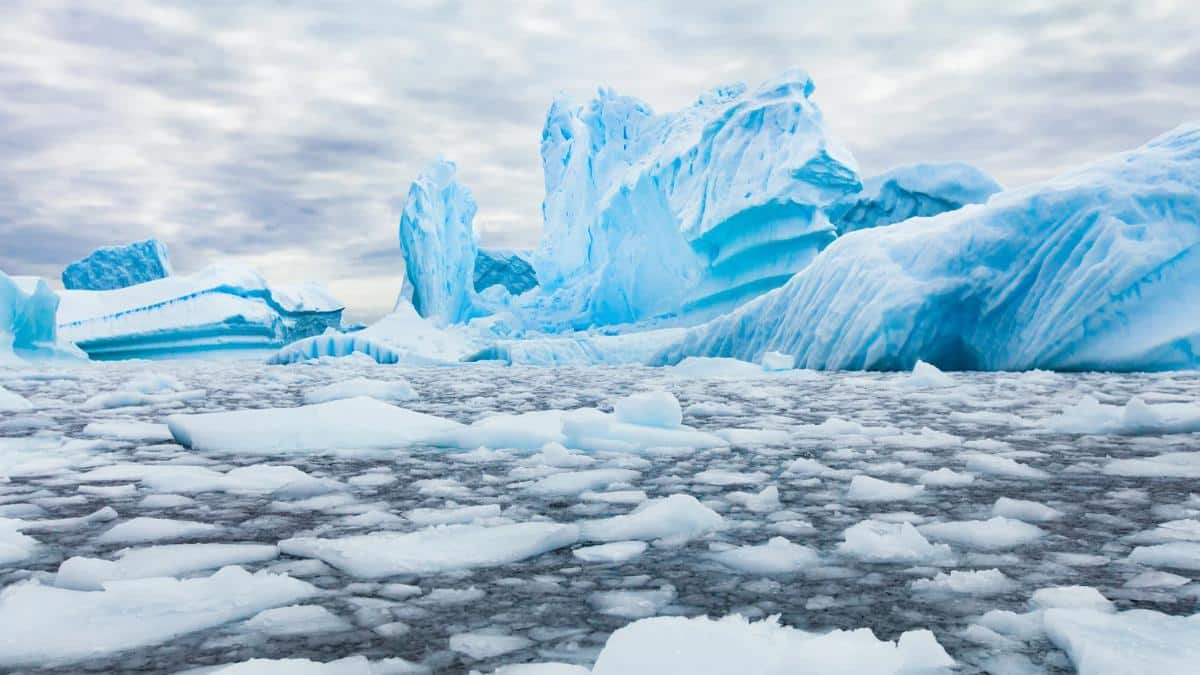
Antarctica concentrates around 90% of the Earth’s ice and around 70% of the planet’s fresh water. Although it is located in a remote region, its enormous ice cap plays a fundamental role in regulating the climate, sea level, and the functioning of the oceans. Therefore, the changes that occur on this continent can have consequences in very distant places.
But what would happen if a large part of the Antarctic ice disappeared? Sea levels would rise, ocean currents could be altered, and numerous marine ecosystems would face significant changes. Although the complete disappearance of this ice mass would require centuries or millennia, even a partial loss could have lasting effects on the entire planet.
Antarctica concentrates 90% of the Earth’s ice and regulates the planet’s climate
Approximately 90% of the land ice and about 70% of the world’s fresh water are frozen on this continent. Although it may seem like a remote and isolated place, its stability directly influences the climate, oceans and ecosystems of the entire planet.
The enormous Antarctic ice sheet acts as a kind of climate regulator. Its white surface reflects much of the sun’s radiation back into space, a phenomenon known as the albedo effect. Thanks to this process, the Earth is prevented from absorbing too much heat. If much of that ice were to disappear, the exposed dark ocean would absorb more solar energy, helping to accelerate global warming.
Additionally, Antarctic ice plays a key role in global ocean circulation. The cold, dense water that forms around the continent sinks and helps drive large ocean currents that distribute heat throughout the planet. These currents influence the climate of regions far away from Antarctica, from Europe to America.
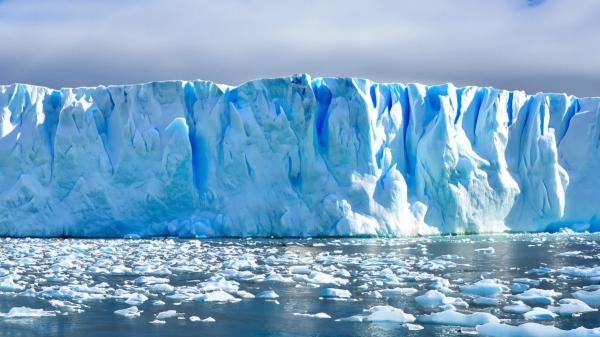
Sea level could rise between 50 and 60 meters if all the Antarctic ice melted
One of the most direct effects of the disappearance of Antarctic ice would be the rise in sea level. This continent is home to such a huge amount of ice that, if it were to melt completely, the world’s oceans could rise approximately 50 to 60 meters.
An increase of that magnitude would radically transform the map of the planet. Many coastal cities would be completely or partially flooded, and millions of people living near the sea would have to move inland. Large low-lying areas, such as river deltas and coastal plains, would be especially vulnerable.
However, it is important to clarify that such a scenario would not occur immediately. The Antarctic ice is so large that its complete disappearance would take many centuries or even millennia. Still, even a partial loss could cause sea level rises of several meters, which would already have significant consequences for coastal communities.
Sea level rise would not be uniform around the world. Factors such as ocean currents, gravity and the shape of continents can cause some regions to experience higher rises than others.
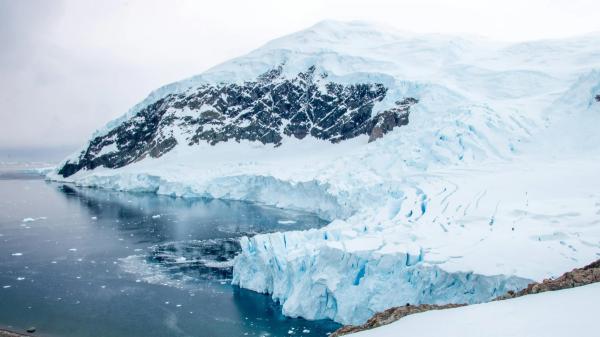
This is how the planet’s climate would change if much of the Antarctic ice disappeared
One of the most relevant changes would have to do with the loss of the albedo effect. As we mentioned before, ice reflects much of solar radiation. If that ice disappears and exposes the ocean, the dark surface of the water would absorb more heat. This process could intensify global warming and create a feedback effect that further accelerates ice loss.
Additionally, Antarctica influences the circulation of deep ocean currents. These currents are part of a global system that transports heat, nutrients and oxygen across the oceans. If melting ice were to alter this mechanism, it could produce changes in climate patterns in different regions of the world.
For example, some areas could experience variations in precipitation, while others could see their average temperatures or the frequency of extreme events change. Even regions very far from the Antarctic continent could notice these changes over time.
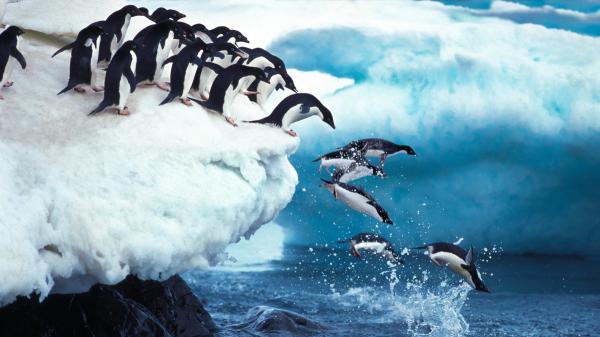
Krill, penguins and other marine animals would suffer the consequences of melting ice
Antarctica and its surrounding oceans are home to some of the most unique marine ecosystems on the planet. At the base of this ecological network is Antarctic krill, a small crustacean that feeds on algae that grow under sea ice. In turn, krill is a fundamental food source for many animals, such as whales, seals, penguins and many species of fish. If the ice were to decrease significantly, krill habitat could be altered, affecting the entire food chain.
It must also be taken into account that many species use ice as shelter or as a platform to rest, reproduce or hunt. Some penguins, for example, depend on sea ice to access areas rich in food. The reduction of these areas could force animals to change their routes or move to other areas.
Melting ice can also modify the temperature and salinity of the water, factors that influence the distribution of numerous marine species. These changes could favor some organisms, but also hinder the survival of others that are adapted to very specific conditions.
Could much of the Antarctic ice disappear in the coming centuries?
The disappearance of a large part of the Antarctic ice is a scenario that often appears in scientific studies and debates about the future of the climate, but it is important to understand that this is an extremely slow process compared to the human time scale.
The ice in Antarctica has been formed over millions of years and constitutes a gigantic mass. Even in the most extreme global warming scenarios, its complete disappearance would require many centuries or even thousands of years. However, this does not mean that significant changes cannot occur over shorter periods of time.
In recent decades, some glaciers and ice shelves have shown signs of weakening or retreating. Even so, the future of Antarctic ice depends on many factors, such as the evolution of global temperatures, ocean currents and the response of the glaciers themselves.
If you want to read more articles similar to If a large part of the ice in Antarctica disappeared, the sea could rise up to 60 meters: this is how the planet would change, we recommend that you enter our Climate Change category.
