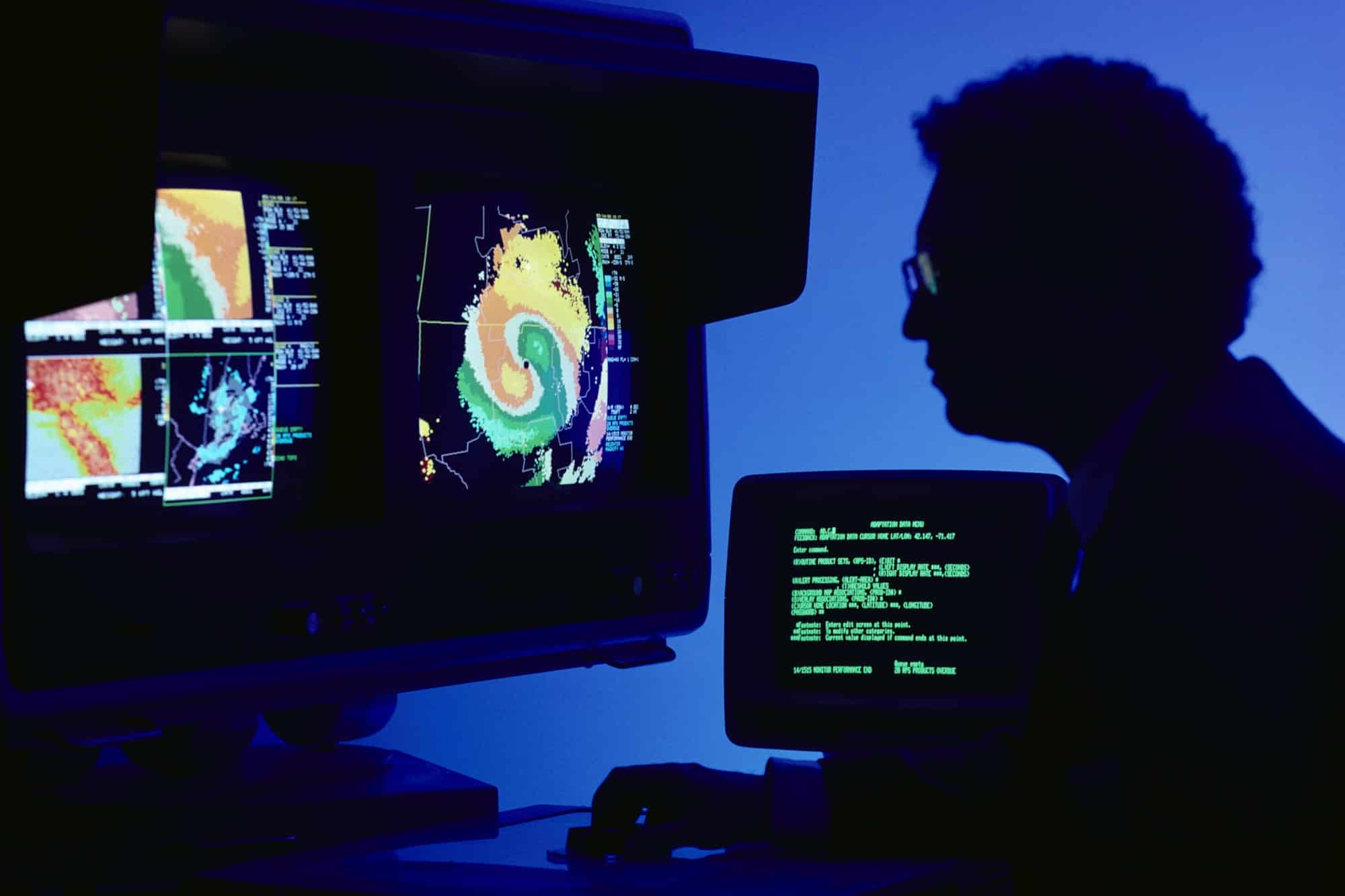
This summer we noticed it: predicting the weather is increasingly difficult, especially when it comes to extreme events. Yet, precisely because floods, hurricanes and storms are increasingly frequent, doing so is vitally important. Imagine being able to predict that in two weeks there will be a storm that will destroy the entire olive crop of the season: if we knew it now, we could take action (literally) in time.
Thanks to a new machine learning model capable of correcting errors in currently used weather forecast models, it may be possible to know more precisely not only whether it will rain in three or four weeks, but also the probability of an extreme climate event occurring. The details are published on Nature.
Challenging chaos theory
According to Edward Lorenz, a historic MIT professor and one of the fathers of chaos theory, minimal variations in the initial conditions of the weather can lead to completely different results. For this reason, he argued, it would be impossible to predict the weather more than two weeks in advance. But maybe he was wrong.
“In theory the atmosphere can create an infinite number of configurations, but in practice it always tends to fall into the same preferred patterns,” explains Judah Cohen, one of the authors.
Subseasonal forecasts
The authors of the study focused on so-called subseasonal forecasts, which try to guess what will happen in 2-6 weeks. “In most cases, making predictions of this type is equivalent to rolling dice in the casino,” comments Cohen, giving us an idea of the lack of precision of current models, even the best.
The new system applies to existing forecasting models, correcting their errors and greatly improving their accuracy. Using artificial intelligence, it learns from past errors made by the forecasting model to which it is applied, and adjusts new forecasts accordingly. The more data it has available, the better it improves.
To test its capabilities, last year the research team had it compete in the first edition of the AI Weather Quest, a competition between forecasting models organized by the European Center for Medium-Range Weather Forecasts (ECMWF), considered the most authoritative in the world.
Their proposal, called MicroDuet, combined the predictions of two models (the ECMWF one and a hybrid AI-based model) “cleaned” by the correction system. MicroDuet came first in all categories, beating models from six major international weather centers and being twice as accurate three weeks ahead and three times more accurate four weeks ahead than all models from major international weather centers.
Extra help for managing emergencies
The technique, which according to the results would improve forecasts on land in most regions of the world, already has those who want to test it in the field: the Kenyan meteorological service has stepped forward to adopt it and better predict the monsoons, with the aim of improving harvests as early as this winter. “It could help you decide when to fertilize based on rainfall, understand when a frost is coming to protect crops during winter harvests, or prepare for drought,” explains Cohen.
But the possible uses go beyond agriculture: being able to predict extreme events weeks in advance could avoid mass blackouts like the one that occurred in Texas in 2021 following winter storm Uri, allowing emergencies to be better managed, giving those who face them more time to prepare.
