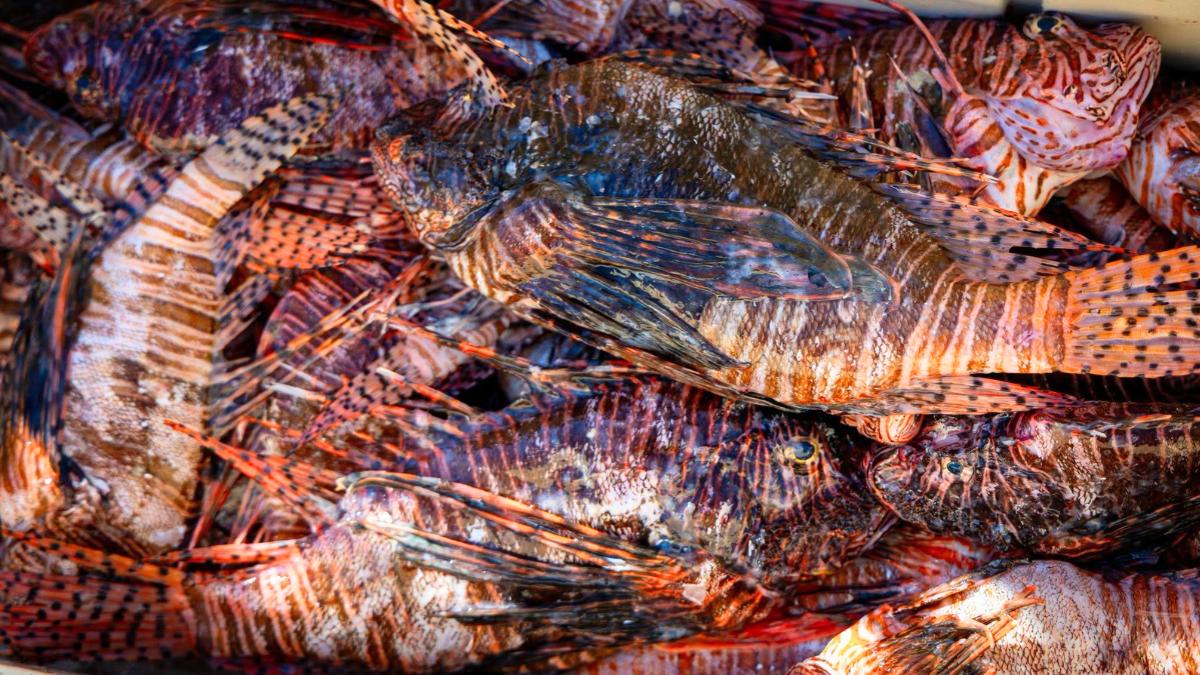
Florida has broken a new record in its fight against one of the invasive species that is of most concern in its marine ecosystems. For several months, hundreds of divers and commercial fishermen have participated in an initiative that has allowed the removal of 36,187 lionfish from the waters of the US state, a figure that exceeds the result of the previous year by more than 5,000 specimens.
The campaign seeks to stop the expansion of this predator, native to the Indian and Pacific oceans, which has spread throughout the western Atlantic, the Gulf of Mexico and the Caribbean. Its presence represents a problem for native fish and reefs, since it feeds on numerous species and finds few natural predators in these waters.
Florida removes more than 36,000 lionfish in record campaign
The Florida Fish and Wildlife Conservation Commission (FWC) has announced the results of the 2026 edition of the Lionfish Challengea competition that encourages the capture of this invasive species to reduce its impact on marine fauna.
According to official data published by the FWC, 533 people participated, who carried out a total of 1,468 diving days and managed to remove 36,187 specimens. The figure represents an increase of more than 5,000 fish compared to the 2025 edition and constitutes a record since the program began.
The competition took place between May 22 and September 14, during the summer months. Both recreational divers and commercial fishermen participated, who were eligible for different recognitions depending on their catches.
One of the most notable participants was Hunter Ledbetter of Monroe County, who earned the title of Lionfish King after withdrawing 1,541 copies. He also achieved the recognition reserved for military personnel and veterans. For her part, Helen Rodney, from Broward County, was named Lionfish Queen after capturing 1,488 fish.
The initiative aims to maintain citizen involvement in the control of a species whose expansion poses difficulties for the conservation of underwater ecosystems. However, the capture record does not mean that the problem is solved: the elimination of thousands of specimens can contribute to reducing their abundance in certain areas, but does not guarantee their disappearance from Florida waters.
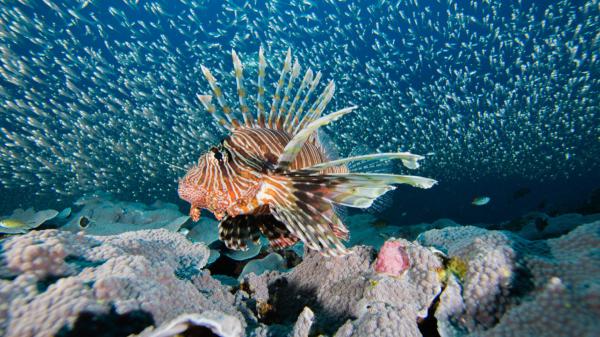
Lionfish, an invasive predator that threatens native fish
The lionfish stands out for its striking appearance, with reddish and white stripes, highly developed fins and long spines. However, behind its appearance lies a predator capable of altering the balance of the ecosystems in which it establishes itself outside its natural distribution area.
According to the Florida Museum of Natural History, this species is native to the Indian Ocean, the Pacific, and the Red Sea. Its presence in the western Atlantic was detected in the 1980s, and since then it has spread along the east coast of the United States, the Gulf of Mexico and the Caribbean.
Researchers believe that its introduction may have been related to the release or escape of specimens from the aquarium trade. Once in the natural environment, lionfish found favorable conditions to reproduce and colonize new territories.
One of the factors that explain its success is its diet. It is a generalist predator, capable of consuming a wide variety of small fish and crustaceans. This broad diet allows it to take advantage of different food resources and compete with native species.
Furthermore, in invaded waters it has few natural predators to regulate its populations. Its poisonous spines also act as a defense mechanism, making it difficult for other animals to consume it on a regular basis.
The combination of these characteristics favors its expansion and increases pressure on local marine communities. On reefs, the reduction of certain fish populations can have consequences that go beyond the species directly preyed upon, by altering feeding relationships and ecosystem functioning.
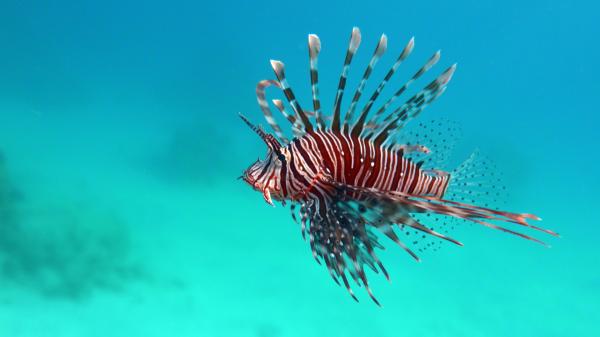
Why is it so difficult to stop its expansion in the sea?
The lionfish’s problem is not limited to its ability to capture native fish. Its high reproductive capacity, its adaptation to different environmental conditions and the difficulty of locating and removing all the specimens present in an area also influence it.
According to information released by the FWC when presenting the 2026 edition of the contest, a female can release up to 30,000 eggs every four days. This reproductive capacity helps populations recover even when numerous individuals are removed.
On the other hand, lionfish can inhabit different marine environments, including reefs and rocky areas where they find shelter and food. Its distribution and habits mean that catches depend largely on the places where the divers’ efforts are concentrated.
The University of Florida, through its IFAS extension service, points out that extraction programs can help reduce the abundance of this species, although it is not considered feasible to eradicate it by capturing adult specimens throughout its invaded area. To achieve significant reductions, it is necessary to maintain efforts continuously and direct them to the most vulnerable areas.
For this reason, Florida’s campaigns are not proposed as a one-time intervention, but as a tool to limit the impact of this predator. Fish removal can be especially useful in areas where the conservation of reefs and native populations requires priority attention.
A fight that also affects the Caribbean
The expansion of lionfish is not a problem unique to Florida. In the Caribbean, this invasive species also threatens native fish and reef-associated ecosystems.
To control their populations, capture campaigns are organized by trained divers and fishermen, as well as initiatives that encourage their consumption as food. These measures can reduce their abundance in certain areas, although they require continuity and monitoring.
The more than 36,000 specimens removed in Florida during 2026 demonstrate the mobilization capacity of these campaigns, but also the difficulty of stopping an already established species. The objective is to limit its impact on marine biodiversity and protect the most vulnerable habitats.
If you want to read more articles similar to Florida eliminates more than 36,000 lionfish in its waters: the invasive species that threatens marine biodiversity, we recommend that you enter our Ecosystems category.
