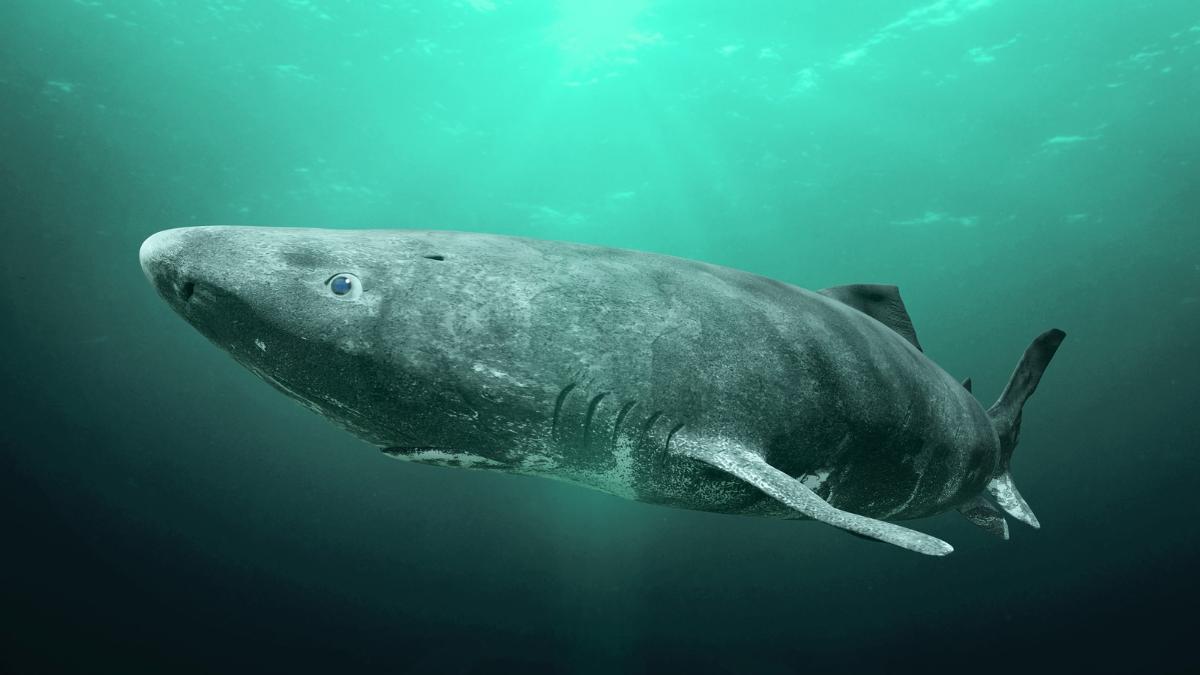
The Greenland shark is one of the longest-lived vertebrates on the planet, but its presence in Arctic fishing areas has opened a conflict between fishermen and those who defend its conservation. The reason is a proposal to sacrifice up to 1,000 specimens with the aim of reducing the economic losses that, according to the fishing sector, these animals cause.
The initiative, promoted by the Greenland municipality of Avannaata, was finally withdrawn after the Government questioned its legality. However, the debate remains open: while fishermen demand solutions to protect their equipment and catch, specialists warn that eliminating sharks that take more than a century to reach sexual maturity could have important consequences for the species and the ecosystem.
The plan to cull 1,000 Greenland sharks
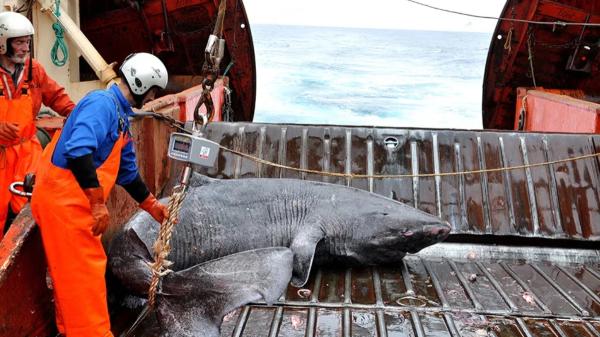
The proposal arose in Avannaata, a district in western Greenland whose administrative headquarters are located in Ilulissat. In this area, where fishing for greenland halibut and cod has an important economic weight, Greenland sharks frequently become trapped in the gear used to capture these species.
The plan included offering a reward of 300 Danish crowns for each shark delivered, an amount equivalent to about 40 euros. The objective was to reduce the presence of these animals in certain fishing areas and alleviate the losses suffered by workers in the sector.
Fishermen say sharks can cut fishing lines, take away snagged hooks and damage longlines, long fishing lines that have numerous hooks. Replacing this equipment is a considerable expense, especially for those who work with small boats and depend on their catch to maintain their income.
However, the Government questioned the legality of the initiative and the program was eventually scrapped. Therefore, it is not a sacrifice campaign that continues, but rather a withdrawn proposal that has put the conflict between fishing activity and the conservation of marine fauna back on the table.
The slowest shark in the world may be over 400 years old
The Greenland sharkSomniosus microcephalus), also known as the boreal shark, lives mainly in the cold, deep waters of the North Atlantic and the Arctic. It is a little-known species, adapted to an environment in which low temperatures and lack of light condition its way of life.
It can reach between six and seven meters in length and is considered the slowest shark in the world. However, the characteristic that most attracts the attention of researchers is its extraordinary longevity.
A study published in the scientific journal Science In 2016 he estimated, through radiocarbon dating of eye lenses, that these sharks can live for several centuries. The oldest specimen analyzed had an estimated age of about 392 years, with a wide margin of uncertainty, which placed the maximum potential longevity of the species above 400 years.
This ability to live for so long is related to extremely slow development. Studies estimate that the Greenland shark does not reach sexual maturity until approximately 150 years of age. This means that its population cannot recover quickly if there is a significant reduction in the number of individuals.

Why scientists question the elimination of these animals
The main concern is that a species that takes so long to reproduce may be especially vulnerable to fishing pressure. If too many individuals are removed in a short period, it could take many decades or even centuries to recover the losses.
Marine conservation specialist Nick Dulvy, from Simon Fraser University in Canada, has warned of the enormous biological sensitivity of these sharks to overfishing. In addition, the species still bears the consequences of decades of captures aimed at taking advantage of its liver oil.
In 1948, one of the highest historical levels of exploitation was recorded, with 58,000 specimens landed. Although that commercial activity decreased after the 1960s, accidental capture continues to be a problem.
Estimates cited by specialists suggest that thousands of Greenland sharks are trapped in fishing gear each year. Added to this is the difficulty of knowing precisely the size and evolution of their populations, because these animals live in deep waters and can travel great distances.
Conservation organization Oceans North Kalaallit Nunaat has also questioned the effectiveness of localized removal. According to their arguments, these sharks can travel up to 2,000 kilometers a year, so specimens removed from one area could be replaced by others from different regions, without solving the underlying problem.
Alternatives to protect fishermen without sacrificing sharks
The controversy reflects a problem that goes beyond the presence of a species in the fishing grounds. For fishermen, losing gear represents direct economic damage; For conservationists, a removal campaign could worsen the situation of an animal whose reproduction is extraordinarily slow.
Among the alternatives proposed are compensating for equipment losses, improving the recovery of abandoned gear and studying devices that reduce contact between sharks and fishing instruments. The importance of establishing measures that reduce accidental captures and allow for better recording of how many specimens are trapped has also been noted.
The so-called ghost lines, that is, fishing lines and other gear lost or abandoned at sea, add another difficulty. These pieces of equipment can become entangled with new equipment, damage machinery, and continue to trap animals. Removing them would help reduce both costs for the sector and the impact on marine fauna.
The challenge is to find solutions that take into account the economic needs of fishing communities and the conservation of a species that is also exceptional. The Greenland shark not only stands out for its longevity: its slow growth means that each loss can have lasting consequences. Therefore, before resorting to their elimination, it is essential to evaluate measures that reduce damage to the gear without compromising the recovery of their populations.
If you want to read more articles similar to Greenland considers whether to sacrifice 1,000 specimens of the oldest shark in the world and science questions the measure, we recommend that you enter our Biodiversity category.
