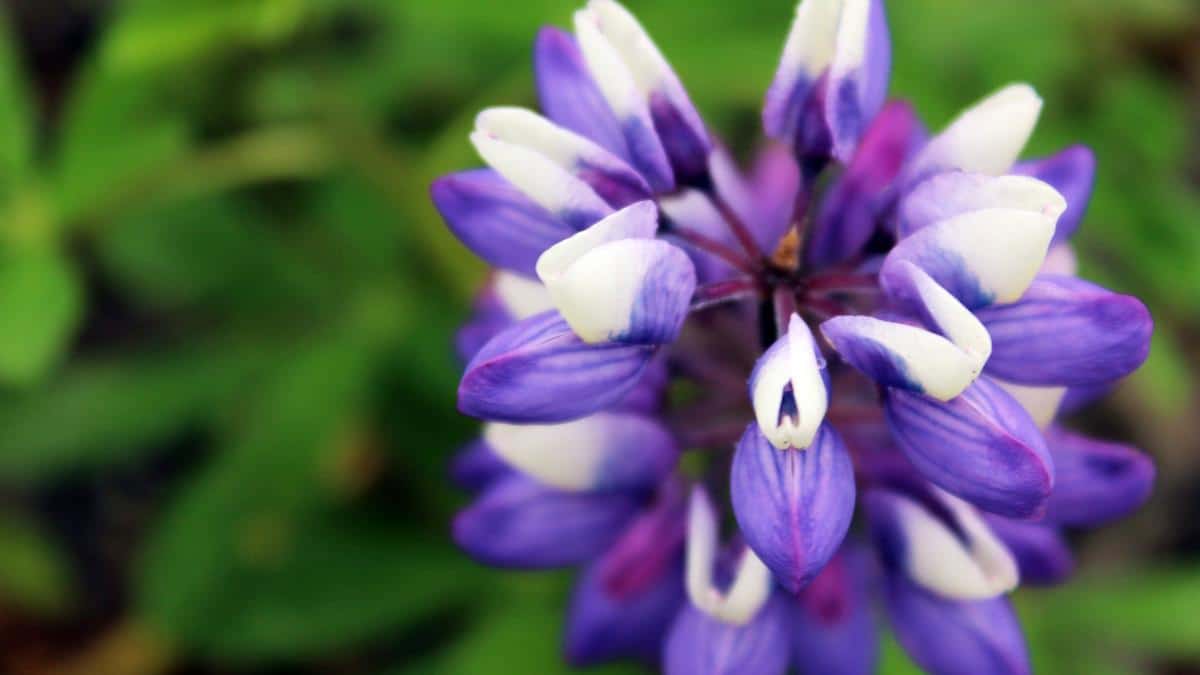
In 1945, Iceland introduced the Nootka lupine (Lupinus nootkatensis), a plant native to North America, with the hope of recovering degraded soils and stopping erosion. Its ability to improve soil fertility seemed a promising solution for a country marked by the loss of vegetation. However, over the decades, the species has spread across large areas of the island and has begun to displace native plants.
A study published in the scientific journal Frontiers in Plant Science In June 2018, he analyzed the effects of this expansion on plant biodiversity and calculated how far the plant could reach in the coming decades. The results show that their presence can reduce the richness of species in certain habitats and that climate change could favor their advance.
The plant that Iceland introduced to recover its soil and stop erosion
Iceland had been suffering significant soil degradation for centuries. Deforestation, grazing and harsh environmental conditions had contributed to the loss of vegetation, leaving extensive areas exposed to erosion caused by wind and water.
In this context, the Nootka lupine was presented as a tool to recover degraded lands and promote reforestation. Native to the coastal regions of Alaska and Canada, this herbaceous perennial plant stands out for its ability to colonize poor soils and stabilize exposed terrain.
One of its main characteristics is that it belongs to the legume family and can fix atmospheric nitrogen through an association with bacteria in its roots. This process enriches the soil and can facilitate the establishment of other plants in places where vegetation barely manages to develop.
The problem is that this same capacity can alter the balance of ecosystems. In cold environments, available nitrogen is an important factor for plant growth, so its incorporation in large quantities can benefit some species and harm others.
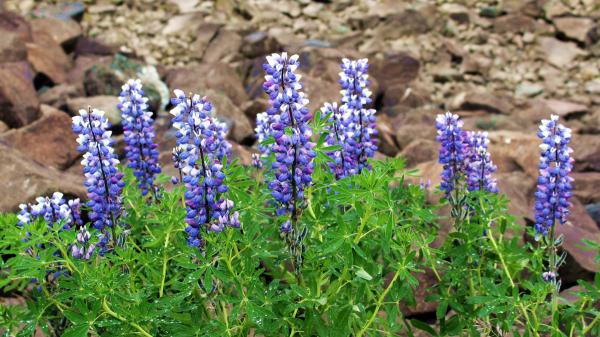
The spread of Nootka lupine across the Icelandic lowlands
With the passage of time, the lupine was no longer limited to the lands where it had been introduced. The successive plantations and the dispersal of its seeds favored its expansion, especially in the lowlands and areas close to roads and inhabited areas.
The study by Vetter and other researchers, published in 2018, analyzed records of the species’ presence and developed models to estimate which areas of Iceland were suitable for its growth.
According to their results, under the reference climatic conditions used by the researchers, around 13.3% of the country’s land area had suitable conditions for lupine. The model also identified roads and human activity as relevant factors to explain its distribution.
In 2016, the plant was registered up to 572 meters of altitude. However, the study’s climate projections suggested that it could reach levels close to 1,100 meters between 2061 and 2080, expanding its presence towards the Central Highlands.
The authors calculated that the area potentially suitable for the species could increase to between 39.1% and 61.7% of the Icelandic territory, depending on the climate scenarios analyzed. These figures represent estimates of potential habitat, not a prediction that the plant will necessarily occupy that entire area.
Nootka lupine reduces native plant diversity
To study the impact of this species, the scientific team carried out field work in Morsádalur, a valley located in the Vatnajökull National Park, southeast of Iceland. There he compared 27 plots of three habitat types: heathland, grassland and birch forest.
The plots had different levels of lupine coverage, from areas without the presence of the plant to others where vegetation dominated. The researchers evaluated species richness, plant diversity and changes in community composition.
The results showed that plant diversity decreased significantly in heathland and forests when lupine cover was high. In the heath, the habitat with the greatest species richness of the three studied, the number of plant species decreased as the presence of the invasive plant increased.
Among the affected species were small rosette plants, cushion plants, orchids and slow-growing shrubs. The researchers also observed changes in vegetation composition, with an increase in some species adapted to nitrogen-rich soils.
However, the effect was not identical in all environments: the study did not detect a significant reduction in plant diversity in the meadows analyzed. This difference demonstrates that the impact of an invasive species depends on both its characteristics and the habitat in which it establishes itself.
The Icelandic Institute of Natural Sciences also identifies the Nootka lupine as an invasive alien plant in the country. In its information on invasive plant species, the entity warns that these plants can modify ecosystems and threaten biodiversity.
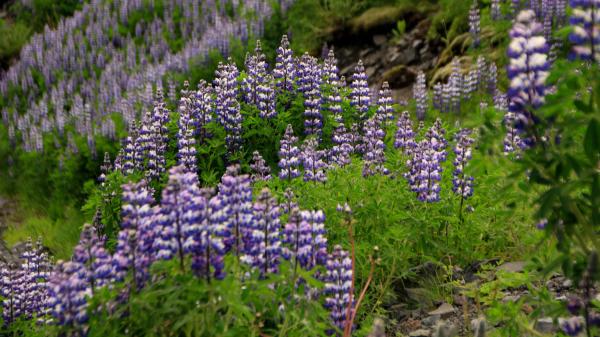
Climate change could favor its expansion
Global warming adds another difficulty to Nootka lupine management. The models published in Frontiers in Plant Science They suggest that the increase in temperatures could cause new areas of Iceland to meet suitable conditions for their establishment.
If the plant continues to spread, some habitats that support cold-adapted species could experience major changes in their composition. In addition, the nitrogen that it incorporates into the soil can favor the establishment of other plants that also alter the native vegetation.
Researchers point out that the expansion of this species represents a challenge for the conservation of ecosystems and for environmental restoration projects themselves. A plant capable of recovering bare soil can be useful in highly degraded land, but its introduction near natural habitats rich in species can have different consequences.
Therefore, the point is not to rule out any intervention to recover eroded soils, but to choose the appropriate species for each environment and control their long-term effects. In Iceland, the Nootka lupine shows how a solution designed to improve the natural environment can become a threat when its expansion upsets the balance of ecosystems.
If you want to read more articles similar to In 1945 they planted it in Iceland to stop erosion and now this invasive plant threatens the island’s native flora, we recommend that you enter our Ecosystems category.
