
Can sheep wool help stop glacial melting? Four Swiss students have put this solution to the test in the Alps with a three-month experiment. They covered 200 square meters of ice with natural wool and managed to reduce its melting by more than 50%, opening the door to a more sustainable alternative to protect these natural reserves against climate change.
The initiative seeks to take advantage of the properties of a natural and biodegradable material to protect snow and ice during the warmer months. Compared to the synthetic fabrics currently used in some mountain areas, sheep wool could offer an option with less environmental impact. Although the results are promising, it is still necessary to study its long-term effectiveness and its application possibilities in other glaciers.
They cover 200 square meters of a glacier in the Alps with sheep wool
Climate change is accelerating the loss of ice in the mountains and has led to the search for alternatives to protect glaciers during the warmer months. In Switzerland, four students from the University of Lausanne have tested a solution based on sheep wool.
The project managed between the University of Lausanne and the Summit Foundation is called Keep It Wool and was developed between June and September 2026 on glacier 3000, located in Les Diablerets, in the canton of Vaud. The initiative consisted of covering an area of 200 square meters with wool to see if it could reduce the loss of snow and ice during the summer.
The team installed two covers of natural and biodegradable Swiss wool, each measuring 10 by 10 meters, with different thicknesses. In addition, he placed a synthetic geotextile cover of the same size to compare the behavior of both materials under similar conditions.
The blankets were secured using recycled malt sacks filled with gravel. To evaluate its effectiveness, the researchers placed stakes in the protected areas and took measurements approximately every two weeks throughout the experiment.
The test was carried out in parallel with the snow conservation practices already used in the area, known as snow farming, which allow part of the snow to be stored during the warm months to have it available in the following winter season.
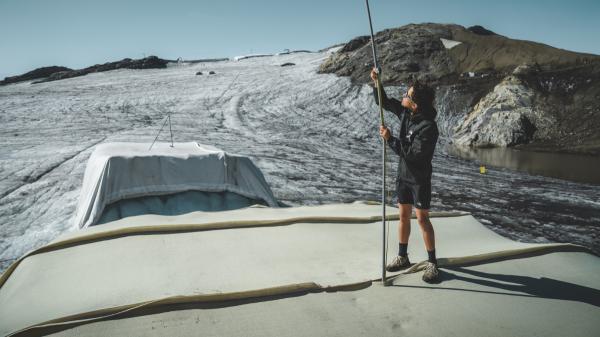
Three months of testing: sheep wool manages to stop the loss of snow and ice
After three months of monitoring, the results of the Keep It Wool project were encouraging. The two wool covers installed on glacier 3000 showed a protection capacity comparable to that of the synthetic geotextile used as reference. Wool managed to reduce the loss of snow and ice in covered areas, which supports its possible use as an alternative to synthetic fabrics. The material acts as a physical barrier that limits the direct exposure of the glacier surface to solar radiation and helps preserve the ice during the summer.
However, the data must be interpreted with caution. The published results are preliminary and the measurements obtained still need to be analyzed in depth to determine the performance of the coverage in the long term and under different meteorological conditions.
One of the main aspects that make this proposal interesting is its lower potential environmental impact. Conventional geotextiles are typically made from petroleum-derived materials such as polyester or polypropylene, the wear and tear of which can release microplastics in mountain environments. Sheep wool, on the other hand, is a natural, renewable and biodegradable resource.
In addition, the project plans to take advantage of a material that is discarded in large quantities in Switzerland. According to information released about the initiative, up to 70% of the wool produced in the country may end up unused, since sheep farming is mainly oriented towards other products and activities.
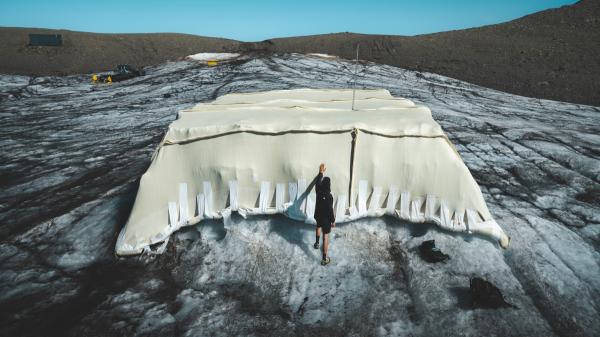
Wool seeks to replace synthetic fabrics that protect glaciers
For about two decades, textile covers have been used in some areas of the Alps to reduce the loss of snow and ice during the summer. Now, the Keep It Wool project proposes replacing synthetic materials with a natural and biodegradable alternative.
The initiative is framed in a worrying context for the country’s glaciers, which have lost a significant part of their volume in recent years. Given this situation, different solutions are being investigated to preserve ice in specific areas, especially in places where its maintenance is important for tourist activities and ski resorts.
Among the main proposals, the following stand out:
- Sheep wool covers: they protect certain surfaces from ice and snow and solar radiation, with the advantage of using a renewable and biodegradable material.
- Synthetic geotextiles: they have been used for years to reduce melting in defined areas. Although they have proven useful, they present environmental drawbacks related to the release of microplastics.
- Snow conservation during the summer: known as snow farming, it consists of storing snow under protective covers to reuse it during the following winter season.
Wool can protect some ice, but it won’t save glaciers on its own
Although the Keep It Wool experiment has obtained promising results, those responsible warn that this technique has limited scope in the face of glacial retreat. Protective blankets, both made from wool and synthetic materials, currently cover around 0.02% of Switzerland’s glacial area. Together, they allow us to conserve about 300,000 cubic meters of snow per year, a small amount compared to the nearly 1,000 million cubic meters of ice that the country loses annually.
The objective of the coverage is not to completely stop the thaw, but to slow it down in specific areas. Therefore, even if wool proves to be an effective and sustainable alternative to conventional geotextiles, its large-scale application would not be enough to prevent the disappearance of alpine glaciers.
For this reason, researchers emphasize that reducing greenhouse gas emissions remains essential to limit the retreat of glaciers. Wool blankets can help temporarily conserve some snow and ice, but stopping global warming requires measures to address its causes.
If you want to read more articles similar to Swiss students cover a glacier with 200 m² of sheep wool and manage to reduce melting by more than 50%, we recommend that you enter our Climate Change category.
