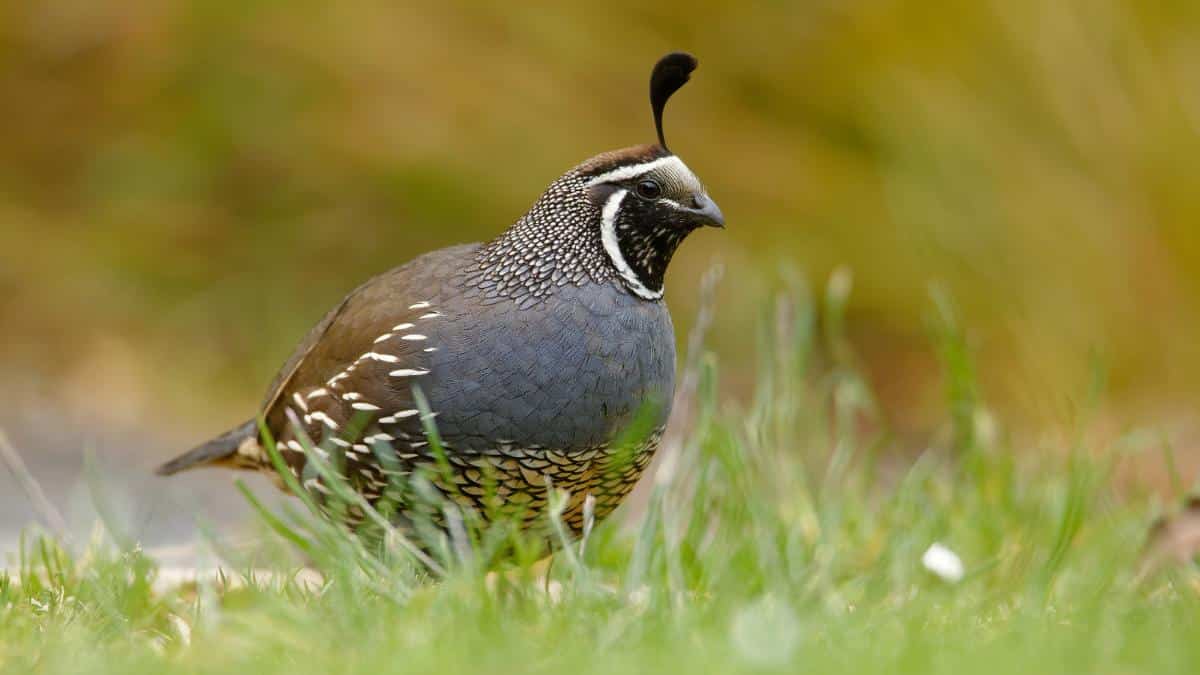
The California quail (Callipepla californica) is a small bird native to North America that arrived in Argentina more than a century ago through human intervention. What began as a series of introductions of specimens from Chile ended up becoming an expansion process that has modified its geographical distribution.
Currently, this exotic species is established in different areas of Patagonia and its presence has been documented even in the province of Santa Cruz, much further south of the places where the first releases began.
Their story is an example of how the introduction of animals outside their natural range can have long-lasting consequences. However, researchers warn that its impact on Argentine ecosystems is still not sufficiently known.
This is the California quail, the bird native to North America
The California quail belongs to the family Odontophoridaea group of American galliformes birds. Although it shares some characteristics with European quails, it belongs to a different family.
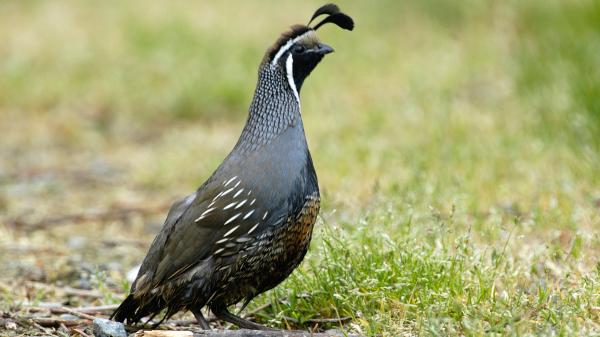
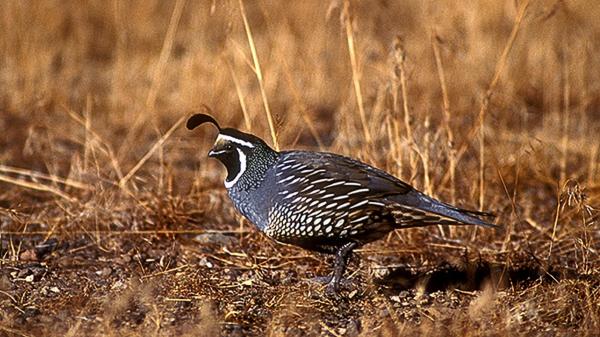
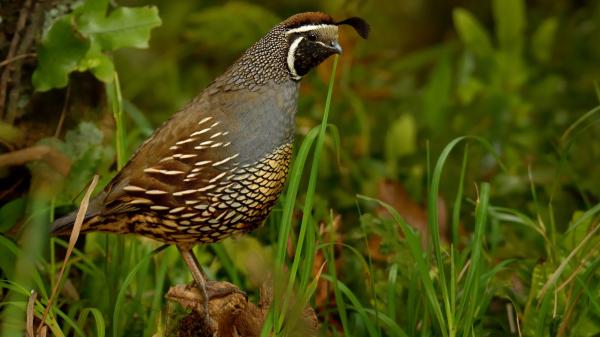
It measures approximately 20 centimeters in length and has an unmistakable appearance thanks to the tuft of dark feathers that protrudes from its head.
Males have a black throat, a bluish-gray chest, and very visible white markings around the face. The females have brown and grayish colors, which favor their camouflage among the vegetation.
It is a mainly terrestrial species, adapted to running through the bushes. When it feels threatened, it can take a short, fast and noisy flight.
Its diet is mainly based on seeds and other plant materials, although it can also consume small invertebrates. For much of the year it forms flocks that seek food and shelter among the vegetation.
According to its file in the Biodiversity Information System of National Parks of Argentina, it occupies transition forests, shrub steppes and environments modified by human activity.
The first releases in Argentina were not always successful
The history of the California quail in South America began in Chile, where it was introduced during the 19th century. An investigation published in 2023 in the scientific journal Chilean Magazine of Natural History reconstructed the successive introductions and their territorial expansion.
The study indicates that in 1920, 25 pairs from Valparaíso were released in Las Heras, near the Argentine city of Mendoza. Two years later, approximately 4,000 additional copies were introduced.
Although they initially managed to acclimatize, those populations were unable to maintain themselves. The last known wild specimen from Mendoza was collected in 1956. The result was different in Neuquén. In 1943, ten pairs were released in a ranch located next to the Traful River. These birds reproduced and began to spread through the valleys of the Limay and Caleufú rivers and towards the basin of Lake Nahuel Huapi. Later, other releases facilitated its expansion towards Río Negro and Chubut.
The process demonstrates that the establishment of an introduced species does not depend solely on the number of specimens released. Environmental conditions, food availability and reproductive capacity also influence.
From Neuquén to Santa Cruz: the expansion of the quail through Patagonia
Although today there is no sufficiently consolidated national estimate to establish how many California quail live in Argentina, their presence is not limited to isolated specimens. The species has managed to form reproductive populations and may be common in certain areas of Patagonia.
The Argentine Biodiversity Information System indicates that its populations experience significant fluctuations. Some years it can be abundant, while winters with heavy snowfall cause considerable decreases, especially in areas close to the mountain range.
Scientific research published in 2023 documented an Argentine distribution that covered approximately 1,400 kilometers between its extreme records, although that distance does not mean that it continuously occupies all of the intermediate territory.
One of the most relevant events was his documented arrival in Santa Cruz. On February 4, 2022, researchers recorded two specimens in El Portezuelo, in the northwest of that province. They also found numerous footprints that suggested the possible presence of other individuals.
The discovery was published in the scientific journal Nuestras Aves, by Aves Argentinas, and constituted the first confirmed record for Santa Cruz. Until then, the known southern limit of the species in Argentina was located in Chubut.
However, there is an important uncertainty: the observed specimens could come from Argentine populations that advanced south or could have arrived from Chile. Therefore, the record demonstrates an expansion of its known distribution, but does not by itself confirm the existence of a stable breeding population in Santa Cruz.
What is known about the impact of this exotic bird on biodiversity
The California quail is officially recognized as an exotic species introduced in Argentina. Their presence raises questions about the consequences of incorporating animals into ecosystems where they did not evolve naturally.
Among the possible effects that should be studied are competition for food resources, interactions with native birds and the transmission of parasites.
But it would be incorrect to affirm that the quail is currently causing widespread ecological damage in Patagonia, because the available research does not yet support that conclusion. The study published in Chilean Magazine of Natural History precisely underlines the need to investigate its effects on other species and determine more precisely its behavior as an introduced organism.
Scientists also highlight that its history offers an opportunity to study adaptation processes and genetic changes in populations established outside their original territory.
More than a hundred years after the first releases, the California quail remains an example of the long-term consequences of the introduction of exotic species. Their arrival in Santa Cruz, Argentina, demonstrates the ability of some birds to colonize new environments, but also reminds us of the importance of monitoring these processes before their possible effects on biodiversity become difficult to control.
If you want to read more articles similar to Argentina introduced quail from California more than 100 years ago and now reaches Santa Cruz while continuing to expand through Patagonia, we recommend that you enter our Ecosystems category.
