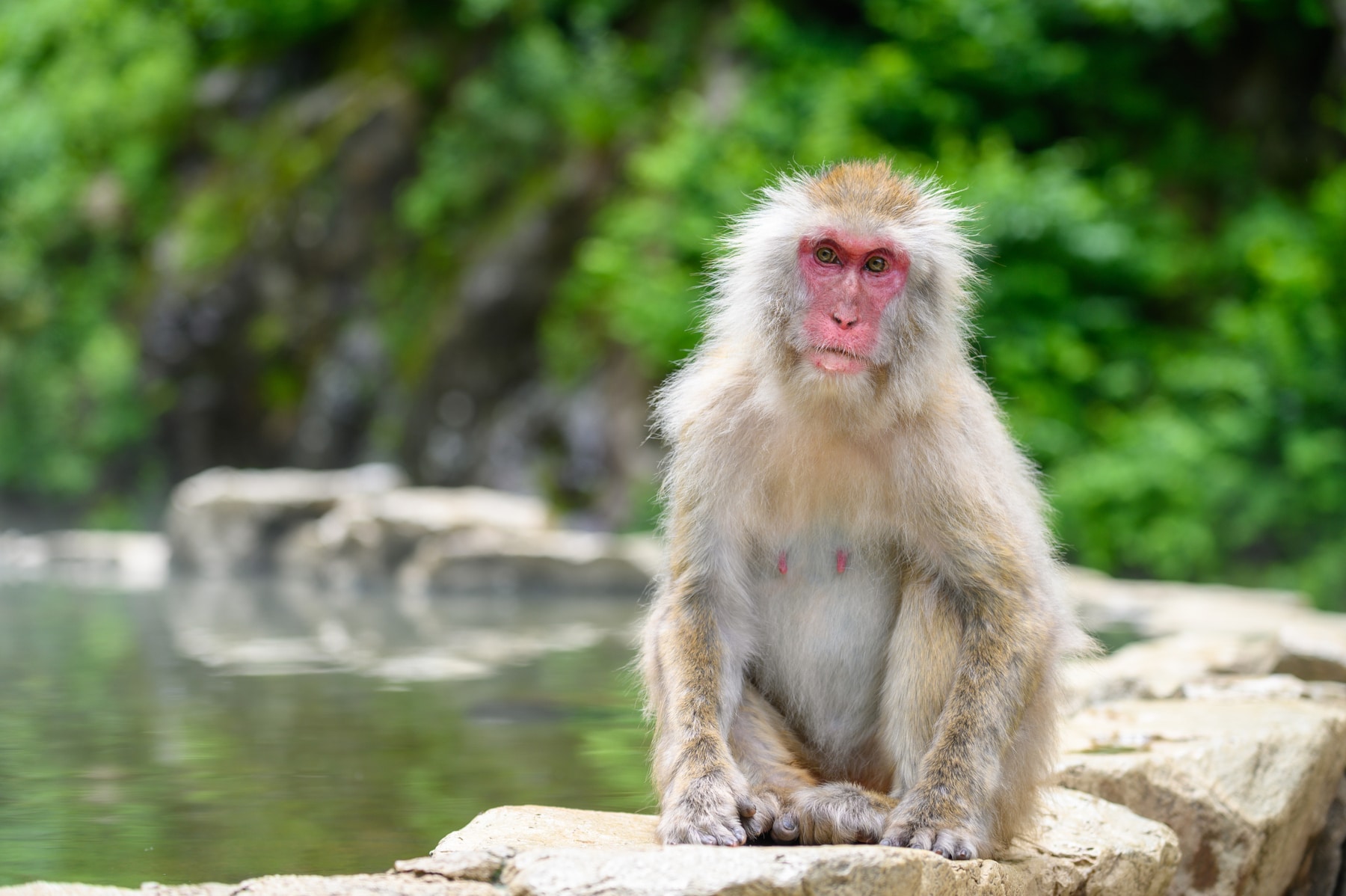
When an epidemic of some disease breaks out (or even, as we well know, a pandemic), one of our first reactions is to worry about contamination, and start paying attention to all its possible sources – even when we don’t know exactly how the said disease is transmitted. It is a prudent approach which, as demonstrated by a study published in Royal Society Open Scienceis not exclusively human: even macaques that have experienced a health emergency change their behavior and pay more attention to what they eat.
Healthy food or contaminated food?
The discovery occurred almost by chance in a primate sanctuary in Texas, where the University of California San Diego has been conducting studies on their behavior for years. Four groups of Japanese macaques live here, arriving in the United States in 1972 and who have since occupied different areas of the reserve, without contact with each other. In 2020, three out of four of these groups were hit by an outbreak of simian retrovirus type II, a disease that can also lead to the death of macaques.
The outbreak was “solved,” giving researchers the opportunity to see how macaques react to the disease. 55 specimens were tested, faced with a choice: on one side the food placed on a perfectly clean wooden surface, on the other the same food but presented on a “plate” on which epoxy resin had been spread. Under the resin the researchers placed macaque feces: visible, but isolated and therefore not dangerous for the animals.
The evolution of disgust
Of the four groups, the one that had not been affected by the retrovirus was the only one that reacted by ignoring the feces: in 80% of cases they ate from the contaminated plate without having too many problems; for comparison, in the other three groups this percentage dropped to 47%. Not only that: the macaques in the infected groups all reacted in the same way to the contaminated food, regardless of whether they had become ill or not.
Curiously, the virus in question is not transmitted through food but is present in the blood and saliva of macaques: contamination is almost always caused by bites or scratches. However, this did not change the behavior of the primates: despite not knowing the methods of transmission of the disease, they preferred to approach contaminated food with extreme caution. According to the authors of the study, the discovery is directly linked to the evolution of disgust, a fundamental reaction to protect ourselves from pathogens – in us humans, but also, apparently, in our closest relatives.
