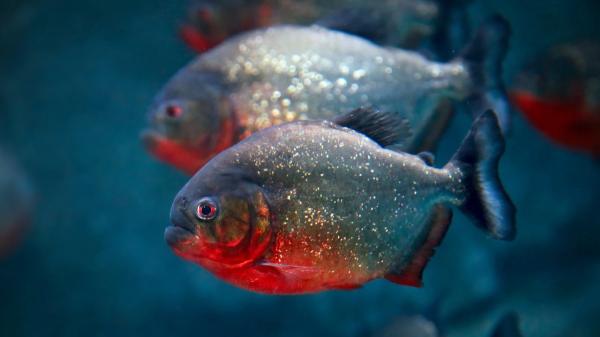
A piranha caught in a fishing net didn’t seem like a good starting point to transform a town. In Jenipapo, a small community on the island of Marajó, in the Brazilian state of Pará, those fish had little commercial value and were often discarded by fishermen. Until the Italian Jesuit priest Giovanni Gallo decided to look at them differently.
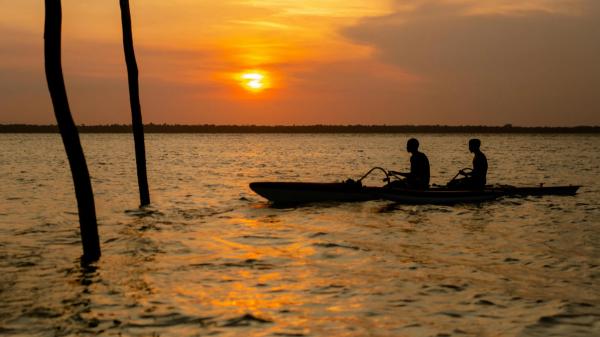
The story occurred in the 70s in a region conditioned by water. The Marajó archipelago combines rivers, mangroves, forests, savannahs and extensive fields that remain flooded for several months of the year. Hydrography determines both its ecosystems and the daily lives of its inhabitants.
Gallo arrived there with an idea that today could be described as an economy based on local resources, although then it had a much more immediate purpose: to raise money to improve the living conditions of a practically isolated community.
The piranhas that nobody wanted ended up being sold in Europe
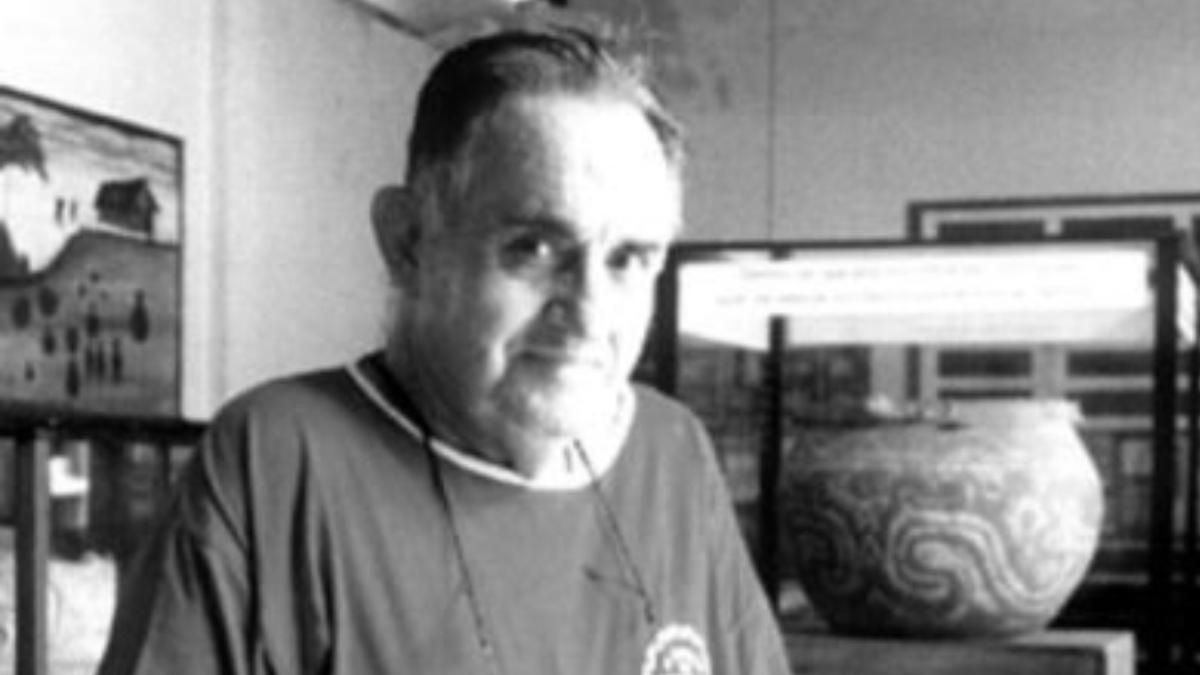
Born in Turin in 1927, Gallo was a priest of the Society of Jesus and settled in Jenipapo, next to Lake Arari, in the first half of the 1970s. A study on the history of the Museu do Marajó describes the place he arrived at as a community without running water, electricity or telephone.
His first response was not piranhas. He promoted courses, craft activities and other initiatives and even proposed the creation of a fishermen’s cooperative. But during his travels he observed something apparently insignificant: numerous piranhas were trapped in the nets and had little economic use.
Thus was born the so-called Piranha Project. Gallo created a small laboratory and taught Jenipapo residents, especially women, how to prepare and embalm the fish. The fishermen brought the specimens that appeared in their nets and, once treated, they became pieces that could be sold as exotic objects.
The operation reached a surprising scale. Around 12,000 piranhas were prepared, which were sold in Europe and other markets. The experience is documented both in research on Gallo and in the history of the Marajó Museum itself.
More than an extravagance starring a priest, the project functioned as a small productive chain: a resource that practically had no market in the area generated local work, was sold abroad and the money returned to the community.
12,000 piranhas that ended up turned into bridges
Here appears the most extraordinary part of the story. The profits were not only used to maintain the project. They served to finance infrastructure that was especially important in a territory where getting around could be complicated during high waters.
Various historical reconstructions attribute to the project the financing of about 350 meters of wooden bridges and walkways, a pier, a cemetery and a landing strip of about 800 meters. The runway allowed small aircraft to operate and improved communications for a population far from large urban centers.
The importance of water helps to understand why these works had so much value. An official plan on Marajó indicates that, in numerous locations in the archipelago, rivers have historically functioned as essential means of transportation and communication. Seasonal floods are not an anomaly: they are part of the ecological functioning of the region and condition the way of living in it.
That is why it is appropriate to qualify a version of this story repeated in recent years. Gallo did not sell piranhas to “save the Amazon” in a strictly ecological sense. Their project sought to improve the economic, social and communication conditions of an Amazonian community by taking advantage of a resource available in its environment. And the piranhas were only the beginning.
The legacy of the piranhas ended up being a museum
While working with the inhabitants of Marajó, Gallo became increasingly interested in their history. Neighbors found fragments of ancient ceramics and gave them to them. He began to preserve them, documented local customs, legends and practices and gradually formed a heritage that would end up becoming the Marajó Museum.
The project was born informally in Santa Cruz do Arari and later moved to Cachoeira do Arari. His approach was unusual: Gallo wanted a museum that was not limited to storing objects behind display cases, but that allowed one to understand the Marajoara culture by touching and experimenting.
From this philosophy emerged his famous “caipira computers”, ingenious devices built with wood, wheels, ropes, plates and cranks that offered information when the visitor manipulated them. Gallo himself said that the inhabitants of Marajó had “their eyes on the tips of their fingers.”
His idea survived his death, which occurred in 2003. The museum was restored by the Government of Pará and reopened in 2022 after an intervention of 3.8 million reais. It preserves thousands of archaeological and ethnographic pieces and continues to function as a space for the preservation of Marajoara memory. In 2025, the addition of a movie theater was also announced.
In April 2026, Cachoeira do Arari took an even more symbolic step: a municipal law recognized the Museu do Marajó and the work of Giovanni Gallo as material and intangible cultural heritage.
More than half a century later, that may be the most unexpected consequence of those piranhas that no one wanted to buy: they not only financed wood, walkways and an airplane runway. They also helped launch an institution designed to preserve the memory of those who lived there.
If you want to read more articles similar to In 1970, a priest sold 12,000 piranhas in Europe and used the money to help a community in the Amazon, we recommend that you enter our Ecosystems category.
