
A practically disappeared reef once again became a marine ecosystem full of life thanks to an unexpected solution: using dolomitic limestone to rebuild its structure. For years, degradation had reduced this habitat to a sandbar, without the firm surfaces oyster larvae need to settle and grow.
The project, developed on the coast of Florida, caused oyster density to go from almost zero values to 244 specimens per square meter in just five years, demonstrating the potential of reef restoration to recover degraded marine habitats.
This is how the Florida oyster reef lost its biological wealth
Lone Cabbage Reef, located near the mouth of East Pass of the Suwannee River on Florida’s Gulf Coast, was an important habitat for oysters for decades. However, its population progressively decreased until the structure lost much of its biological richness and ended up becoming a sandbank.
The disappearance of this ecosystem had consequences that went beyond the reduction in the number of oysters. These reefs provide shelter and food for fish and other marine species, contribute to the maintenance of local fisheries and help cushion the impact of waves on the coast.
Between 2010 and 2017, researchers conducted field studies and small experiments to understand why the reef was failing to recover naturally. The results pointed to a fundamental problem: the seabed had lost much of the hard surfaces that oyster larvae need to attach and develop.
The dolomitic limestone that allowed the oyster habitat to be recreated
Large-scale restoration of the reef began in the summer of 2018 with support from the National Fish and Wildlife Foundation. The project brought together researchers from the University of Florida, local businesses, quarry operators and members of the Cedar Key Oystercatchers Association, who collaborated to rebuild the deteriorated habitat.
The solution was to spread locally sourced dolomitic limestone over the surface of the ancient reef. To do this, they used blocks of different sizes, between approximately 15 and 91 centimeters, with which they recreated an irregular structure similar to that of natural reefs.
The design also took into account the height of the terrain. The new surface reached between 38 and 46 centimeters, dimensions similar to those of other healthy reefs in the area. This was important because oyster larvae, known as spatthey need firm surfaces to adhere to to begin to develop.
In addition, the spaces between the rocks offered protected areas in which young oysters could settle and grow. In this way, the intervention was not limited to placing material on the seabed, but rather sought to reproduce the physical conditions necessary to recover the ecosystem.
The oyster reef began to recover in just six months
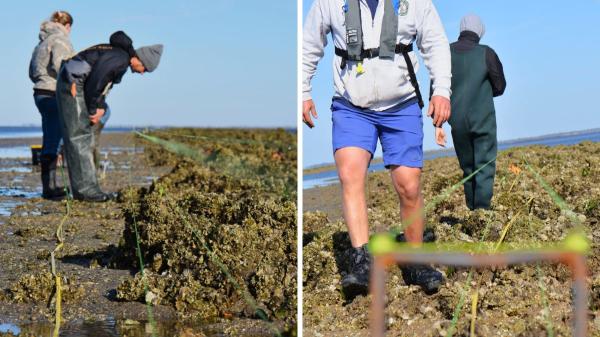
The first results of the intervention were visible much sooner than expected. In the six months after the reconstruction of the reef, the density of live oysters went from practically zero values to about 91 specimens per square meter. This increase confirmed that the new structure was providing the necessary surfaces for the larvae to settle and develop.
The recovery did not stop during the following years. Checks carried out by the researchers showed that the density continued to grow, reaching approximately 244 live oysters per square meter in the fifth year after restoration.
These figures reflect that the intervention not only managed to attract new oysters, but also allowed for the progressive recovery of a population capable of developing on the reconstructed reef. The dolomitic limestone had provided a stable base to favor the settlement of new specimens and the growth of subsequent generations.
The recovery of the oysters made it possible to reestablish part of the ecological functions that had been lost with habitat degradation. As the specimens grew and grouped, they contributed to forming a three-dimensional structure that offered shelter to other marine organisms and improved environmental conditions.
Why reef restoration helps restore balance to the marine ecosystem
Oyster reefs play a critical role in coastal ecosystems, providing food, shelter and breeding grounds for numerous marine species. As oysters clump together and form new structures, they create spaces between their shells that can be used by fish, crabs, and other invertebrates. In this way, the reconstruction of the reef contributes to recovering a much more diverse habitat than that offered by the old degraded bottom.
Another of its benefits is related to the quality of the water. Oysters feed by filtering particles and microorganisms present in the water, so a healthy population can help reduce the amount of suspended matter and promote more suitable conditions for other organisms.
They also help protect coastal areas from wave action. Reef structure can reduce some wave energy and limit erosion, an especially important function in regions vulnerable to storms and sea level rise.
The Florida case shows that it is possible to recover reefs that seemed lost
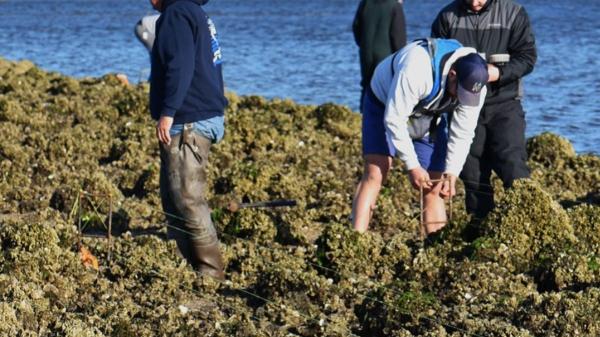
The recovery of the Lone Cabbage Reef demonstrates that the degradation of some marine ecosystems does not have to be irreversible. Florida’s experience shows that, when the causes of its deterioration are correctly identified, it is possible to apply relatively simple solutions to promote its recovery.
Although each ecosystem has different characteristics and needs, the results obtained in Florida show that combining the physical recovery of the habitat with long-term scientific monitoring can make a difference. A reef that seemed lost managed to once again become an environment capable of housing a growing population of oysters and recovering part of its ecological functions.
If you want to read more articles similar to In 2018, Florida rebuilt an oyster reef that had become a sandbar: just five years later, it went from almost zero to 244 oysters per square meter, we recommend that you enter our Ecosystems category.
