
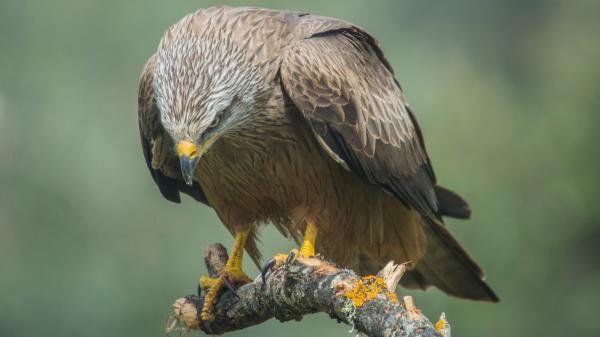
In Doñana, the shortage of rabbits and the long periods of drought are altering the relationships between some of the animals that inhabit this natural space. A scientific study has documented unusual behavior of the Iberian lynx, which has begun to prey on the young of the black kite, a bird of prey with which it shares part of its food resources.
The phenomenon has come to have important consequences for the reproduction of this bird. In 2018, feline attacks affected almost half of the black kite nests observed in the study area. The results, published in the scientific journal Nature, show how a lack of food can trigger changes that go far beyond the survival of a single species.
The research also reveals that the consequences do not end with the affected nests: the kites can abandon their territories and other birds benefit from their absence. Behind this chain of changes is a combination of environmental factors that helps understand to what extent the balance of an ecosystem depends on the availability of water and food.
The Iberian lynx climbs trees to reach the black kite chicks
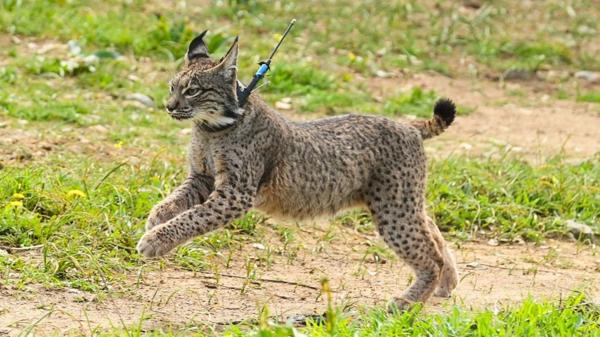
The Iberian lynx (Lynx pardinus) is a feline specialized in hunting rabbits, which constitutes the majority of its diet. Although it can feed on other prey when lagomorphs are scarce, researchers have documented a particularly striking behavior in Doñana: the predation of black kite chicks (Milvus migrans).
Both animals have lived together for decades in this natural space, where they share the rabbit as a food resource. However, the situation has changed in recent years. According to research published in Nature, attacks on nests increased significantly starting in 2016.
Historical data allows us to appreciate the magnitude of the change. Between 1993 and 2012, researchers recorded only 13 attacks on 904 nests. In 2018, however, predation affected almost half of the chicks in the population studied.
To reach them, lynxes can climb the trunks and reach nests located about 12 meters high. It is not, therefore, a chance encounter between two species, but rather a behavior that can have direct consequences on the reproductive success of a raptor.
Rabbit shortage and drought are behind the change
To understand why the lynx has begun to attack these nests with such intensity, we must look at the availability of its usual prey. One of the main causes is the decline of rabbits, which suffered a significant decline starting in 2013 due to viral hemorrhagic disease. This disease has seriously affected its populations in different parts of the Iberian Peninsula.
The loss of its main food resource forces the lynx to look for alternatives. Under normal conditions, it can turn to animals such as ducks, partridges or small mammals. However, drought also reduces the availability of some of these prey, especially waterfowl that find food in the marshes.
In this way, the decline in rabbits coincides with periods in which other food sources are less abundant. The result is greater pressure on alternative prey and a change in interactions between species that could previously coexist without attacks of this magnitude being observed.
The research also points to a possible additional explanation: lynxes more frequently attacked black kite nests located under trees where there were remains of rabbits. This pattern suggests that, in addition to obtaining food, the feline could be reducing the presence of a competitor for the same prey.
However, this interpretation should be understood as a possible additional motivation, not as a demonstrated conscious intention. What the data does show is that food scarcity and drought can modify the behavior of predators and alter the balance of an entire ecosystem.
The kites abandon their territories and another bird benefits
The effects of these attacks are not limited to the young that die in the nests. The researchers observed that adult black kites whose nests had been depredated were more likely to abandon their territory and move to other areas.
This behavior can be understood as a response to prevent new attacks. However, it also modifies the distribution of birds within the park and can affect other species that share its habitat.
One of the most striking results is the increase in European owlets, small nocturnal birds that feed mainly on insects and can also be prey for the black kite. By reducing the presence of this raptor in certain areas, the owls encounter less pressure from one of their predators.
As explained by the Doñana Biological Station of the CSIC, the change in behavior of the lynxes, the displacement of the kites and the response of the owls show how an initial alteration can spread through different levels of the food chain.
This phenomenon is known as a cascade effect: when the abundance or behavior of one species changes, the consequences can spread to others that maintain predation or competitive relationships with it. Therefore, analyzing only the evolution of a population does not always allow us to understand what is happening in an ecosystem.
Recovering rabbits and guaranteeing water, keys to the future of Doñana
The study shows that the conservation of predators also depends on the environmental conditions that allow them to maintain their food resources. In the case of Doñana, the researchers point out two priorities: recovering rabbit populations and guaranteeing an adequate flooding regime in the Guadalquivir marshes.
The European rabbit is a key species in Mediterranean ecosystems, as it serves as food for numerous predators. Its decline not only harms the Iberian lynx and the black kite, but can trigger changes in the relationships between many other species.
At the same time, maintaining water in the marshes for the appropriate periods favors the presence of waterfowl, which constitute an alternative source of food for the lynx when rabbits are scarce. If droughts also reduce these prey, the feline’s possibilities for adaptation are narrowed.
The research, published in Nature under the title Drought and disease trigger novel interactions among top predatorsis based on the monitoring of 1,624 black kite nests between 1993 and 2023. This long-term record has made it possible to detect an interaction that would have been difficult to identify through specific observations.
The case of Doñana shows that drought and diseases can act together and amplify their effects on fauna. Also remember that conserving a species is not only about protecting its specimens, but about maintaining the ecological conditions that make its survival and coexistence with the rest of the animals possible.
If you want to read more articles similar to Iberian lynxes against black kites in Doñana: the lack of rabbits leads the feline to hunt the birds of prey’s young, we recommend that you enter our Biodiversity category.
