
On a cattle farm in Oregon, a couple found an unexpected solution to reclaim land that seemed useless. It was too humid to cultivate it, but it did not meet the necessary conditions to house aquatic fauna.
So instead of trying to drain it, they decided to turn it into a natural wetland. The result was even surprising because of its speed: as soon as the work was finished, birds and other animals began to arrive. Experience shows that ecosystem restoration can benefit both biodiversity and agricultural activities.
The land that was not suitable for farming and the decision that changed everything
Heidi and Stan Gorden are the owners of Bar GX Ranch, a livestock farm located in Bonanza, in the US state of Oregon. For years, a low-lying area of his property represented a problem for agricultural production.
The soil accumulated too much moisture to allow efficient harvesting of hay, used as feed for livestock. Furthermore, it also did not maintain enough water to become a suitable habitat for waterfowl and other animals.
At the beginning of 2024, the couple decided to look for an alternative. He contacted the United States Fish and Wildlife Service (USFWS) and the Klamath Watershed Partnership organization. Both entities collaborated to obtain financing and develop an ecological restoration project.
The work allowed the recovery of approximately 5.7 hectares and was completed in autumn 2024. The initiative pursued a specific objective: to return the land to the necessary conditions to function as a wetland, without compromising the rest of the livestock activities.
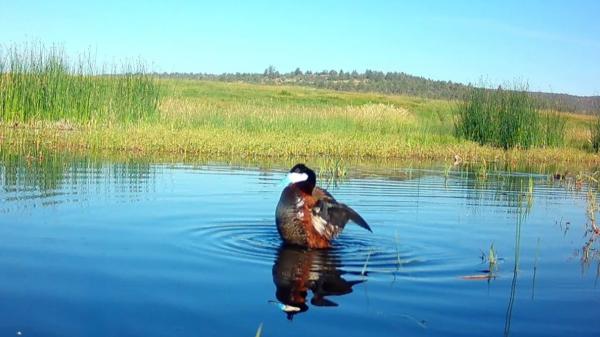
Ducks, cranes and other birds arrived a few days later
One of the most striking results was the speed with which fauna began to use the restored space. As reported by the USFWS in March 2026, American ducks, waders, and pronghorns (American antilocapra) appeared a few days after finishing the work.
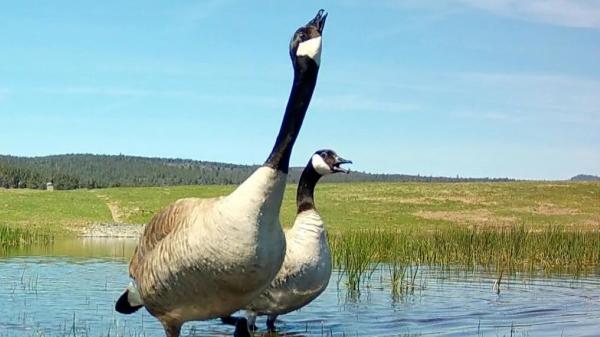
Birds documented at the site also include Canada geese, cinnamon ducks, white-faced ibis and sandhill cranes.
This answer has an ecological explanation: wetlands provide food, shelter and rest areas for numerous species, especially during their migratory movements.
The US federal agency highlights that these ecosystems are essential for the reproduction of birds and fish, in addition to serving as corridors of biodiversity. But it is important to distinguish between the immediate arrival of animals and the complete recovery of the ecosystem.
Observing birds a few days after restoration is a positive sign, but determining whether the wetland is functioning stably requires checking its evolution over several years.
Why wetlands can help reduce flooding
The recovery of the land had another important consequence for the owners: it helped reduce flooding in other areas of the livestock farm.
The phenomenon is related to the capacity of wetlands to temporarily store water and regulate its circulation. These ecosystems function like natural sponges. During heavy rain events, they can retain some of the water and gradually release it.
This helps to slow down runoff and, depending on the characteristics of the terrain, can reduce the intensity of certain floods.
The benefits don’t end there. Vegetation and moist soils can also retain sediment, capture nutrients, and improve water quality.
In the case of Bar GX Ranch, US authorities confirmed a reduction in flooding, although they have not yet published measurements that would quantify this improvement.
Recover wetlands: a way to protect biodiversity and help the countryside
Oregon’s experience illustrates a conservation strategy that is gaining importance: restoring degraded ecosystems rather than replacing them with artificial infrastructure.
Wetlands are among the most valuable environments for biodiversity. They are home to amphibians, fish, insects, specialized plants and numerous migratory birds.
They also perform essential functions for people. The National Oceanic and Atmospheric Administration of the United States (NOAA) explains that these spaces can protect against flooding, improve water quality and reduce erosion.
Its recovery is especially relevant in a context of droughts, extreme rains and loss of natural habitats.
However, restoring a wetland requires previously studying the hydrological functioning of the land. It is not enough to flood a plot: it is necessary to consider the soil, the vegetation, the species present and the connections with other ecosystems.
For the Gordens, the project also demonstrated that environmental conservation and livestock farming do not have to be incompatible activities.
The couple expressed their satisfaction with the diversity of animals that arrived at the farm and expressed their intention to collaborate again with the responsible organizations.
Their experience leaves an important lesson: some land that seems unproductive can perform much more valuable ecological functions if its natural conditions are recovered.
If you want to read more articles similar to A couple from Oregon had land that was too humid to grow hay and too dry for fauna: they transformed it into a wetland and the birds arrived in a few days, we recommend that you enter our Ecosystems category.
