
At the beginning of the 20th century, some owners of large Argentine estates imported European deer to beautify their land and convert them into hunting areas. More than a century later, those animals are still present in the country, where they have managed to establish populations in the wild.
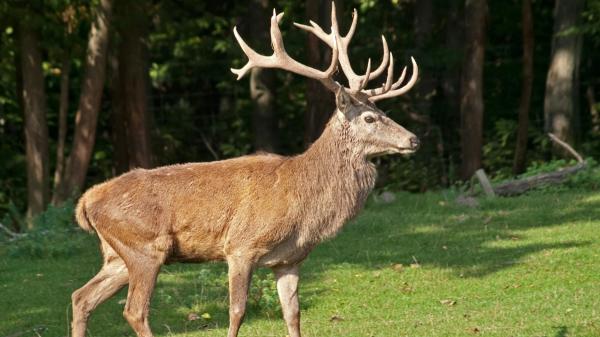
This is the lady deer, recognizable by its mottled fur and the large antlers that are flattened at the top in the case of males. Although today he may seem like just another inhabitant of the Argentine landscapes, his presence is the result of a human introduction that changed his relationship with the environment.
The story began in 1905, when specimens from Spain and Poland arrived in Sierra de la Ventana, in the province of Buenos Aires. From there, the species spread to other places and became part of the wildlife of different regions.
The European deer that arrived in Argentina to decorate the haciendas
The lady deer (lady lady) is native to Europe and some regions near the Mediterranean. At the beginning of the 20th century, its presence in Argentina responded to a fashion among the owners of large plots of land, who sought to reproduce the landscapes and customs of the European elites.
In 1905, businessman Ernesto Tornquist introduced specimens from Spain and Poland to Sierra de la Ventana, in the province of Buenos Aires. The animals served both to beautify private lands and to encourage sport hunting.
The incorporation of foreign fauna was not an isolated event. At that time, introducing species that were exotic to South America was considered a way to enrich the landscape and diversify the possibilities for using rural properties.
The lady deer had the characteristics that its introducers were looking for: a striking appearance, a considerable size and very recognizable antlers. Males can weigh between 40 and 100 kilos and have wide, flattened antlers with numerous points.
How he managed to live in freedom and spread to other provinces
The presence of the lady deer was no longer linked exclusively to the private spaces where it had been introduced. Over time, different transfers between establishments and the release or escape of specimens favored the appearance of populations outside the original enclosures.
According to the Biodiversity Information System of the National Parks Administration of Argentina, the species is present in the provinces of Buenos Aires, Neuquén and Río Negro. There are also specimens in semi-captive conditions in other territories.
One of the places where it has managed to establish itself is Victoria Island, in the Nahuel Huapi National Park, in Patagonia. The introduction of deer in this area is related to attempts to acclimatize foreign animals to Argentine landscapes during the 20th century.
Its adaptation is explained, in part, by its varied diet. It consumes herbs, grasses, leaves, stems, bushes and shoots, and can occupy different environments, such as grasslands, mountain ranges and open forests.
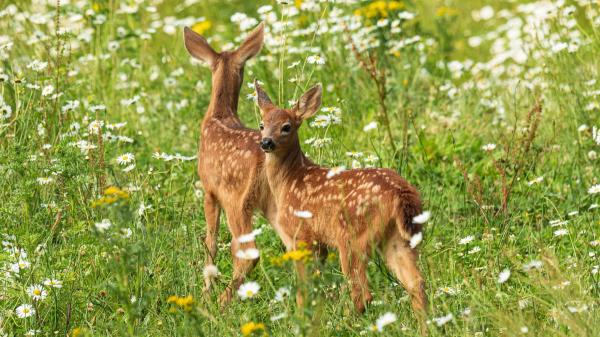
Additionally, females usually give birth to a single calf after a gestation of approximately eight months. This reproductive capacity, together with the availability of food and shelter, can favor the maintenance of populations when they find suitable conditions.
The ecological impact of introducing animals into a new ecosystem
The history of the lady deer allows us to observe an important issue for conservation: an introduced species can establish itself and alter the environment even when its arrival initially responds to ornamental or recreational purposes.
Deer are herbivores and, when feeding, can consume shoots and young plants. When its presence reaches a high abundance, browsing can hinder the regeneration of certain trees and modify the composition of the vegetation.
On Victoria Island, where the effects of introduced deer have been studied, alterations to natural vegetation have been described. The National Parks Biodiversity Information System collects this information and indicates that the species proliferated excessively in this environment.
This does not mean that all lady deer necessarily produce the same impact in any location. The effects depend on factors such as the number of specimens, the characteristics of the habitat and the availability of food. Therefore, knowing its distribution and studying its relationship with the local flora and fauna is essential to evaluate each situation.
The case also illustrates the difference between an exotic species and an invasive species. The first lives outside its natural area of distribution; The second, in addition, manages to spread and can cause environmental impacts. The classification of a population depends, therefore, on its behavior and its effects, not only on its origin.
A decision from more than a century ago that continues to have consequences
More than 120 years after the first documented introductions, the lady deer continues to be part of the wildlife of several Argentine provinces. Its presence is a reminder that human decisions about moving animals can have consequences that last far beyond their initial purpose.
What began as an initiative to decorate farms and private properties to encourage hunting, ended up giving rise to populations capable of living outside those lands. In certain spaces, furthermore, its presence has posed challenges for the conservation of natural vegetation.
Today, monitoring these populations allows us to better understand how introduced species adapt and what effects they may have on ecosystems. A lesson that goes beyond Argentina: incorporating fauna into a landscape is not only about checking if the animals survive, but also about evaluating how the environment changes when they establish themselves in it.
If you want to read more articles similar to Argentina imported deer from Spain and Poland 120 years ago to promote hunting: today they live in freedom, we recommend that you enter our Biodiversity category.
