
The ecological transition has been occupying a prominent place in the debate on the economic and environmental future of Spain for years. But is it possible for a country to continue growing economically while reducing its pollution? Pedro Sánchez defended yes in an intervention published in a TikTok account video in 2025, coinciding with the celebration of the United Nations climate summit in Brazil.
The President of the Government took advantage of that publication to vindicate the role of renewable energies and explain why he believes that Spain must maintain its commitment to decarbonization. He also recalled the economic consequences of the climate emergency and the objectives that the European Union had set for the coming decades.
His message ended with a declaration about the direction that, in his opinion, the country should follow: “Spain will continue to commit to the ecological transition and adaptation to climate change.”
Pedro Sánchez warns of the economic consequences of climate change in Spain
Sánchez began by referring to COP30, the Conference of the Parties on Climate Change held in Belém (Brazil) in November 2025. This international meeting brings together representatives from numerous countries to negotiate measures aimed at limiting global warming and addressing its consequences.
The president pointed out that the scientific data on the climate emergency was worrying and focused on emissions from fossil fuels and rising temperatures. He also recalled that Spain is among the European countries especially exposed to the effects of climate change.
The numbers support that concern. According to the European Environment Agency, extreme weather and climate phenomena have caused direct economic losses of more than 95 billion euros in Spain since 1980.
For its part, the report OECD Economic Surveys: Spain 2025 It calculated economic losses of approximately 2,800 euros per inhabitant between 1980 and 2024, one of the highest figures in Europe.
Droughts, floods, heat waves and forest fires are some of the phenomena that explain this impact. In addition to reducing polluting emissions, Spain needs to prepare its infrastructure, cities and agricultural systems for increasingly demanding climatic conditions.
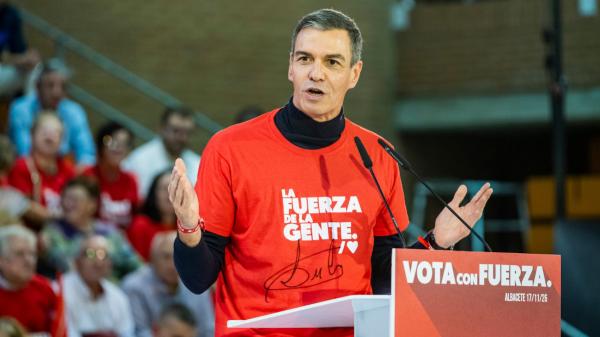
The European goal of reducing emissions by 90% by 2040
Another of the issues that Sánchez addressed was the European Union’s climate commitment. In his speech, he recalled the objective of reducing net greenhouse gas emissions by 90% by 2040, taking 1990 levels as a reference, and achieving climate neutrality in 2050.
When he published the message, the 90% goal was still pending completion. On 5 November 2025, the Council of the European Union had agreed on its negotiating position and, on 13 November, the European Parliament had also approved its position.
Finally, both institutions reached a provisional agreement on December 10, 2025 to incorporate this objective into European climate legislation. This is an important step to guide the energy and environmental policies of Member States for the coming decades.
Achieving this will require transforming sectors such as transportation, industry and energy production, which still depend to varying degrees on fossil fuels.
In his video, Sánchez also criticized the contrary vote of some Spanish parties to the position of the European Parliament. The president described these positions as “denialism” and defended the need to maintain political commitment to the fight against climate change.
“You can grow and reduce emissions”: the commitment to renewables
The main idea that Sánchez wanted to convey was that economic growth does not have to imply an increase in pollution. To defend it, he gave as an example the evolution of Spain, which had managed to increase its economic activity while reducing greenhouse gas emissions.
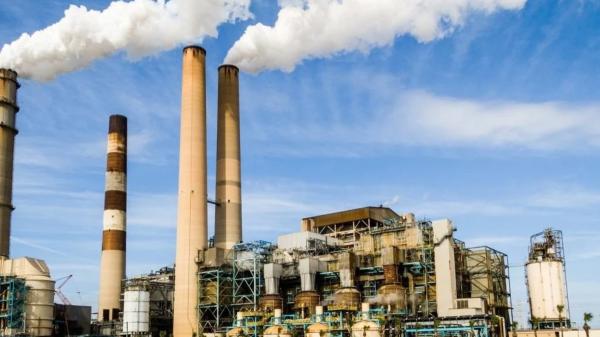
Specifically, he highlighted the role of renewable energies in the transformation of the electricity sector. The expansion of solar and wind energy has made it possible to reduce dependence on coal and reduce emissions associated with electricity generation.
Data from the Ministry for the Ecological Transition supports this evolution. In 2024, greenhouse gas emissions from the electricity sector decreased by 16.8% compared to the previous year. Furthermore, the accumulated reduction reached 75.7% since 2007.
That same year, Spanish gross domestic product increased by 3.5%. Renewable electricity generation also reached a peak, representing 57.2% of the country’s gross electricity production.
These figures show that economic growth and emissions reduction can advance at the same time. However, it is also important to keep in mind that evolution is not the same in all sectors.
Transportation, for example, continues to be one of the main challenges of decarbonization. According to official emissions data for 2024, it accounted for 33.8% of Spain’s greenhouse gases, so reducing its dependence on fossil fuels will be essential to meet climate commitments.
The ecological transition, therefore, does not only consist of installing more solar parks and wind turbines. It also requires promoting sustainable mobility, improving the energy efficiency of buildings and transforming industrial processes.
Pedro Sánchez’s final message: Spain will continue to commit to the ecological transition
Sánchez’s video statement ended with a statement that summarized the President of the Government’s position: “So, regardless of who it may be, out of conviction and also for reasons of opportunity, Spain is going to continue betting on the ecological transition and adaptation to climate change.”
With these words, Sánchez linked environmental protection with an economic transformation that also affects competitiveness, energy security and industrial development.
The expansion of renewables is one of the fundamental pieces of this change, but the challenge goes far beyond producing clean electricity. Spain will have to reduce emissions from sectors that still depend on oil and gas and, at the same time, prepare for the effects of a warmer climate and extreme phenomena.
His November 2025 message thus left a central idea, which is still valid today: moving towards a less polluting economy and maintaining economic growth are not necessarily incompatible objectives.
If you want to read more articles similar to Pedro Sánchez defends the ecological transition: “You can grow and reduce emissions”, we recommend that you enter our Other ecology category.
