
Lucrezio, the multimedia magazine created and directed by Massimo Polidoro, has been online since 1 October. We asked him to tell us about his latest creation.
We live in an age with more information, tools and possibilities than any other in the past. Yet, precisely for this reason, orientation has become more difficult. Communication favors speed and superficiality, social media is built to create addiction and fuel anxiety, misinformation is rampant and polarization pits us against each other. An antidote, however, exists: knowledge, the real one. Not the information that overwhelms us, but the ability to understand.
It is from this belief that Lucrezio was born (on the lucrezio.eu website), a space in which science and art, philosophy and technology, economics and history can dialogue. Because the twentieth-century separation between the “two cultures”, the humanistic and the scientific, does not exist: there is only one thought, and when we use it well in all its aspects the results are astonishing. Leonardo knew it, capable of integrating art and technology; Einstein knew this, saying that he arrived at his theories not through calculations, but on the basis of “pure inventive play”. It is no coincidence that we like to define Lucretius as “the wonder of knowledge”.
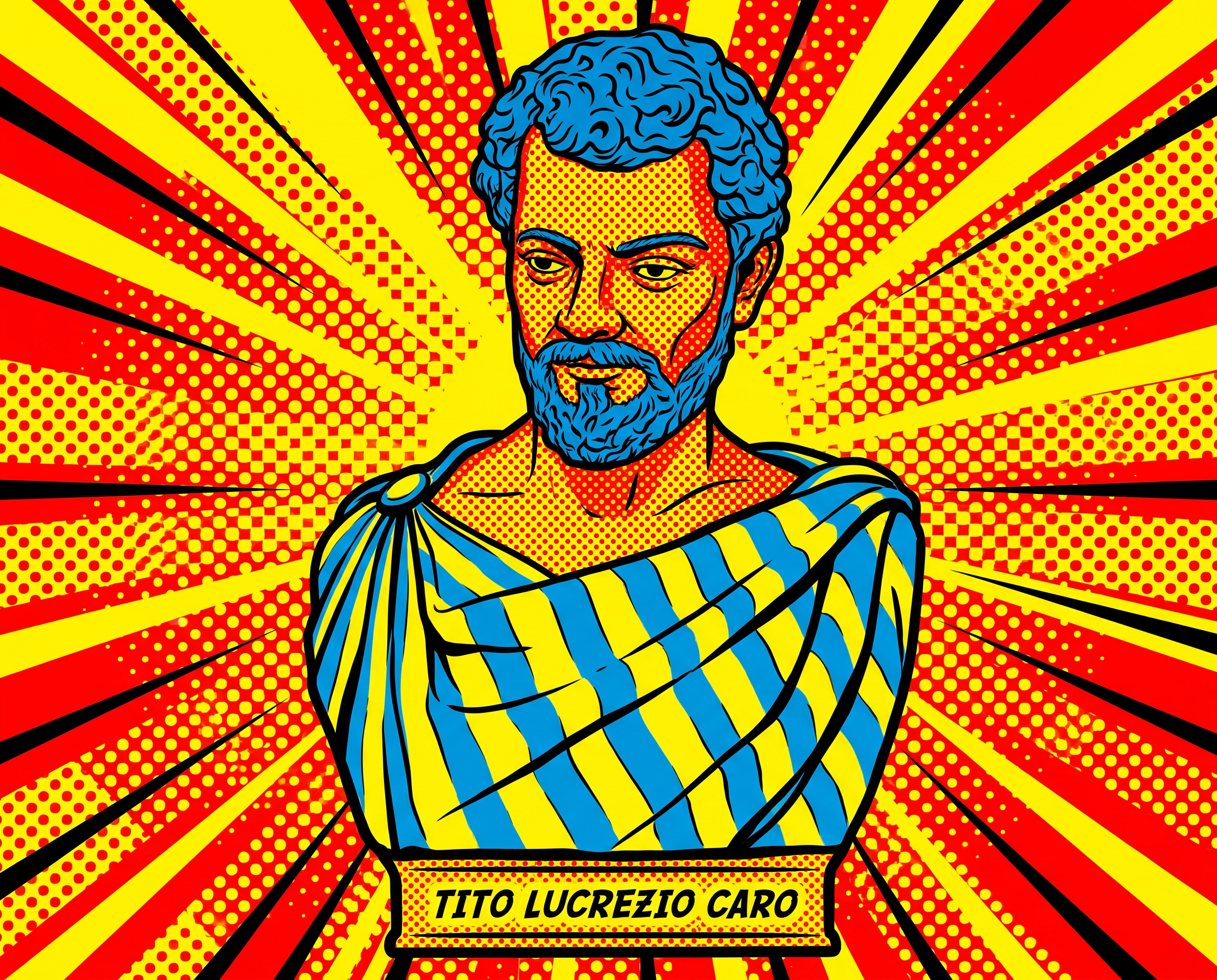
The name is not accidental. Tito Lucrezio Caro, Roman poet and philosopher who lived over two thousand years ago, in De rerum natura he said that nothing comes from nothing and nothing returns to nothing: everything transforms and connects. He spoke of the interconnectedness of all things and argued that understanding nature is the most powerful way to free us from fear, prejudice and superstition.
As the philosopher of science Telmo Pievani observes, Lucretius «is more than a classic: he is a scandal» and at the same time a surprising contemporary. It reminds us that we are made of the same material as the stars and that “human history is made as we go, it is not already written”. His, however, is not a gloomy vision: within a universe indifferent to our fate, precisely because we are fragile and mortal we have something in common on which to base solidarity, curiosity and responsibility.
This is the spark we want to cultivate: wonder and critical spirit together. Because science does not give us definitive answers, but offers us the tools to search for them, to understand the world and, ultimately, ourselves.
This is not a new intuition. Biologist Rachel Carson, who with Silent Spring changed our way of looking at nature, had grasped it: “If notions are the seeds that later produce knowledge and wisdom, emotions and impressions of the senses are the fertile soil in which those seeds must grow.” It is precisely our purpose: to reawaken amazement, so that knowledge can take root in that soil.
In the wishes that Alberto Angela wanted to send to Lucrezio there is perhaps the best synthesis of all this: «Cultivating wonder is no longer just a pleasure: it is a cultural and social urgency». And then, as he reminds us, let’s look up and marvel. Always.
Massimo Polidoro
