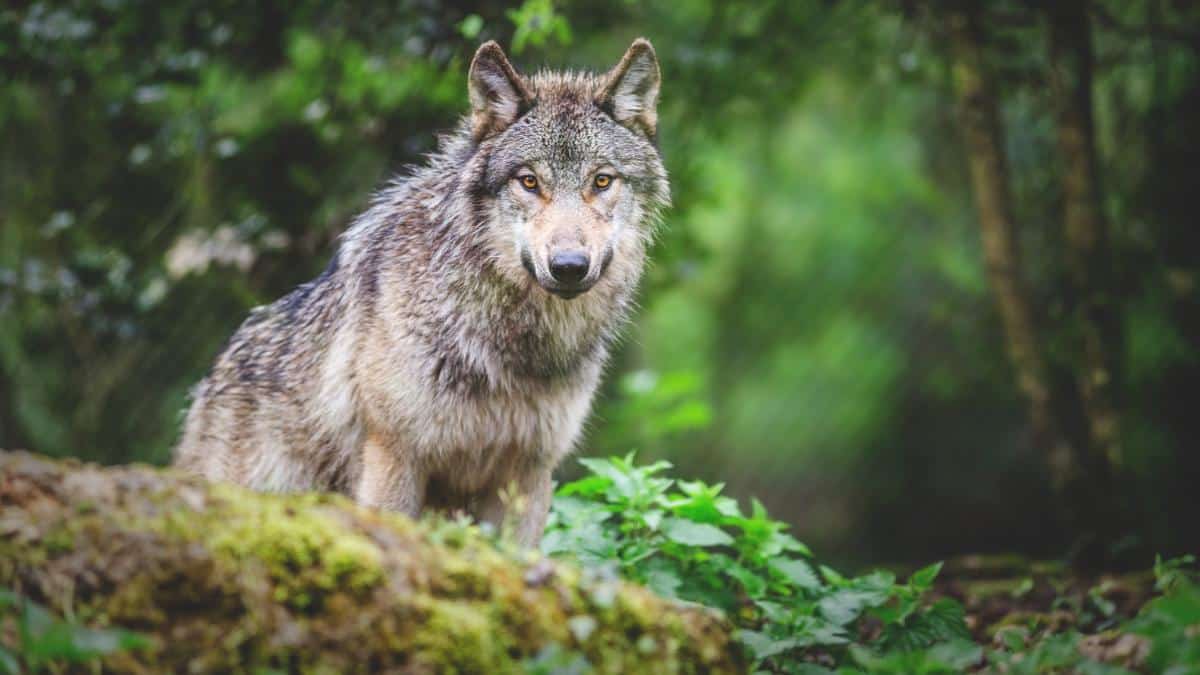
In January 1995, 14 gray wolves arrived in Yellowstone National Park, in the United States, after approximately seven decades of absence. The initiative aimed to recover a species that had disappeared from this territory due to human persecution. Three decades later, its consequences go far beyond the conservation of a predator.
The recovery of wolves has coincided with important transformations in vegetation, especially in poplar and willow populations, which for decades had had difficulty developing.
A study published in July 2025 by researchers at Oregon State University documented the appearance of a new generation of adult aspen trees in certain areas of the park, a phenomenon that had not been observed for about 80 years.
Why Yellowstone wolves disappeared and how their recovery began
The protagonist of this recovery is the gray wolf (Canis lupus), a carnivorous mammal of the canid family that inhabits different regions of North America, Europe and Asia.
It is characterized by its robust body, its long legs and its thick fur, whose color can vary between gray, brown, black and whitish tones. It is a social animal that usually organizes itself in family herds, generally made up of a breeding pair and their descendants.
Wolves play a key role as predators of large herbivores. In Yellowstone, their main prey include elk or Canadian deer, known in North America as elks, as well as other ungulates.
During the first decades of the 20th century, the systematic persecution of these carnivores caused their disappearance from the park. Without their presence, herbivores were subjected to less predatory pressure, which contributed to the deterioration of certain plant communities.
To reverse this situation, the US authorities transported specimens from Canada. To the 14 wolves introduced in 1995, another 17 were added in 1996, completing an initial program of 31 animals.
The operation, documented by the US National Park Service, became one of the best-known large carnivore recovery projects in the world.
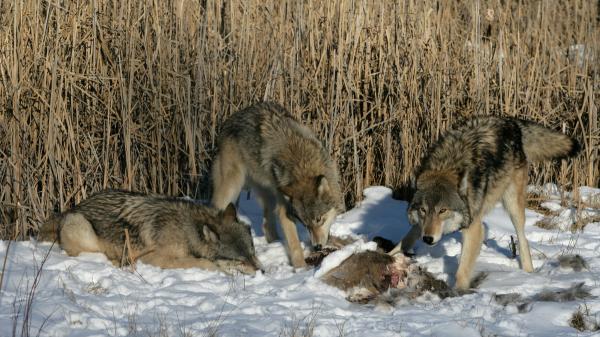
Wolves returned to Yellowstone and aspen trees grow again after decades
One of the most significant results has been observed in aspen (Populus tremuloides), characteristic trees of North American forests.
For decades, Canadian deer consumed its young shoots before they reached sufficient height. The constant pressure from browsing prevented many specimens from becoming adult trees. The situation began to change with the recovery of large predators, including wolves, bears and mountain lions.
In research released by Oregon State University, scientists analyzed 87 groups of aspen trees located in northern Yellowstone. The results showed that approximately one third had numerous young, tall specimens, while another third recorded areas where these trees were beginning to join the forest canopy. In the remaining third, growth continued to be limited by herbivores.
Luke Painter, lead researcher on the study, highlighted that the recovery of large carnivores had set in motion an ecological process that had been interrupted for decades.
This regeneration can also benefit other species. Aspen trees provide food and shelter to different birds and mammals, including beavers, whose activity helps create aquatic habitats.
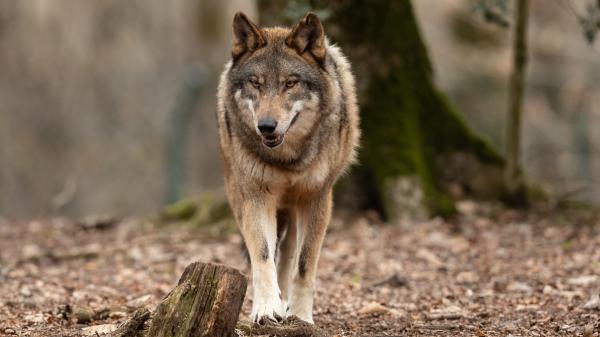
Wolves and the rivers of Yellowstone: what is true about this transformation
The case of Yellowstone is often used to explain the so-called trophic cascades, processes through which changes in an animal population impact other species and the entire ecosystem.
The recovery of trees and shrubs can promote the stability of the banks, reduce erosion and improve conditions for different aquatic species. Hence comes the well-known statement that wolves changed the course of rivers.
However, scientists warn that this explanation is oversimplified. Changes in the channels also depend on hydrological, climatic and geological factors, and cannot be attributed exclusively to wolves.
In fact, research published in 2025 on the recovery of willows sparked a scientific debate about the real magnitude of these effects.
Researchers Daniel MacNulty and his collaborators questioned the methods used to calculate vegetation growth and argued that recovery had been uneven.
How many wolves now live in Yellowstone and how their population has evolved in Spain
The reintroduction has allowed the establishment of a permanent breeding population. According to official Yellowstone Park data, in January 2026 there were at least 84 wolves distributed in 8 packs.
The gray wolf also lives in Spain, represented by the Iberian population, traditionally called Canis lupus signatusbetter known as Iberian wolves.
The last national census, corresponding to the period 2021-2024, identified 333 herds, concentrated mainly in Castilla y León, Galicia, Asturias and Cantabria.
According to the Ministry for the Ecological Transition, this figure represents a growth of 12% compared to the previous census, although it is still below the 500 herds considered necessary to guarantee their long-term genetic viability.
The American experience shows that recovering large predators can help restore lost ecological processes. However, its results depend on the characteristics of each territory and the interaction between numerous species.
If you want to read more articles similar to 14 wolves were introduced to Yellowstone 30 years ago and now scientists are observing how the forests are recovering, we recommend that you enter our Ecosystems category.
