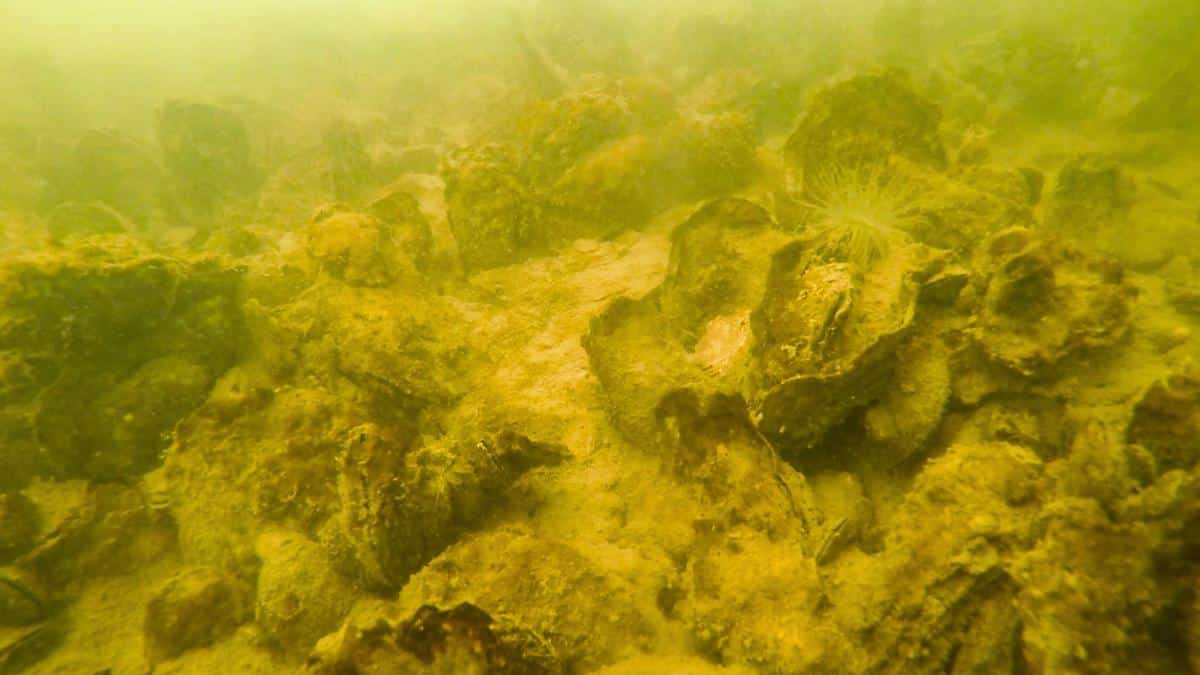
Planting billions of oysters may seem like a huge gamble, but Maryland has managed to turn it into an environmental success. In Harris Creek, the introduction of 2.49 billion oyster seeds has restored 139 hectares of healthy reefs, a key step forward in restoring one of the Chesapeake Bay’s most important marine habitats.
These reefs not only support the recovery of native oyster populations, but also provide refuge for other species and contribute to improving water quality. The result demonstrates the extent to which a well-planned restoration project can help recover degraded coastal ecosystems.
Maryland restores 139 hectares of oyster reefs after planting billions of seeds
The recovery of oyster reefs in Harris Creek, Maryland, has become one of the most notable examples of marine ecosystem restoration in the Chesapeake Bay. After planting 2.49 billion oyster seeds between 2011 and 2020, the project ensured that 139 hectares of reefs met the established criteria to be considered restored.
The initiative is part of a broader program aimed at recovering native oyster populations, whose presence in the bay has been drastically reduced in recent decades. To achieve this, the teams responsible combined the construction of new reefs with the introduction of young oysters from farms, thus favoring the development of habitats capable of sustaining new populations.
The results were not limited to the number of specimens introduced. Scientific monitoring made it possible to verify that, six years after the interventions, 139 of the 141 hectares treated in Harris Creek met the established restoration criteria. The evaluations took into account aspects such as oyster density, biomass and reef stability.
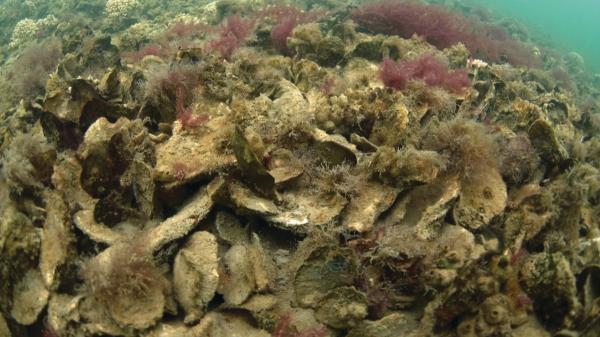
This is how they have managed to recover the oyster reefs in Maryland
Restoration of Harris Creek began in 2011 with a plan that combined seafloor preparation and the introduction of hatchery-produced juvenile oysters. The objective was not only to increase the number of specimens, but also to rebuild reefs capable of maintaining themselves and developing their ecological functions in the long term.
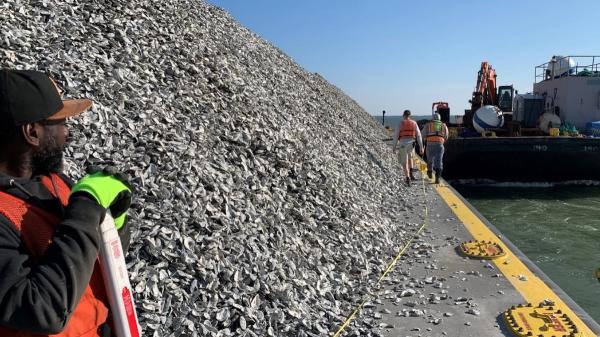
To do this, the teams used two main methods. In areas where the bottom already offered suitable conditions, they deposited young oysters attached to shells, a technique known as spat-on-shell. In other areas, they first added materials to create a stable base on which the mollusks could sit and grow.
A significant portion of the oysters came from the University of Maryland hatchery at Horn Point, which specializes in producing specimens for recovery projects. The researchers evaluated the reefs three and six years after the interventions, analyzing the density and biomass of the oysters, the presence of different generations and the stability of the structures.
This system made it possible to distinguish between areas where specimens had simply been introduced and those in which the ecosystem had reached the levels necessary to be considered restored. Of the 141 hectares treated, 139 exceeded the established criteria after six years of monitoring, which confirmed the success of the intervention in almost the entire restored area.
Harris Creek is not the only area that has seen progress. In the Little Choptank River, 145 hectares of healthy reefs have been achieved after planting 2.16 billion oyster seeds, while in the Tred Avon River, 53 hectares have been restored with the introduction of 1.2 billion seeds.
Work continues in other areas of Maryland. In 2024 alone, program collaborators planted more than 340 million oyster seeds, produced at the Horn Point hatchery, to strengthen populations and promote the expansion of these marine habitats.
Why restoring oyster reefs benefits the entire marine ecosystem
The recovery of Maryland’s oyster reefs has implications beyond increasing oyster populations. Their presence contributes to the functioning of the Chesapeake Bay, as the reefs provide shelter and food for numerous species and help maintain the biodiversity of coastal waters.
Oysters also play an important role in water quality. When feeding, they filter suspended particles, including some microscopic organisms, which can promote greater water clarity. This process benefits other marine organisms and contributes to the balance of the ecosystem, although its effects depend on environmental conditions and the scale of the populations.
The importance of these reefs also lies in their ability to reduce excess algae and nutrients in the water. In addition, their structures create spaces where species such as blue crabs and striped bass, which use these habitats during their early stages of life, can live and develop.
The Harris Creek project shows that marine restoration requires more than introducing large numbers of specimens. The selection of suitable areas, the reconstruction of the bottom and the monitoring of the reefs for years are essential elements so that the results last.
Although the recovery of 139 hectares represents significant progress, maintaining these healthy habitats remains essential. Maryland’s experience offers a model for future conservation initiatives that seek to recover native species and strengthen coastal ecosystems.
If you want to read more articles similar to They plant 2.49 billion oyster seeds and recover 139 hectares of healthy reefs in Maryland, we recommend that you enter our Ecosystems category.
