Maria Montessori had grasped the importance of the didactic activities carried out outdoors, through which the child can live the nature by giving direct experience
In 1909 Maria Montessoriin his first book The method of scientific pedagogy applied to childhood education in children’s homesdedicates an entire chapter to Nature in educationbecause it considers nature an important element to be integrated into its pedagogical vision of school reality. She herself defines the child as “the greatest spontaneous observer of nature, who undoubtedly needs to have a material at his disposal to act on”.
The famous Italian pedagogist believed in fact necessary to entrust the nature much of the educational work and not surprisingly wrote: “The caring treatments towards living beings are the satisfaction of one of the most alive instincts of the childish soul. Therefore an active service of treatments can be easily organized to plants and especially to animals. Nothing is more capable of this to awaken an attitude of social security in the small child who lives his passenger moment, without care for tomorrow. But when he knows that those animals need him, that the seedlings dry out if they do not water them, his love goes by connecting with a new thread the moment that passes with the rebirth of the following day ».
Ecology in the growth path
Maria Montessori had caught the importance of the activities carried out outdoors, in contact with nature and outside the classrooms, observing the “childhood gardens” of the German pedagogist Friedrich Fröbel, who made available to each child a flowerbed to cultivate and cure. Through this green space, the child could have observed the life cycle of plants, sown by the child himself, also managing to perceive the passage of time, the alternation of the seasons and what the climate change involved.
But For Maria Montessori this great importance of nature is not relegated to the childhood only. In Scheme for a secondary school reformknown as The Erdkinder – The children of the earthreference is made precisely to the nature/adolescence ratio. In particular, in the text The discovery of the childfrom 1950, Maria Montessori underlines how this report has great educational potential, so much so as to consider it a basic point on which to build the curricular learning path for the teenager.
School and nature
Maria Montessori has thought of a systematic insertion of activities concerning nature. With his son Mario, during a long journey made to India, they developed A series of didactic materials concerning botany and plant biologystill in use in Montessori schools. The material concerns the study of the morphology of some plants, is made through classified nomenclature, prepares and starts children for the experimental study of physiology.
The Montessori methodology therefore provides that the children, from the nest to the primary, but also beyond and above all in the particular period of adolescence, carry out activities in the garden or in the garden, living nature and gaining experience in the first personoutside the class or school, also providing within their class, the presence of a “nature table” that allows children to observe, discover, experiment and study what has lived outside.
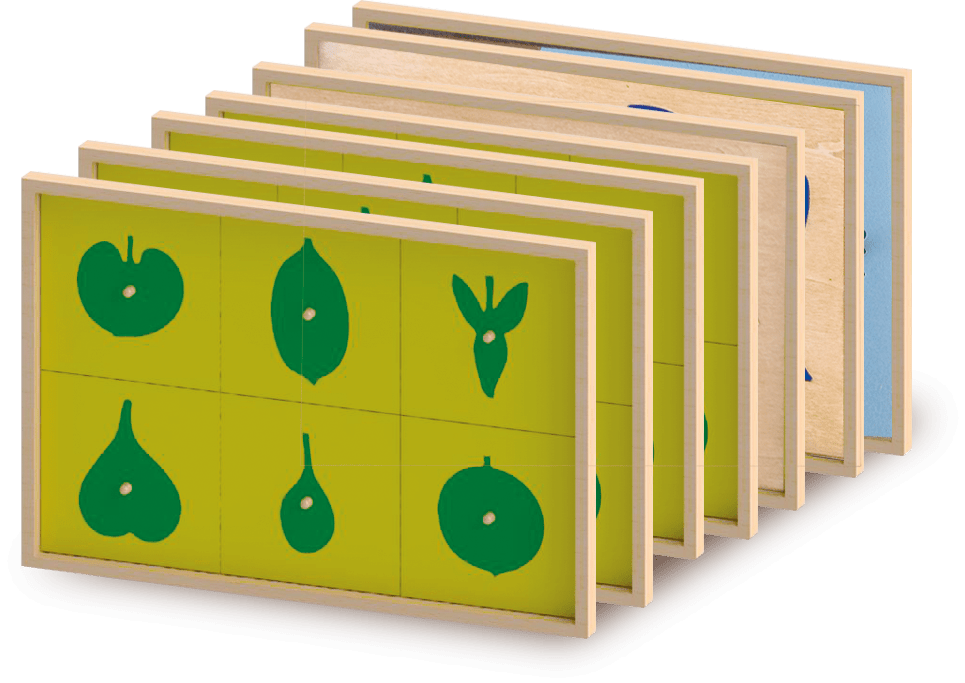
All this work can also be supported, for example, by an object called “Botanical chest of drawers”. Using the botanical chest of drawers, the child develops interest and respect for the plants, learns to recognize various types of leaves and their names (thrown, obnovated, alabardated etc.), tracing the boundaries and combining them with those of the natural environment. It also learns to know and name the parts of the leaf, flower and plant.