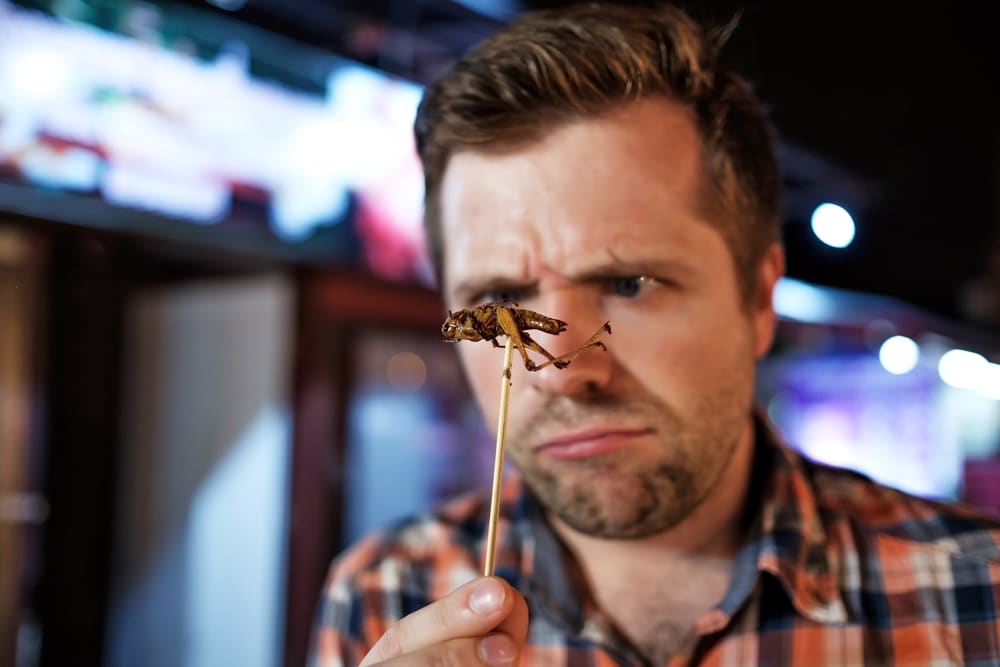
From social psychology to neuroscience: here are the marketing strategies to clear insects on our tables (already on the plates of 2 billion people).
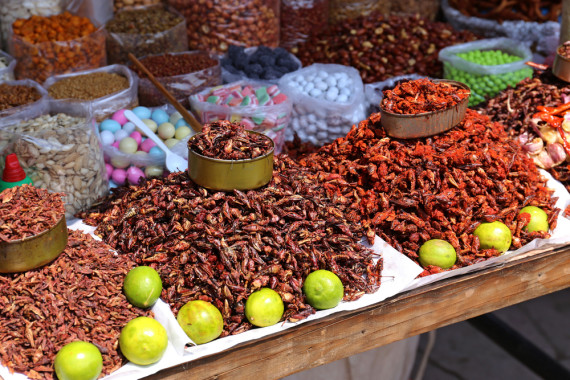
More than 1,900 species of edible insects supplement the diet of over 2 billion people, who consume them in traditional dishes, capture them with age-old techniques, and breed them to make their diets more nutritious. According to the FAO, entomophagy has health benefits (many insects are rich in proteins, “good” fats, calcium, iron and zinc), environmental benefits (the greenhouse gases produced and soil consumption are minimal, compared to those of meat animals) and socio-economic: insect farming is practiced, without the need for large capital, even in very poor areas, with little technology and limited space available.
Waiter, there is an insect on your plate
Yet, in the Western mentality edible insects are considered a novel fooda new food because it was not significantly consumed in the EU before May 1997, when the regulation governing the consumption of insects, cultured meat, algae and other dishes that were until recently unheard of for European consumers came into force. For many inhabitants of industrialized countries, edible insects have remained, more or less implicitly, the same pests that destroyed crops in the agricultural fields around which our civilizations grew.
A dish that welcomes them is therefore, for most people, a contaminated dish, difficult to eat: how do you overcome this distance? Is it possible to develop effective strategies to approach this precious (and convenient) food?
We talked about it with Cristina Zogmaister, psychologist and associate professor of psychometrics at the University of Milan-Bicocca who directs the research group BUGIFY – A BUG In the Food is Yummyfinanced by the European Union – NextGenerationEU through the PRIN call of the Ministry of University and Research. The project, which involves the Universities of Milan-Bicocca and the “G. d’Annunzio” University of Chieti (the latter unit directed by Professor Francesca Romana Alparone), sought to understand why Western consumers have so much resistance to insects on their plates, and how psychology can help us overcome them.
Curious or wary?
«Initially we tried to measure people’s spontaneous affective reactions towards foods containing insects: these are automatic, “instinctive” reactions, which anticipate the behavioral response of approaching or avoiding these foods. We can consider these natural fears or curiosities the basis of the psychological mechanisms that will then determine consumption intentions” explains Zogmaister a Evidence Network.it.
To bring out the affective and behavioral reactions we used the Implicit Association Test (IAT), a computer task in which we try to understand, by measuring reaction times, whether it is easier for a participant to respond to images of food with insects with the same button used for positive words or with the one used for negative words (and therefore, what is more natural for him to do, when he doesn’t have much time to think about it).
We then involved the participants in a kind of video game in which they had to move food closer or further away with insects on the screen. Finally, we developed the swipeAAT (Swipe Approach Avoidance Task), a smartphone-based task, which uses the same swiping gestures used to choose between various options in many apps: in this case people see foods, including insect-based ones, on their mobile phone and have to swipe up to move them away and make them smaller, or down to bring them closer and see them bigger.”
The first reaction counts
Knowing these spontaneous reactions is an important element if we want to imagine future interventions of gentle persuasion (nudging) in large-scale insect marketing. How we realize very well when, after an endless day, we always end up taking refuge in our not at all healthy space comfort food«food choices are not always just the result of reflection. They are largely due to our most spontaneous reactions.
On the one hand there is what a person may think about food with insects: that it is strange, that it is not part of our traditions, or that it is sustainable and good for you; on the other there are the more spontaneous reactions linked to a sense of disgust or curiosity. In the case of insects, we have found that what is declared and spontaneous reactions are not connected: it is as if they function on two different tracks. It is therefore important to have interventions that can influence both dimensions” says Zogmaister.

How to work on intentions
Starting from this information, the group worked to develop interventions to improve consumers’ evaluation of foods with insects. Francesco Fedeli, psychologist and researcher at the University of Milan-Bicocca involved in the OnFoods sustainable nutrition project, financed through funds from the National Recovery and Resilience Plan, explains: «We based ourselves on the principle of shared characteristics: when two elements share a characteristic, for example aesthetics, people infer that these objects also share others.
For example, in marketing, to promote new products, some characteristics that they share with other products already known to the consumer are highlighted. Let’s think about plant-based burgers, created with a shape, consistency and packaging similar to conventional burgers: consumers will be led to think that they also have the same taste and smell, and that they can be used in similar contexts.”
We created an online study in which we used a simple shared feature – a colored frame – to convince people that insect meal-based foods that appeared in the frame could be as good as ice cream, and as healthy as crackers shown in the same frame.”
It worked. But could it also work outside the experimental context, in the world of marketing?
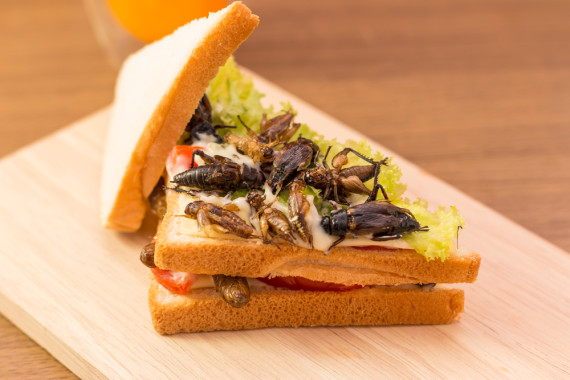
Cricket bars? Close to cereals
«We found that, in fact, the brand of insect-based product associated with ice cream was considered tastier, while the one associated with crackers with cereals was considered healthier. What we imagine is that with shared features more relevant than a simple colored frame, the effect becomes even more evident. For example, some types of insects look a lot like crustaceans: could we use this similarity to make people infer that they are therefore just as good, or can they be consumed in the same way? And inside the stores, how would customers’ perception change if insect-based products were displayed near the checkouts, or near the biscuits?”.
If he eats it…
Gentle persuasion toward insect-based foods can also leverage simple social learning strategies. To what extent does seeing a cartoon or video of someone tasting edible insects change our spontaneous reactions or behaviors towards these foods?
Fedeli says: «Even just observing a model tasting these products in a video changed the evaluations in a positive way; however, seeing a tasting followed by positive feedback did not substantially change the evaluations compared to just seeing the tasting: the positive opinion added nothing. We gave ourselves this explanation: the tasting itself is already a very strong signal, because we are not just approaching a product but we are literally ingesting it.” Which is to say that the real barrier is not so much the taste of an insect, but the fact that it can be chewed and swallowed.

Insects and virtual reality: immersion in a possible world
What if instead of showing a video we made participants live an even more immersive and authentic tasting experience? Here virtual reality comes to our aid: with the related project “A meal in the future”, Chiara Lucafò, psychologist and social psychology researcher at the University of Chieti, uses the sense of presence to try to introduce some participants to entomophagy.
«The brain – he explains – interprets the virtual environment as a credible place, bringing out a sense of presence. In the study we want to understand how individual differences – for example curiosity or, on the contrary, attachment to traditions – and personal values have an impact: there are those who are more oriented towards individual benefits (such as health) and those towards the collective good (such as environmental sustainability).
The objective is to verify whether the sense of presence generated by virtual reality increases the probability of a change in attitude towards insect-based foods and whether this can translate, over time, into purchasing choices and new daily habits.”
The experience may vary slightly based on the personal characteristics of the participant. «We reproduce a natural and usual situation such as a restaurant lunch and propose an option based on insects and one based on a traditional dish. In this sense, virtual reality proves to be a particularly valuable tool. It allows the goal to be achieved in an ethical way, without forcing anyone to actually consume foods that are not attractive, and in an ecological way, recreating a realistic – even social – experience capable of involving participants to the point of making them feel really “there”.
Within the experience, some elements of the context are presented in a slightly different way, and we expect, for example, that a person sensitive to the issue of sustainability is more likely to choose to eat insects when the option is presented as consistent with collective well-being and the reduction of waste.”
New research perspectives
In short, there are strategies to dismantle the wall of excuses that we make before tasting a cricket bar, and that barrier could one day creak. «With these studies we have found that these interventions work. Now the challenge is to understand when they work best and why” clarifies Zogmaister. «For example, does it matter if we show, in a video, that the person eating insects is clearly Italian, in a well-recognizable place in Italy, or that he is of the same age group as the people we want to persuade? Would it change if we showed a person from another culture?
And why does persuasion work? Is it because, by seeing the person eating these foods, they really become foods – in the sense that in people’s minds insects are not food, but by seeing someone eat them they become food? This is a possibility; another is that it is the social norm that influences us, i.e. knowing that others eat them gives important normative information, i.e. that it is normal to do so. These are all lines we are starting to work on.”
