
Dormancy is a survival strategy in response to unfavorable environmental conditions. The types of dormancy can be primary or secondary, or physiological or environmentally induced. An example in plants is the lotus, whose seed can germinate after more than a thousand years; while in animals hibernation, diapause, aestivation, brumation can occur, depending on the type of animal. In this BIOencyclopedia article we will learn about what dormancy is, its types and examples in plants and animals.
What is dormancy?
Dormancy is a survival strategy by which organisms temporarily stop their growth, development or activity in response to unfavorable environmental conditions. In the agricultural field, it is especially essential because it allows plants to conserve energy, withstand adverse seasons and resume their growth when the environment improves, thus promoting the health and productivity of crops.
What are the types of dormancy?
What is physiological dormancy?
Physiological dormancy occurs in seeds with mature embryos and permeable external envelopes that, despite these conditions, do not germinate immediately upon falling to the ground. Its causes are complex and are related to the metabolism of the seed. Among them, the presence of hormonal inhibitors that block metabolic processes, the initial absence of promoters that activate digestive enzymes, the predominance of inhibitors over promoters in newly mature seeds and the impermeability of cell membranes, which make it difficult for water to reach the embryo, stand out.
What is environmentally induced dormancy?
Environmentally induced dormancy is a phenomenon that allows organisms to survive in adverse conditions, delaying energy expenditure and reproduction until more favorable circumstances exist. It is closely linked to the environment and can manifest itself in a predictive or consequent way. In predictive dormancy, organisms anticipate environmental changes, such as the decrease in photoperiod and temperature before winter, entering into preventive inactivity. In consequent dormancy, inactivity occurs after unfavorable conditions arise, something common in unpredictable climates, which prolongs activity and favors the use of available resources.
What is the difference between primary and secondary dormancy?
Primary dormancy begins at the end of seed maturation while it remains in the mother plant, being regulated by internal factors such as abscisic acid (ABA), which blocks germination capacity. This type of dormancy can be suppressed by cold, light, hormones such as gibberellins or ethylene, and even substances present in smoke. In contrast, secondary dormancy appears in mature seeds that have already been disseminated and were not dormant, but that enter this state due to adverse environmental conditions. This is associated with soil seed banks and presents periodic cycles of dormancy.
What is dormancy in plants?
Why do plants go dormant?
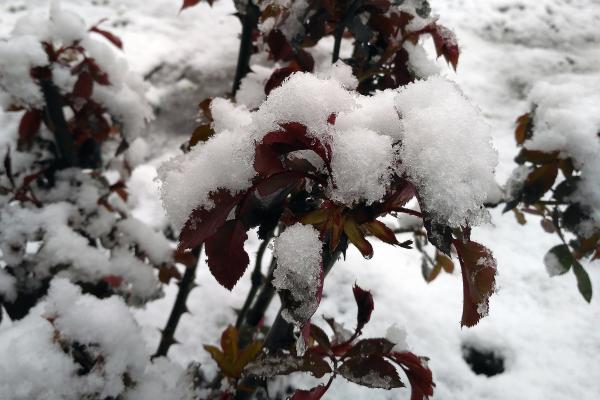
Plants go dormant because this mechanism allows them to survive unfavorable conditions, such as cold winters or dry seasons, ensuring their conservation over time. Dormancy also prevents seeds from germinating at inappropriate times, regulating germination until optimal conditions exist. Its causes include immature embryo, impermeability to water or oxygen, mechanical restrictions or chemical inhibitors.
What are some examples of plant dormancy?
Some examples of plant dormancy are observed in seeds, trees, buds and model plants such as Arabidopsis thaliana. Seeds can remain dormant due to hard covers that prevent the entry of water or oxygen, or due to internal conditions of the embryo; A notable case is the lotus whose seed can germinate after more than 1,000 years. In citrus fruits, during the winter they slow down their metabolism to conserve energy. In temperate zones, winter buds protect stem and leaf tissues until the arrival of spring.
What is dormancy in animals?
Why do animals go dormant?
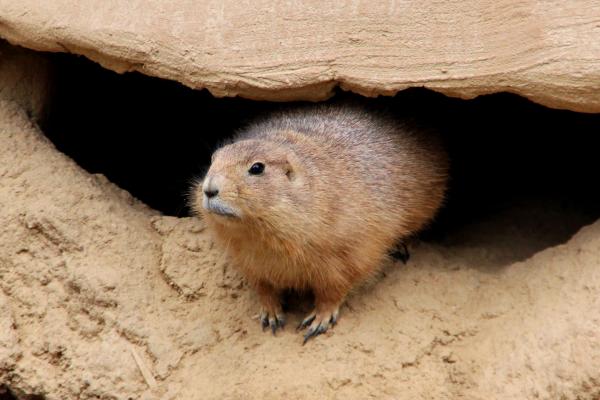
Animals enter dormancy as a survival strategy in the face of unfavorable environmental conditions, for example, to face winter, when low temperatures and food scarcity make it difficult to remain active. Metabolism decreases noticeably, reducing respiratory and heart rate and body temperature to conserve energy. Depending on the species and latitude, this state can last from weeks to months. During this period, some survive thanks to their fat reserves, while others make brief interruptions to feed or eliminate waste.
What are some examples of dormancy in animals?
- Some examples of dormancy in animals include hibernation, present in bats, marmots, hedgehogs, bears and mouse lemurs, which drastically reduce their metabolism and body temperature.
- Diapause occurs in insects and mammals such as the European roe deer, delaying embryonic development.
- Aestivation appears in snails, worms, and lungfish during heat or drought.
- Reptiles show brumation, reducing activity while still needing water.
- Nematodes present hypobiosis, stopping their development in larval phases under environmental stress.
Why is dormancy important?
Dormancy is important because it allows organisms from different groups, from bacteria to vertebrates and plants, to survive in adverse environmental conditions such as cold or drought. During this state, metabolic activity is almost completely reduced, which ensures the persistence of species until favorable periods return.
Furthermore, dormancy favors the coexistence of multiple species or genotypes within a community, directly influencing biodiversity. It has been key in the evolution and dispersion of plant and animal species, since it makes it possible to overcome climate changes, conserve energy and guarantee survival in the face of resource scarcity.
If you want to read more articles similar to Dormancy: what it is, types and examples in plants and animals, we recommend that you enter our Ecosystems category.
- Nautiyal, P.C., Sivasubramaniam, K., Dadlani, M. (2023). Seed dormancy and regulation of germination. In: Dadlani, M., Yadava, DK (eds) Seed science and technology. Springer, Singapore. https://doi.org/10.1007/978-981-19-5888-5_3
- De la Cuadra, C. (1992). GERMINATION, LATENCY AND DORMITION OF SEEDS. Ministry of Agriculture, Fisheries and Food. https://www.mapa.gob.es/ministerio/pags/biblioteca/hojas/hd_1992_03.pdf
- National University of Colombia. (2014). 2.3.4.6. DORMANCY. https://web.archive.org/web/20070917042927/http://www.virtual.unal.edu.co/cursos/ciencias/2000024/lecciones/cap02/02_04_15.htm
- Bachman, C. (sf). Do Bears Really Hibernate? National Forest Foundation. https://www.nationalforests.org/blog/do-bears-really-hibernate
- Rodríguez, J. (sf). Ecological curiosities: The hibernation of animals. https://sierradebaza.org/noticias/17-12-notic9
