
Fungi are complex organisms that alternate cycles. Thus, we can distinguish two forms of fungi, which are divided into mycelium and fruiting body. The latter is popularly called a mushroom and it is the one that we can see with the naked eye. It is made up of the following parts: cap, hymenium, ring, foot, volva and mycelium. Knowing the parts of mushrooms can help us identify them, so, if you want to know about each of them, we invite you to read this BIOencyclopedia article.
Mycelium
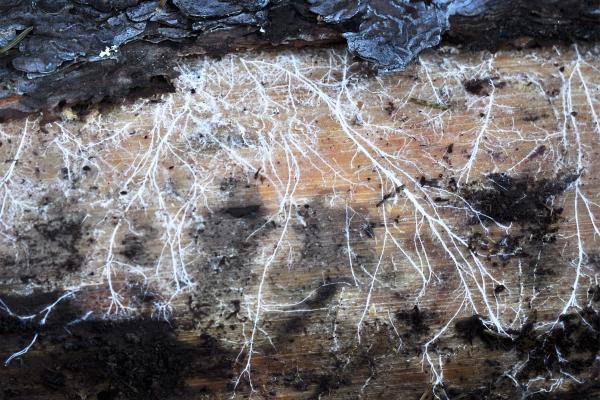
This is the part from which the mushroom develops. When it is not in the reproductive stage, the fungus develops fine networks under the soil called hyphae, which together are called mycelium. They are microscopic and with the naked eye they do not look like anything more than a white hairy mass, but when placed under the microscope we can see that they are branched white tubes.
The mycelium that is associated with the mushroom is known as fertile mycelium, because it forms the reproductive part of the fungus, and it is also called aerial mycelium, since it is above ground, unlike the submerged vegetative mycelium that extends underground.
Hat
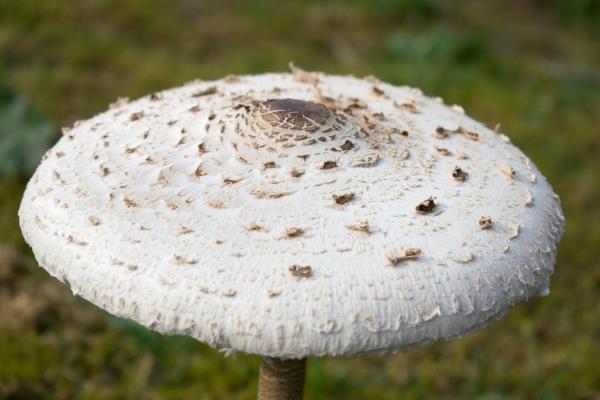
Also known as the pileus, this is the uppermost part of the mushroom and the most visible. It is found in different colors, depending on the species, such as red, brown, yellow, white, and even bioluminescent, which demonstrates the enormous variety that this group of living beings has. It is the main part of the mushroom and helps to begin its identification.
The hat hangs downward like a bowl, although we can also see it in a lamellar shape, among others, depending on the species. For example, the mushrooms we are very familiar with have convex-shaped caps, but there are more wild mushrooms, such as Sarcosoma globosum whose hat is completely round, with the opening facing upwards.
Other hat shapes that can be found are:
- Conical.
- Flat.
- Egg shaped.
- Bell-shaped.
- Sunken.
- Rolled edge.
- With a grooved edge.
In addition, it can also have ornamentations such as scales, which are part of the cuticle that covers them, or even warts. A clear example is the white points that the Amanita muscaria about the red hat.
This part is very important because inside it houses the key that makes mushrooms the reproductive part of the fungus. Let’s see below what it is about.
Hymenium
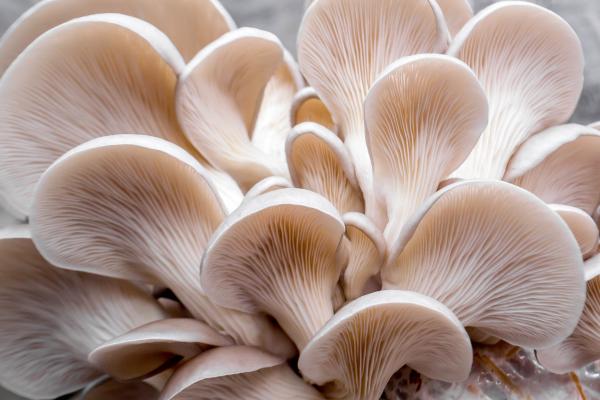
The hymenium is protected by the cap, and is made up of sheets, pores, tubes or simple folds, depending on the species, well arranged to maximize storage space to store the most important part of the mushroom: the spores. These spores are the sexual reproduction cells of the fungus, necessary to multiply. Here these spores will mature, and will be released until they are ready to be released.
A very nice example of the release of spores are the so-called powder mushrooms, which consist of a completely globose structure, with a small hole in the center from which the spores emerge as dust. When raindrops fall on it, they create pressure inside and propel the spores out.
Stipe
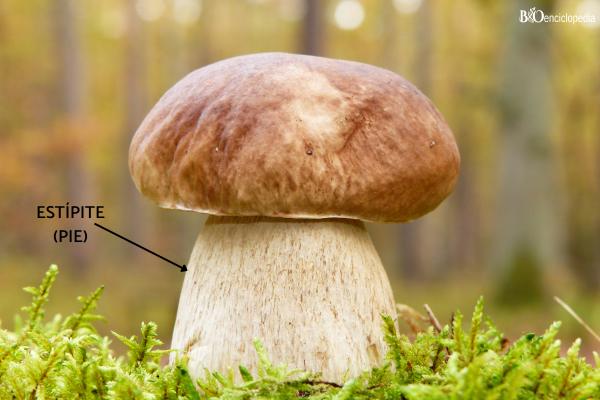
The foot is the part that lifts the cap and the hymenium. It is located between the ground and these two structures, and looks like a column. Like the cap, it does not always look the same. There are cases in which it is even reduced, such as in tinder mushrooms that are attached to the trunk of trees. It can also be completely absent as in truffles.
Its function is to place the hymenium in an advantageous area: closer to the air so that the wind can easily disperse the spores, and thus the fungus can colonize new spaces to survive. It can also be found under the name tal, foot or peduncle.
Ring
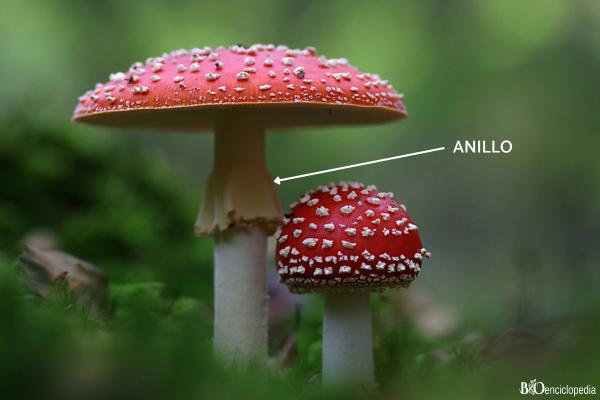
This part is seen as a division in the center of the foot, and is formed when the mushroom increases in size. When the mushroom is just about to emerge, a structure called an egg or primordium sprouts, which is oval and completely closed under a thin layer called the universal veil. Inside there are tight hyphae that are waiting to mature to differentiate into the structures that make up the mushroom. From here the fruiting body will emerge, and it is the remnants of this primordium that remain attached to the foot, and are called the ring.
Its function is related to the universal veil, since it is its remnant, and this veil serves to protect the mycelium that is still maturing to become a mushroom. It may or may not occur, depending on the species and the growth conditions of each mushroom. It also varies in shape, and can be similar to a skirt, a well-adhered ring, or simply remains.
come back
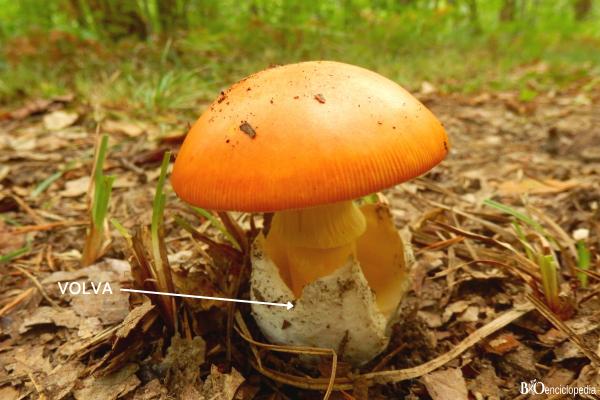
This is the part that is on the ground and includes the base of the foot. It is another remnant that remains when the mushroom emerges from the veil. It can be present or absent, and can even hide under the ground and go unnoticed.
The shape of the volva is characteristic for each species. It can be cup-shaped, globose, among others. Like the ring, its function is related to the universal veil, which serves to protect the early mushroom stage before it fully emerges.
If you want to read more articles similar to Parts of mushrooms: what they are and their functions, we recommend that you enter our Biology category.
- García, V. (sf) Introduction to microbiology (2nd ed.). Costa Rica: Euned.
- Montón Martínez, J. (2021). Practical guide to mushrooms. Spain: Larousse.
