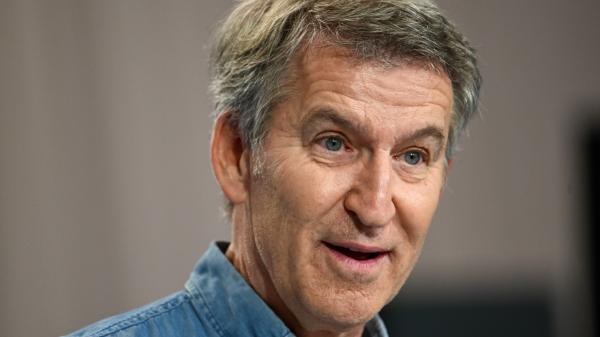
The management of forests and their economic use have returned to the political debate in Spain, especially after the large forest fires of recent years. Alberto Núñez Feijóo has defended on several occasions that forests need active management and that their use can contribute to maintaining the territory, generating employment and reducing the risk of fires.
The president of the Popular Party has recovered this idea in his proposals for the rural and forestry world, where he proposes making certain uses more flexible and giving more prominence to farmers, ranchers and forestry workers. But what does it really mean to have productive forests? Can this activity help prevent fires and what aspects of your speech generate debate from an environmental point of view?
Feijóo is committed to productive forests and greater forest management
The defense of productive forests is not a new idea in Feijóo’s speech. Already in September 2023, during a visit to Tenerife due to the fires that affected the island, he related the fire problem to climate change, the abandonment of rural areas and poor forest management. He then announced that he wanted to introduce forestry policy into the national debate.
In August 2025, the PP leader presented a comprehensive aid, recovery and prevention plan for rural and forestry environments with 50 measures. Among them was modifying the Forestry Law to make forestry use more flexible, promoting groups of landowners and facilitating the reduction of woody fuels. He also proposed encouraging agricultural and livestock practices that contribute to the maintenance of forests and the prevention of fires.
A month later, at the event held in Membrilla (Ciudad Real), he once again defended the need to make economic activity compatible with the protection of the territory. In his speech he criticized “armchair environmentalism” and stated that not everything can be attributed to climate change while, in his opinion, obstacles are being put in place to clean up the mountain.
The proposal has not stopped at those announcements. In July 2026, the PP recovered its plan of 50 measures to take it to Congress through a non-law proposal (PNL). Among its priorities continued to be forest management, the reduction of vegetable fuel and the modification of forestry regulations.
What are productive forests and how can they help prevent fires?
A productive forest is one from which economic, social or environmental resources and benefits are obtained through planned use. It may include the extraction of wood, firewood, cork, resin, forest fruits or biomass, as well as livestock activities and other uses compatible with conservation.
However, just because a forest is productive does not mean that it should be exploited without limits. Forestry Law 43/2003 defines sustainable forest management as that which allows maintaining the biodiversity, productivity, vitality and regeneration capacity of ecosystems, without harming others.
This management can contribute to reducing the risk of fires through different actions:
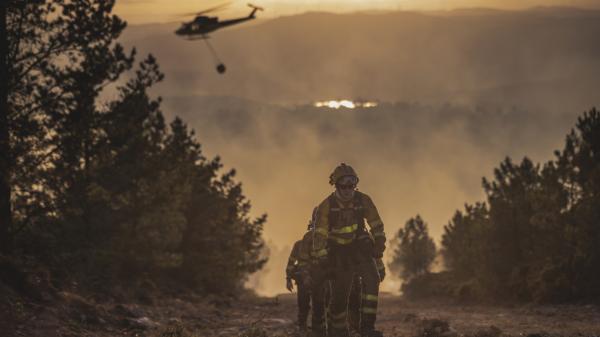
- Reduce the accumulation of plant fuel: removing part of the dry vegetation, pruning remains and other materials can reduce the continuity of the fuel that feeds the fire.
- Maintain extensive livestock activities: controlled grazing helps keep certain areas open and reduce the amount of herbaceous and shrubby vegetation.
- Take advantage of forest resources: the sustainable extraction of wood, firewood and biomass can help finance maintenance and conservation work.
- Create mosaic landscapes: combining wooded areas with grasses, crops and scrub areas can make it difficult for some fires to spread.
These actions are part of the prevention strategies included by the Ministry for the Ecological Transition in its guidelines for the management of forest fires. However, there is no single intervention that guarantees avoiding fire: territorial planning, surveillance, means of extinction and the adaptation of forests to climate change are also essential.
Criticism of Feijóo’s speech on the environment and forest management
Although the active management of the forests has technical support, some of Feijóo’s political positions have generated controversy among environmental organizations and environmental specialists.
One of the most debated issues is his criticism of certain environmental regulations. In September 2025, during his speech in Membrilla, he questioned what he called “armchair environmentalism” and rejected that climate policies can limit agricultural and forestry activity. In March 2026, he also criticized European environmental regulation for considering that some standards have an ideological component and harm economic competitiveness.
There have also been disagreements over their response to the fires. After presenting the 50-measure plan in August 2025, Greenpeace considered that some proposals were necessary, but described the document as incomplete for not sufficiently addressing structural problems such as rural abandonment and the adaptation of ecosystems to climate change. The organization also questioned whether several initiatives were already contemplated in the legislation or had not been sufficiently applied in territories governed by the PP.
Another point of debate is the importance that the party attaches to climate regulation. In July 2026, Feijóo avoided speaking out on the possibility of negotiating the State pact against climate change proposed by Pedro Sánchez, while the PP did not agree to participate in those negotiations. This position contrasts with the need to address the effects of global warming on forests and fires in a coordinated manner.
In any case, it is worth distinguishing between Feijóo’s own statements, his party’s positions and criticism from other organizations. The popular leader has expressly defended that forest management and environmental protection must be compatible, although he maintains disagreements with certain climate policies and European regulations.
The bottom line is that forests need continued care and planning that takes into account both their economic value and their biodiversity. Giving them sustainable use can help conserve them and reduce some risk factors, but it is not enough to convert them into productive spaces: it is also necessary to protect their ecosystems and prepare them for increasingly demanding climatic conditions.
If you want to read more articles similar to Feijóo defends productive forests: what is forest management and how it can help prevent fires, we recommend that you enter our Other environment category.