
Feeding ducks bread is often considered a kind gesture, but it can harm both the birds and the ecosystem. Biologist Felipe Morales warns in his video that “what may seem like a good gesture ends up being harmful to them and the environment.”
Bread provides energy, but very few nutrients, and its frequent consumption can promote health problems, a higher concentration of birds and water pollution. Therefore, this common practice should be reconsidered from a responsible perspective based on scientific evidence.
The problem with bread is not that it gives them energy: it is what they stop eating
Morales points out that the problem, in part, is that “bread is not part of their natural diet and gives them almost no nutrients; it only fills them up.” Although it provides quick energy, mainly in the form of starch, it does not reproduce the variety of aquatic plants, seeds, shoots, small invertebrates and other resources that the different species of ducks consume.
Therefore, when it is stated that bread “does not nourish”, it must be understood from a nutritional point of view: it contains calories, but it is unbalanced when it replaces an important part of the usual diet.
In Amsterdam, researcher Burt and other collaborators observed that bread represented around 67% of the food offered to urban birds and calculated an excess of energy in six of the seven areas analyzed. Their study concluded that this diet was nutritionally inadequate and could promote malnutrition.
The risk does not depend on a single crumb, but on the daily repetition of hundreds of people feeding the birds. Furthermore, dominant individuals tend to monopolize the food, while young specimens or smaller species compete at a disadvantage.
Thus, abundant food can coexist with significant deficiencies in proteins, fiber, vitamins and minerals. The duck gets full sooner, looks for less natural food and ends up consuming many calories, but a much less balanced diet.
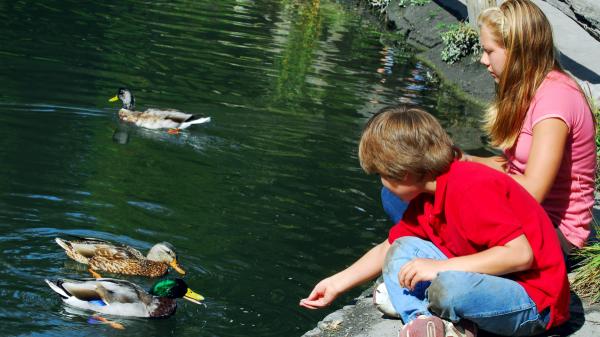
Giving them bread can have consequences on their development and even on their wings
Morales warns that inadequate nutrition can cause “health problems or even deformations such as angel wing, which leaves their wings crooked and can prevent them from flying.”
The angel wing consists of a deviation of the tip of the wing during growth and, in permanent cases, the flight feathers are oriented outwards.
However, it is advisable to qualify the scientific evidence. The available studies do not demonstrate that a portion of bread alone is the direct cause of this deformation. The research published in Animal Bioscience describes a multifactorial disorder, related to accelerated growth, an unbalanced diet, energy excess, genetics, population density, exercise and even certain infectious agents.
Therefore, the message most in line with the evidence is that habitually feeding ducks with poor foods from a nutritional point of view can contribute to an unfavorable context, especially in young specimens, although it does not by itself explain all cases.
Furthermore, concentrating numerous birds at the same point increases competition, stress and contact with feces and wet food remains. These conditions favor the circulation of pathogens and the appearance of moldy foods, related to diseases such as aspergillosis.
The problem continues even after the duck eats the bread
The damage does not end when the duck stops eating. As Morales explains, “leftover bread decomposes in the water and encourages the growth of bacteria and algae, reducing the amount of oxygen and worsening the quality of the water.”
The added organic matter and nutrients feed the microorganisms. During the decomposition process, they consume dissolved oxygen, and in places with little water renewal hypoxia can appear, a situation that is harmful to fish, invertebrates and other aquatic organisms.
Excess nitrogen and phosphorus also favors eutrophication and the proliferation of algae or cyanobacteria.
Additionally, feeding ducks attracts more birds to the same spot and concentrates their droppings. Various studies have shown that waterfowl droppings can add nutrients to the water and modify phytoplankton communities.
Not every green pond can be explained by a few slices of bread: factors such as fertilizers, wastewater, temperature or poor water circulation also play a role. Even so, throwing bread represents avoidable pressure, especially in small, urban or poorly renovated lagoons.
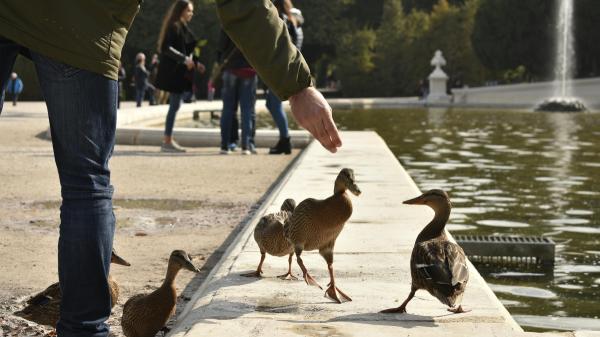
The best way to help a duck may be to not feed it.
Morales’ main recommendation is “not to give them anything.” Observing them, photographing them and explaining to the children how they look for their own food allows them to enjoy the encounter without altering their natural behavior. This option avoids replacing their diet, reduces the concentration of birds and eliminates remains that can attract rats or worsen water quality.
Signs, municipal regulations and instructions from park and wetland managers must also always be respected.
Morales adds that “if you fall into temptation,” it is better to choose vegetables or seeds. Even so, this alternative requires nuances: there is no universal food for all waterfowl, since their needs change depending on the species, age and environment.
When an authority allows feeding birds, minimum quantities of appropriate products should be offered, without salt, mold, sauces or ultra-processed products. Thawed peas, plain oats, chopped greens, or specific food can be less unbalanced options than bread, although they should not become a routine.
The most useful help is to preserve native vegetation, clean water and calm shores. Protecting habitat allows ducks to find their own food and avoids turning a seemingly kind gesture into a problem for the birds and the ecosystem.
If you want to read more articles similar to Felipe Morales, biologist: “Giving bread to the ducks seems like a good gesture, but it ends up harming them”, we recommend that you enter our Biodiversity category.
