
Forests are often associated with clean water and healthy ecosystems, but not all forest plantations have the same effect on the environment. A study conducted in France and Luxembourg has found that streams running through Douglas fir forests can have nitrate concentrations up to ten times higher than those in other forest areas.
What do these trees have to make such an important difference? Researchers have found clues in the soil and in the way nitrogen circulates through the ecosystem, a process that could be affecting both waterways and underground reserves.
Douglas fir and its unexpected effect on forest water
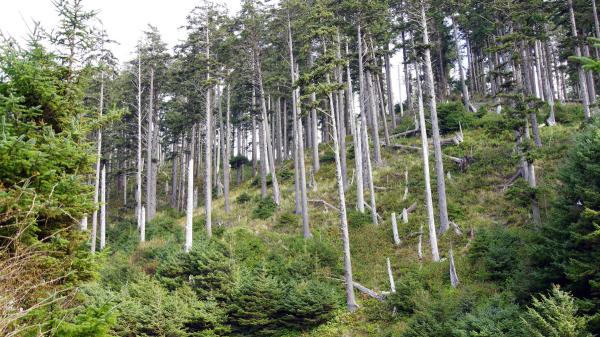
Forests are often associated with clean water and healthy ecosystems, but the choice of tree species can influence the chemical balance of the soil and nearby waterways. A study carried out in France and Luxembourg has focused on Douglas fir plantations (Pseudotsuga menziesii), a conifer native to North America that is used in European forestry projects.
The research, published in the scientific journal Environmental Pollutiondetected that the streams that drain areas with these plantations had nitrate concentrations between two and ten times higher than those recorded in areas with other types of vegetation. The researchers also found elevated levels of this compound in groundwater under spruce trees.
These results raise questions about how certain forest species can modify natural soil processes and promote the movement of nutrients to rivers, streams and aquifers.
Why Douglas firs promote the accumulation of nitrates in the soil
The key to understanding this phenomenon is in the nitrogen cycle, a natural process through which this element is transformed and circulates between the soil, microorganisms and plants. In Douglas fir forests, researchers observed evidence that excessive amounts of nitrates are produced and are not absorbed by vegetation or retained in the soil.
During the decomposition of organic matter, nitrogen is transformed into different chemical forms. One of them is nitrate, a soluble compound that can easily move with rainwater through the layers of the soil. When its production exceeds the absorption capacity of the trees and the retention capacity of the ecosystem, some of it can leak into the groundwater and reach nearby streams.
The study related nitrate concentrations found in the soil with those measured in water courses. This link suggests that the excess nitrates originate, at least in part, in the soil processes under these plantations.
However, the exact mechanisms that explain this accumulation still require investigation. The characteristics of the terrain, the availability of nutrients and the activity of microorganisms can also influence the intensity of the phenomenon.
Streams and groundwater also show the impact
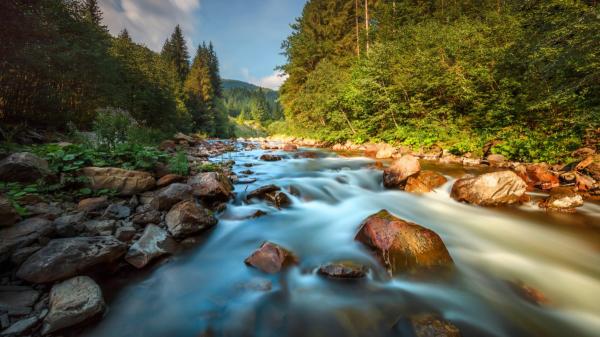
Scientists also detected high concentrations in the streams that run through these forest areas and in the groundwater beneath them.
The team analyzed different river basins in France and Luxembourg over periods of between three and five years. To evaluate the differences, he compared areas covered by Douglas fir with others dominated by common spruce, deciduous trees and grasslands, plus a clear-cut area.
The results showed that the streams that drained the Douglas fir plantations had nitrate concentrations between two and ten times higher than those in areas with other vegetation covers. In the groundwater under these plantations, values reached up to 50 milligrams per liter.
The researchers also observed a relationship between the amount of nitrates present in the soil and that detected in streams, which supports the hypothesis that an important part of this compound moves from the land to the water. The study also pointed out that concentrations could decrease downstream due to dilution, when these waters were mixed with others of lower concentration.
The solution that scientists propose to reduce nitrates
Compared to plantations dominated exclusively by Douglas firs, the researchers propose that combining different species of trees could help reduce the accumulation of nitrates in the soil and its subsequent filtration into water courses.
One of the options being considered is to incorporate deciduous species, such as the European beech, in areas where Douglas fir is grown. This combination could favor greater use of available nitrogen and limit the amount of nitrates that moves into groundwater. Other studies have also observed lower nitrate concentrations in soils from mixed forests that combine both species.
Although it is still necessary to delve deeper into the mechanisms involved and evaluate management measures under different environmental conditions, the findings reinforce a fundamental idea. The choice of forest species not only influences wood production and ecosystem functioning, but also water quality. Promoting forests with a greater diversity of trees could be a useful tool to make forestry activity compatible with the conservation of water resources.
If you want to read more articles similar to France planted Douglas fir forests and now scientists discover that its streams have up to 10 times more nitrates, we recommend that you enter our Ecosystems category.
