
In 1998, some 12,000 tons of orange peels and pulp were used to cover degraded land in Costa Rica. The plot, which had been used for years as pasture for livestock, had compact, rocky and nutrient-poor soil.
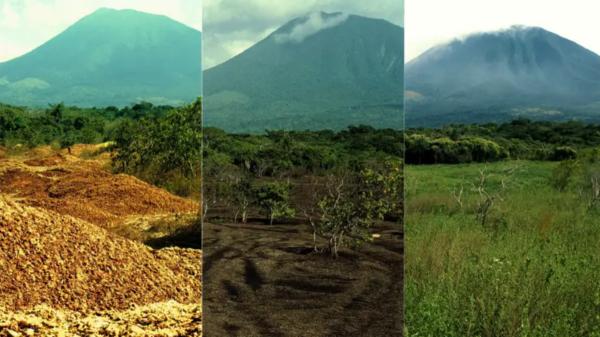
What happened next caught the attention of investigators. When they returned 16 years later, the terrain had completely changed: where grasses and exposed soil had previously dominated, much more abundant vegetation had grown, with a greater diversity of trees.
The study later published in Restoration Ecology calculated 176% more aerial woody biomass in the plot treated with orange residue than in another nearby that had not received this contribution.
How the orange peel experiment began
In the late 1990s, ecologists Daniel Janzen and Winnie Hallwachs were looking for a way to reclaim land degraded by years of ranching in Costa Rica. The soil had lost much of its capacity to support vegetation, so the researchers proposed an unusual idea: using waste from the juice industry as a source of organic matter.
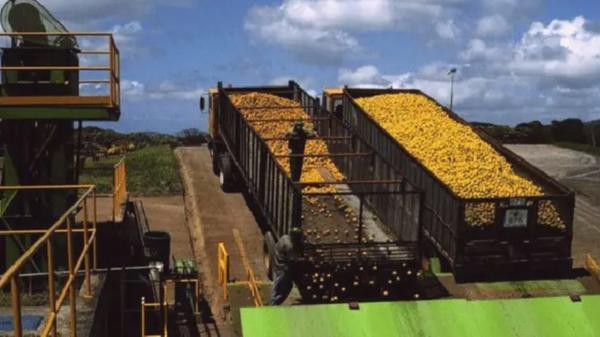
In 1998 they reached an agreement with a company dedicated to the processing of oranges to deposit the waste from their production on about three hectares of land. In total, around 12,000 tons of orange peels and pulp were transported, which remained spread on the surface.
The approach was simple. Instead of treating these remains as waste that had to be thrown away, they would be used to enrich deteriorated soil. When decomposed, the organic matter could provide nutrients to the soil and create more favorable conditions for the vegetation to begin to recover.
The experiment, however, did not continue as planned. Shortly after starting, a dispute between companies in the sector took the case to court and the project was interrupted. The plot was practically abandoned for years, without researchers being able to closely follow its evolution.
What happened during that time would make that experiment an especially striking case of ecological restoration. When scientists returned to the site in 2013, the terrain had changed to such an extent that they could barely recognize it.
The shells began to transform the soil
The 12,000 tons of orange peels and pulp began to degrade naturally. During this process, organic matter was incorporated into the soil and provided nutrients, while its characteristics were progressively modified.
The deposited material also favored more appropriate conditions for the activity of microorganisms and other soil organisms. As the waste decomposed, the soil had a greater amount of organic matter and could retain moisture better.
The enormous amount of waste also had another important effect. The thick layer of peels and pulp covered much of the vegetation that initially dominated the plot, reducing competition for available space and resources for a time.
As the years went by, the decomposition of the waste left behind a soil different from the one that had received the treatment. The new conditions made it easier for different plant species to establish themselves and for natural regeneration to advance.
The contrast was especially clear when the researchers compared the treated plot with a nearby one that had not received the waste. In the latter, the landscape continued to be largely dominated by grasses and exposed soil, while the treated area had much more abundant vegetation.
16 years later, there was 176% more biomass
When researchers returned to the field in 2013, about 16 years had passed since the waste was applied. The difference between the two plots was then especially evident.
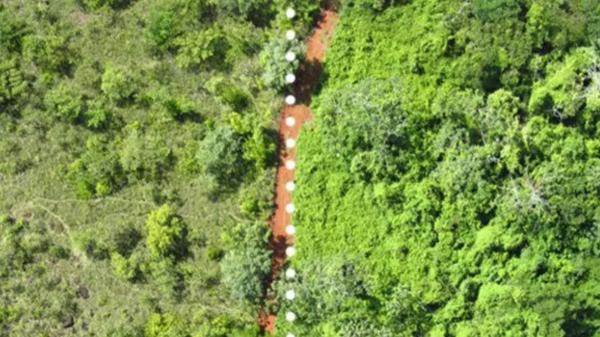
The area where the orange peels and pulp had been deposited had a greater amount of woody vegetation and a more diverse community of trees than the plot used as a control.
Measurements carried out during the investigation estimated 176% more aerial woody biomass in the area treated with the waste. A greater richness of woody plant species was also recorded, to the point that the researchers described a considerable recovery of vegetation compared to the plot that had not received the contribution of organic matter.
One of the most striking aspects of the case is that the recovery did not occur through conventional plantation. It was not necessary to introduce trees one by one for the vegetation to advance. Once the initial conditions of the land were modified, the ecosystem itself developed over the following years.
The result thus showed the potential that the use of certain organic waste can have in ecological restoration projects when suitable conditions are met.
A case of restoration that does not work for any terrain
The Costa Rica case left a conclusion that goes beyond the orange peels themselves. Some organic waste can play an important role in the recovery of land that has lost a good part of its vegetation, especially when it contributes large amounts of organic matter to highly degraded soils.
In this experiment, the decomposition of the peels and pulp provided nutrients and organic matter to the soil and helped create favorable conditions for the vegetation to begin to regenerate naturally.
However, the result does not mean that covering any land with waste from the food industry will produce the same effect. The characteristics of the soil, the climate, the species present, the degree of degradation and the quantity and composition of the waste are factors that can completely change the result.
For this reason, the researchers themselves proposed the experiment as a specific case of ecological restoration and not as a universal formula. On this piece of land in Costa Rica, 12,000 tons of waste that were going to be discarded ended up being part of a recovery process that, 16 years later, had completely transformed the landscape.
If you want to read more articles similar to In 1998 they covered a degraded land with 12,000 tons of orange peels: 16 years later it was a forest, we recommend that you enter our Ecosystems category.
