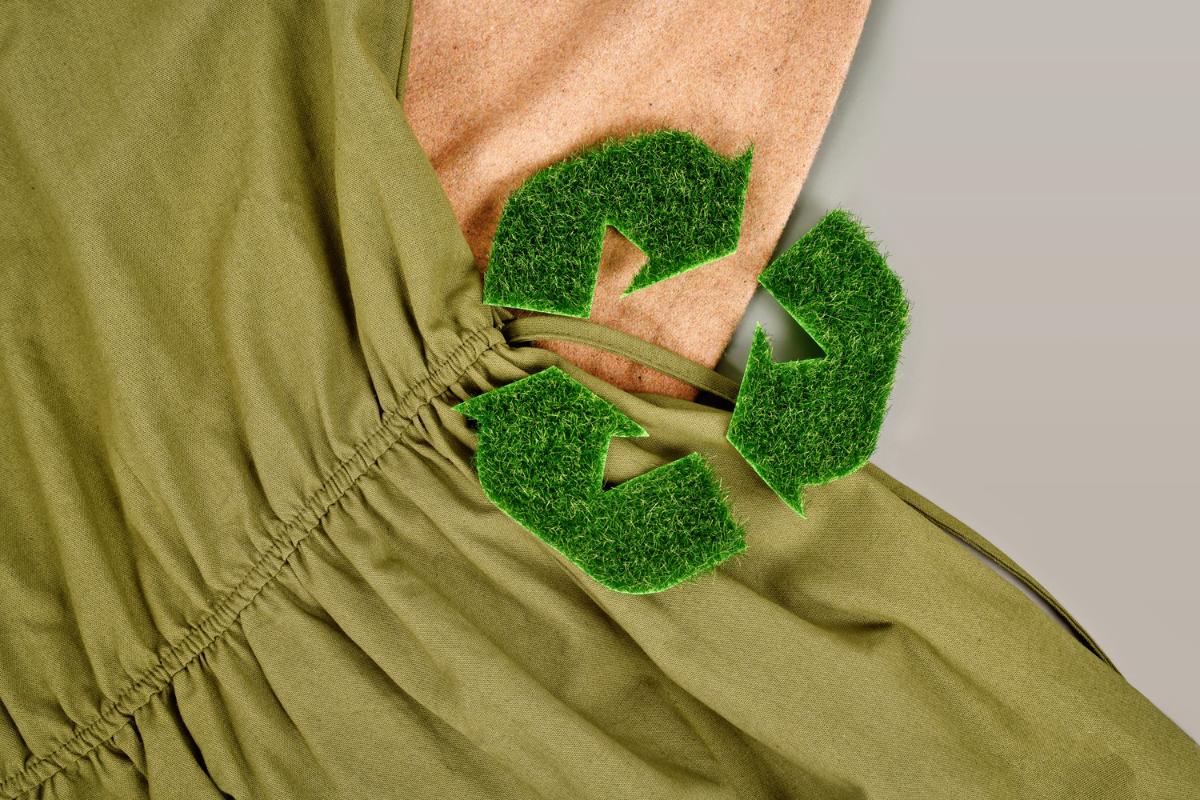
As time goes by, the fashion industry is rethinking itself and seeking to transform many of its practices, because these are identified as negative for the environment. In this sense, for some years now people have begun to talk about sustainable fashion, mainly as a response to the practice of fast fashion.
In this Evidence Network article we talk about sustainable fashion and the advantages over fast fashion.
A scenario that promotes the protection of the planet with fashion
In this scenario, there are more and more sustainable fashion brands that we can find, such as Fieito. This is related to the climate and environmental crisis that requires the world’s industries, from different sectors, to begin to take on the challenge that they all have to move towards a more sustainable model.
With this common horizon, what sustainable fashion seeks is to become a friendlier alternative for the planet than fast fashion. Its focus is on the concept of reducing, reusing and recycling, which are pillars of the circular economy, increasingly in demand. The circular economy seeks to transform the way we produce and consume, but also the way we think about development and the market.
In the book called Sustainable Wardrobe: Learn to buy consciously and intelligently, the Spanish communicator and fashion expert, Laura Opazo, seeks to make it clear that clothing is capable of transmitting a message that changes over time. This is because it understands that fashion is a true reflection of society that is constantly evolving. Understand, at the same time, that assuming this perspective can help understand how the paradigm shift in fashion consumption was taking place from the beginning of the 20th century to the present day.

Clothing and consumption
To better understand the history of fashion, we must go back to the Second World War. Until then, clothing was not a daily consumer product, but rather the garments were more related to the idea of replacement. Starting in the 1950s, the concept and practice in relation to fashion changed substantially.
Because? Because young people no longer had to go to war, which expanded the available workforce. Furthermore, at the same time women began to enter the labor market en masse in the West, which also generated the beginning of a moment of economic prosperity, cementing societies’ confidence in consumption.
It is in the set of these factors and in technological advance that industrial production increases. Furthermore, the growth of advertising boosts consumption and increasingly intense production. This leads to an unbalanced system and, starting in the 2000s, fast fashion emerges, where people seek not to wear clothing but to consume it. For this reason, clothes are worn for less time and discarded, only to be bought again in an endless cycle.
What does sustainable fashion propose?
Understanding that the fashion industry is the second most polluting in the world according to a study presented by the UN Conference on Trade and Development, and that more than 8% of global greenhouse gas emissions are produced by the clothing and footwear industry (and that an increase of more than 60% is expected by 2030), sustainable fashion seeks to reduce this impact.
What sustainable fashion seeks is to turn to alternatives that extend the useful life of garments, as well as promote their reuse in what is known as second-hand, clothing rental, cloud closets, among other things. But it also seeks to produce garments using fewer polluting materials and processes.
If you want to read more articles similar to Sustainable fashion and the advantages of fast fashion, we recommend that you enter our Organic products category.
