
In the northwest of Canada there is a territory of steep mountains, extensive forests and valleys crossed by rivers where wildlife retains a leading role. This is Muskwa-Kechika, a huge natural area in British Columbia that exceeds 6.3 million hectares and is home to some of the most emblematic large mammals in North America.
Black and grizzly bears, wolves, lynx, elk, caribou and even bison are part of the diversity of animals found in this region, known as the “Serengeti of North America” for its rich fauna. Its value lies both in the variety of species and in the existence of large natural spaces where predators and their prey can maintain their ecological relationships.
Muskwa-Kechika, an immense wild territory in Canada
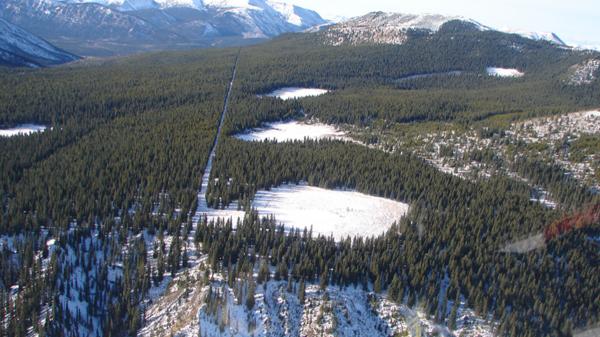
Muskwa-Kechika is located in the northeast of the Canadian province of British Columbia, where the boreal plains and wetlands meet the northern Rocky Mountains. Its management area occupies 6,384,441 hectares, an area comparable to that of entire countries.
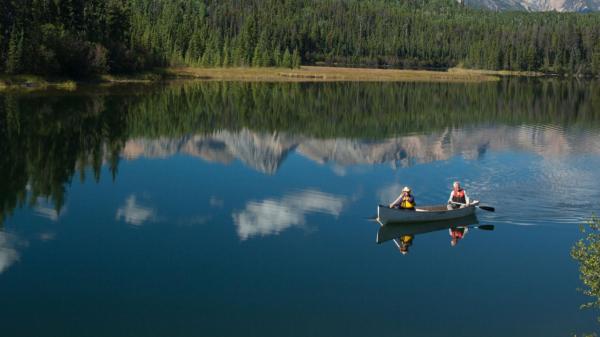
The landscape changes considerably from one area to another. There are mountain peaks, deep valleys, alpine meadows, forests and wetlands that provide food and shelter for numerous species. This diversity of environments helps explain why the territory stands out for its natural wealth.
This region of Canada also preserves large areas relatively unaltered by human infrastructure. The low density of roads and access restrictions in certain areas have contributed to maintaining extensive habitats and relationships between predators and prey that are more difficult to conserve in highly fragmented landscapes.
The name Muskwa-Kechika identifies a territorial management area, not a single national park. It includes provincial parks, protected areas and ecological reserves, as well as areas in which certain uses of natural resources are allowed under specific conditions.
Bears, wolves, lynx and bison share their ecosystems
The variety of mammals is one of the most notable features of Muskwa-Kechika. The official site of the management area includes among its fauna black and grizzly bears, gray wolves, lynx, elk, caribou, mountain goats, Stone sheep and plains and wood bison.
Grizzly bears and black bears occupy different habitats in the region and take advantage of seasonally available food resources. Wolves, for their part, are large predators that feed on different animals and are part of a natural system in which the populations of carnivores and herbivores are related.
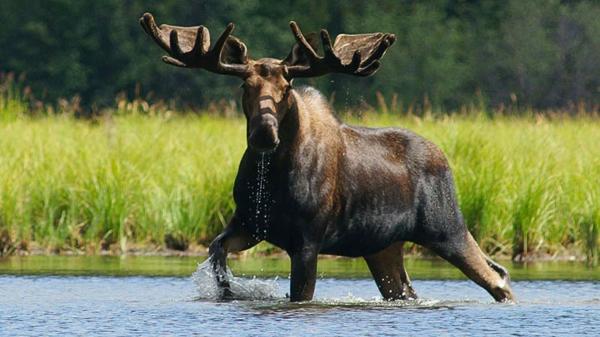
Moose and caribou are some of the large herbivores that find food in the forests, grasslands and other environments of the territory. Their needs change throughout the year and their movements depend, among other factors, on the availability of vegetation and environmental conditions.
The lynx is another of the mammals present in the area. More discreet than large bears, this feline is adapted to forest environments and feeds mainly on smaller animals, such as hares.
Also notable are the bison, both plain and forest, which are among the species collected in the documentation of the region. Their presence reminds us that the fauna of Muskwa-Kechika is not limited to large carnivores: herbivores are also essential for the functioning of these ecosystems.
The coexistence of so many species does not mean that it is easy to observe them. Many move through remote areas, avoid human presence or use large territories to find food and reproduce. Precisely for this reason, conserving their habitats is as important as protecting the animals themselves.
Why conserving large areas is essential for wildlife
The size of Muskwa-Kechika is one of its main ecological values. Animals that travel long distances need connected habitats, feeding areas and spaces where they can reproduce without encountering constant barriers.
When roads, infrastructure and other human activities fragment the landscape, travel can become more difficult and some populations become isolated. Instead, maintaining large connected natural areas makes it easier for animals to move between different environments and helps preserve relationships between predators and prey.
According to information published by the Muskwa-Kechika Advisory Council, the territory covers about 6.4 million hectares and brings together landscapes ranging from alpine areas to lower altitude wetlands.
Not all of that surface is protected in the same way. Part corresponds to parks and other protected areas where resource extraction is prohibited, while in certain management zones activities such as logging, mining or energy exploration are allowed, subject to the corresponding regulations.
Therefore, the challenge is to make human uses compatible with the conservation of ecosystems. Access management, activity planning and protection of sensitive habitats are important tools to prevent development from compromising the natural values that distinguish the region.
A management model that also has a cultural dimension
Muskwa-Kechika is not only an area of interest for fauna and ecological research. It is also part of the traditional territories of several indigenous peoples, including the Kaska Dena First Nations and communities linked to Treaty 8.
These communities maintain a historical relationship with the territory and its resources. Therefore, the conservation of Muskwa-Kechika also involves recognizing its cultural and social values, in addition to preserving landscapes and biodiversity.
The creation of a specific legal framework in the late 1990s made it possible to establish management objectives to maintain the wild nature, species diversity and ecosystems of the area. The model seeks to preserve these values in the long term, while regulating the permitted uses in different areas.
The nickname “North American Serengeti” refers to the abundance and variety of fauna that characterizes Muskwa-Kechika. Although their mountainous and boreal landscapes are very different from the African savannas, both territories illustrate the importance of conserving large spaces where animals can develop their life cycles.
At a time when infrastructure expansion and land transformation threaten many habitats, Muskwa-Kechika shows why conservation must consider not only specific species, but also the landscapes and ecological processes that allow their survival.
If you want to read more articles similar to The “Serengeti of North America”: the region of Canada of more than 6 million hectares where bears, wolves, lynx and moose live, we recommend that you enter our Ecosystems category.
