
In the middle of the Atacama Desert, a mountain of 60,000 tons of discarded clothing has become one of the most surprising textile landfills on the planet. The accumulation, located near Alto Hospicio in Chile, is so huge that it can be seen from space and continues to grow with clothing from around the world, including Europe and the United States.
Among mountains of t-shirts, pants, coats and shoes, there are garments that were never sold or that were discarded after passing through different markets. This landscape, in the middle of one of the most arid places on the planet, has become a symbol of the consequences of mass consumption of clothing and the impact of the so-called fast fashion about the environment. Some users on social networks, like Agustina Grasso (@cronistamillennial) shows in her video, have already come forward to see this reality and be able to show it more and better to the rest of the world.
This is how a mountain of 60,000 tons of clothing has been formed in the middle of the Atacama Desert
The enormous textile landfill in northern Chile is located next to the Iquique free zone, where shipments of garments arrive, initially intended for sale and subsequent distribution to other Latin American countries.
The problem appears when a part of these garments does not find a buyer. Clothing that loses its commercial value can end up abandoned in desert areas, causing the accumulation to grow year after year. Satellite images allow us to appreciate the size of this landfill, to the point that its extension can be distinguished from space.
Although a good part of the garments come from international trade and Europe plays a prominent role, it is not only European clothing. According to data cited from the United Nations, the European Union accounts for 30% of global exports of discarded clothing, while the United Kingdom accounts for 16% and the United States 15%. This makes the Atacama landfill the visible result of a much broader commercial chain.
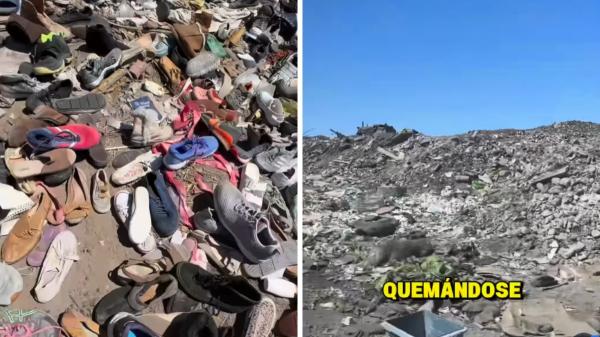
How clothes from Europe and the United States end up in the Atacama Desert
Iquique is part of a free zone, which facilitates the entry and subsequent distribution of goods. From the port, the shipments move to Alto Hospicio, where importers try to sell the garments in Chile or send them to other Latin American countries.
The problem appears when a part of the clothing does not find a buyer. Garments that lose their commercial value can become too expensive to store, transport or manage, so they end up abandoned in desert fields. In this way, the bales that were initially intended to continue their commercial journey end up becoming waste.
The volume of trade helps to understand why accumulation does not stop growing. The European Union is the world’s main exporter of discarded clothing, with 30% of the total, but behind it are also the United Kingdom, with 16%, and the United States, with 15%. Therefore, the Atacama mountain is the reflection of a problem that affects a much broader textile market than the European one.
“We are the garbage dump of the world”: this is how the neighbors live next to the gigantic mountain of clothes
The mountain of clothes is not only a problem related to waste. In Alto Hospicio, a town located next to the landfill, its consequences are part of the residents’ daily lives. Fires set to eliminate part of the textiles generate smoke that can reach inhabited areas, especially worrying when there are synthetic materials such as polyester among the garments.
The mayor of Alto Hospicio, Patricio Ferreira, has publicly denounced the situation and the lack of a definitive solution. “We feel abandoned. We feel like our land has been sacrificed. We are the garbage dump of the world and there is still no real solution to this problem.”
Ferreira also regretted that the image of the municipality has been linked to this landfill. “On the Internet, when you search for Alto Hospicio, videos appear saying that here is the ugliest place in the world,” he said, before claiming that it is a small city in northern Chile whose identity should not be reduced to the accumulation of textile waste.
The concern transcends the borders of Chile. The UN has described the waste problem as an “environmental and social emergency for the planet” and has focused especially on the impact of the fashion industry and the rapid pace at which clothing is discarded. According to the organization, prolonging the wear time of clothing could contribute to considerably reducing the emissions associated with its production.
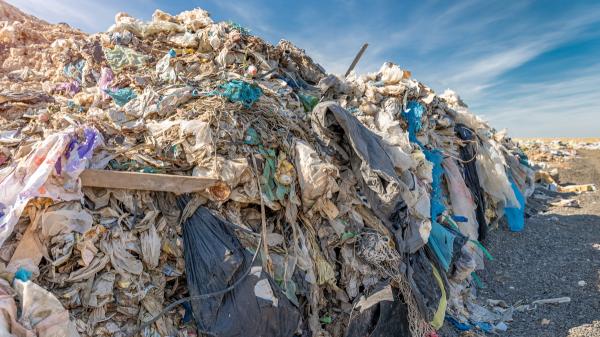
The mountain of clothes reached the courts, but the Atacama problem continues
The enormous accumulation of textiles does not have a simple solution. After years of neglect, the issue has even ended up in court. The First Environmental Court of Antofagasta determined that the Chilean State was responsible for omission by failing to prevent or control for years the illegal accumulation of textile waste on public lands in Alto Hospicio.
The ruling ordered the implementation of an environmental repair plan with a duration of ten years. However, the process is not over yet. Meanwhile, the flow of clothing to Chile continues to be enormous. The port of Iquique receives between 120,000 and 180,000 tons of used clothing every year, a figure that makes the country the fourth largest importer of second-hand clothing in the world. Some of this merchandise may find a new commercial outlet, but other ends up without a buyer and increases pressure on a waste management system that is already overwhelmed.
The solution is not only to remove the tens of thousands of tons that are already in the desert. The UN has warned of the global impact of the current textile consumption model and points out that extending the useful life of garments could considerably reduce their associated emissions. According to experts, doubling the wear time of a garment could reduce greenhouse gas emissions by 44%.
If you want to read more articles similar to A mountain of 60,000 tons of clothing found in the Atacama Desert that can be seen from space and contaminates the environment, we recommend that you enter our Pollution category.
