
Desertification in Africa is advancing at an alarming speed. In the Sahel, the enormous semi-arid strip that separates the Sahara Desert from the southern savannas, rising temperatures, extreme droughts and soil degradation are transforming fertile landscapes into territories increasingly hostile to human life. Faced with this threat, eleven African countries decided to promote one of the most ambitious environmental initiatives on the planet: the Great Green Wall.
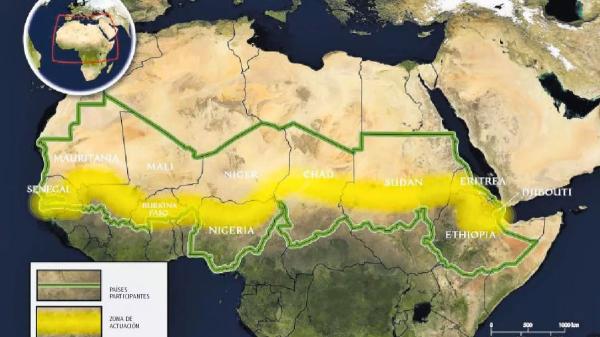
The project, coordinated by the African Union, seeks to create a gigantic ecological corridor of about 8,000 kilometers in length that crosses the continent from Senegal to Djibouti. Although its initial objective was to plant millions of trees to stop the advance of the Sahara Desert, over the years the Great Green Wall has evolved into a much broader strategy based on the restoration of ecosystems, sustainable agriculture and the recovery of communities affected by climate change.
The initiative began to take shape in 2005 and was officially launched in 2007. Countries such as Senegal, Mauritania, Mali, Burkina Faso, Niger, Nigeria, Chad, Sudan, Eritrea, Ethiopia and Djibouti participate. Together, the initiative aims to restore 100 million degraded hectares before 2030, capture up to 250 million tons of carbon and generate some 10 million green jobs in one of the most vulnerable regions on the planet.
The solution to stopping desertification does not consist only of planting trees
The Sahara does not stop expanding. Various climate studies show that the Sahel is warming faster than the global average, while rainfall is becoming more irregular. The loss of vegetation accelerates soil erosion, decreases water retention and reduces agricultural productivity. For millions of people who depend on agriculture and livestock, this situation translates into hunger, forced migrations and conflicts over basic resources.
The advance of desertification could push hundreds of millions of people to move before mid-century if climate adaptation measures are not taken. The Great Green Wall tries to respond precisely to that scenario. But it’s not just about planting trees. In many places, traditional agricultural techniques are being recovered, restoring native vegetation and protecting existing natural shoots.
In countries like Ethiopia, for example, much of the project’s success has been in allowing local species to regrow through pruning and soil protection, rather than relying exclusively on new plantings.
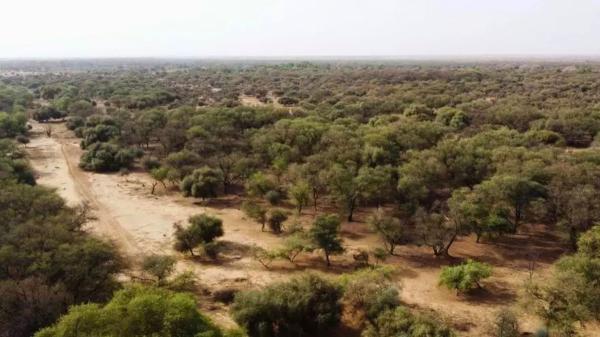
Senegal and Ethiopia, two emblematic examples of the project
Senegal has already managed to plant millions of drought-resistant trees, especially acacias, a species essential for fixing nitrogen in poor soils and improving fertility. In some areas of northern Senegal, where arid terrain previously predominated, crops and pastures began to reappear.
Ethiopia, for its part, restored millions of hectares using natural regeneration systems managed by local farmers. Specialists consider that this strategy can be more effective and sustainable than traditional massive reforestations, because it uses species already adapted to the ecosystem.
In addition to capturing carbon and recovering biodiversity, these interventions help reduce dust storms, stabilize local temperatures and improve water infiltration into the soil. The Food and Agriculture Organization of the United Nations (FAO) maintains that the restoration of degraded ecosystems will be a key tool to confront climate change in arid regions.
Difficulties due to insufficient financing and armed conflicts
Although the initiative became a global symbol of environmental restoration, the project faces enormous difficulties. Funding remains insufficient and many Sahel countries are experiencing political crises, coups d’état or armed conflicts that make restoration efforts difficult.
In several regions, millions of trees planted during the first years died for lack of water and maintenance. This forced us to rethink strategies and prioritize local species that are much more resistant to extreme conditions.
The most recent reports indicate that a relatively small portion of the 2030 goals has still been completed. That is why some experts believe that the deadlines will have to be extended to at least 2035. Even so, many scientists consider that the project remains a global reference because it combines ecological restoration, food security and climate adaptation on a large scale.
The initiative that inspires the fight of other countries against desertification
The African strategy also began to inspire similar initiatives in other parts of the world. China, for example, has been promoting its own “Great Green Wall” for decades to contain the advance of the Gobi Desert. In recent years it has even incorporated new technologies to stabilize dunes and protect agricultural areas.
However, the African experience has an especially strong human and social component. Landscape restoration does not only aim to improve environmental indicators: it also seeks to prevent millions of people from losing their livelihoods in a region where climate change is no longer a future threat but has become an everyday reality.
The Great Green Wall thus became one of the greatest environmental commitments of the 21st century. A gigantic project, crossed by economic and political difficulties, but at the same time reflects how ecological restoration can become a key tool to confront the global climate crisis.
If you want to read more articles similar to What is the Great Green Wall: the 8,000-kilometer wall of trees with which Africa wants to stop the Sahara Desert, we recommend that you enter our Other environment category.
