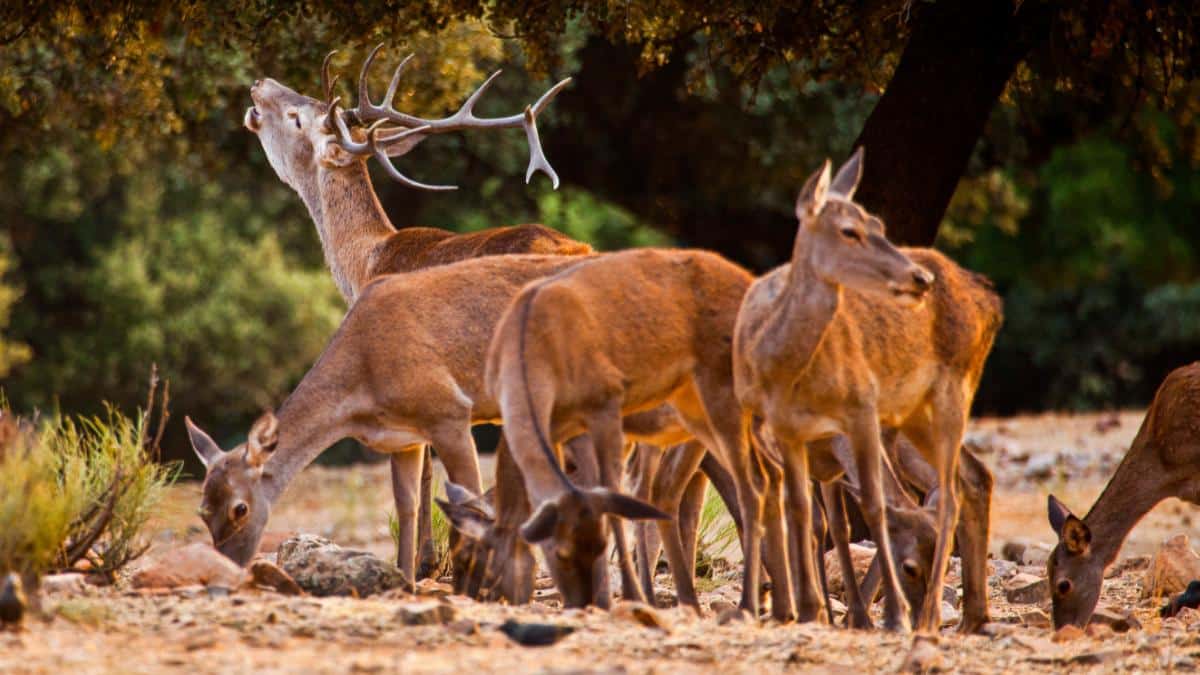
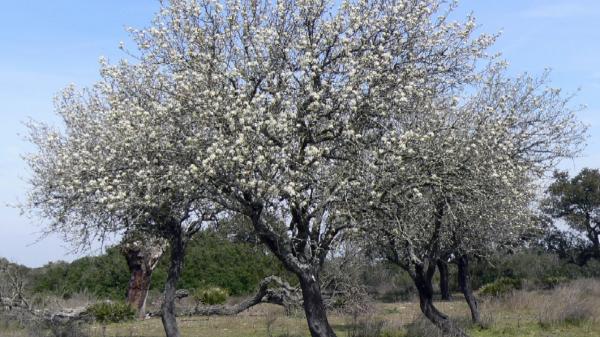
The pirouétano (Pyrus bourgaeana) is one of the characteristic trees of the Mediterranean ecosystems of Doñana, but its populations have been having difficulty regenerating for years. A scientific study that has followed its evolution for almost two decades has focused on the pressure that deer and wild boars exert on young plants, although these animals are far from explaining what is happening on their own.
Lack of water and prolonged droughts are also compromising the survival of the species. Researchers thus speak of a conservation paradox: even within a protected space, a species can continue to be subject to different environmental pressures that make its survival difficult.
Almost 20 years of data show that the tree has problems regenerating
The research, led by scientists from the Doñana Biological Station of the CSIC, analyzed five populations of piruétano located inside and outside the National Park. The team studied different phases of the life of these trees for almost 20 years, from seedlings to adult specimens, to find out what factors were behind their decline.
The results show that the regeneration of the species is especially complicated. The survival of seedlings during their first years is very low and pressure from herbivores appears as one of the factors that makes it most difficult for these small specimens to become adult trees.
The situation is especially striking in some areas of the park. In Matasgordas, for example, more than 60% of the adult specimens died during the two decades studied and there was hardly any incorporation of new trees into the reproductive phases. The mortality also coincided with a marked decrease in groundwater.
The study published in Biological Conservation concludes that the protection of the territory is not alone guaranteeing the persistence of the piruétano. Hence its authors speak of a conservation paradox.
Pressure from deer and wild boar hinders the regeneration of this tree
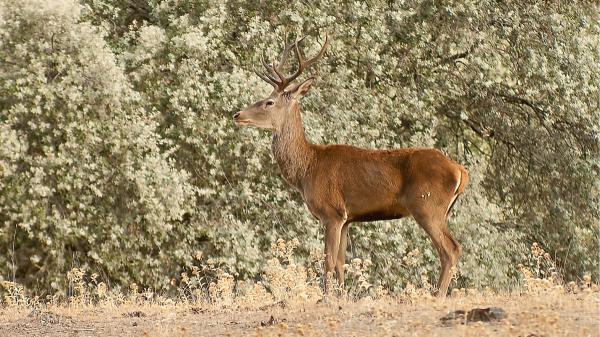
Ungulates do have an important role in this process. Deer and wild boar can consume fruits, seeds and vegetation, and their activity can especially affect the most vulnerable phases of the piruétano.
The research found greater herbivory pressure on young specimens in some of the populations located within the National Park. This can make it difficult for plants to survive during the first years, precisely when they have not yet reached the size necessary to better withstand environmental conditions.
Other scientific work focused on the Doñana piruétano populations also found a relationship between the activity of ungulates and the distribution of these trees. Populations subject to greater herbivore activity had a lower density of trees.
But this data does not mean that deer and wild boar are solely responsible for the decline. The study itself indicates that herbivory acts together with other factors, including the deterioration of groundwater and prolonged droughts.
It is an important difference: ungulates can hinder the regeneration of the piruétano without being, by themselves, the explanation of its current situation.
The same fauna can help the tree and hinder its regeneration
The relationship between the piruétano and the animals of Doñana is even more complex. Not all mammals that interact with their fruits have the same effect.
Previous research has shown that animals such as the fox and the European badger can act as dispersers of their seeds. By consuming the fruits and then moving through the territory, they help transport the seeds to other places. Ungulates, on the other hand, can have a different effect on seeds and seedlings.
This shows why it is difficult to divide the ecosystem between animals that are beneficial and harmful to a plant species.
The survival of the piruétano depends on a network of interactions in which herbivores, seed dispersers, vegetation, water and climatic conditions participate. A change in any of these elements can modify the tree’s chances of regeneration.
Lack of water exacerbates the problem
In addition to herbivore pressure, the researchers identified another fundamental factor: water.
The decrease in groundwater appears related to a high mortality of adult specimens in some studied areas. This is especially relevant because an adult tree can survive for years, but it needs sufficient environmental conditions to maintain itself and produce new generations.
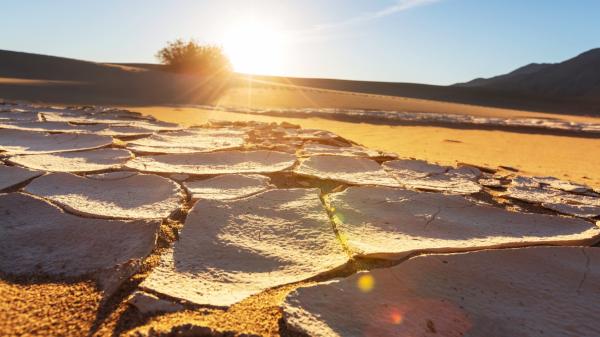
Added to this situation are prolonged droughts. When water availability decreases, young plants have more difficulty surviving their first years of life and adult trees may be subject to greater water stress.
Therefore, reducing the problem to the presence of deer and wild boar would leave out a fundamental part of what is happening. The piruétano is in the middle of a scenario in which herbivory, lack of water and drought act together.
The paradox of conserving a complex ecosystem
The case of the piruétano shows one of the difficulties of conserving natural spaces as complex as Doñana. Protecting a territory does not mean that all the species that live there automatically have the necessary conditions to thrive.
The researchers raise the need to address several factors at the same time, from the sustainable management of water resources to herbivore pressure and the recovery of ecological interactions that allow seeds to be dispersed. This is stated by the Doñana Biological Station of the CSIC in its explanation of the results.
The situation also reminds us that conservation is not necessarily about acting on a single species or threat. In an ecosystem like Doñana, animals, plants, water and climate are connected.
The piruétano is a good example of this. Deer and wild boar can hinder their regeneration, but science indicates that their future depends on a much broader set of environmental factors. The paradox is precisely there: a tree can be found within one of the most protected natural spaces in Spain and, even so, continue to have problems guaranteeing the relief of its own populations.
If you want to read more articles similar to Deer and wild boar make the survival of this Doñana tree difficult, but they are not the only cause: scientists have discovered an ecological paradox, we recommend that you enter our Ecosystems category.
