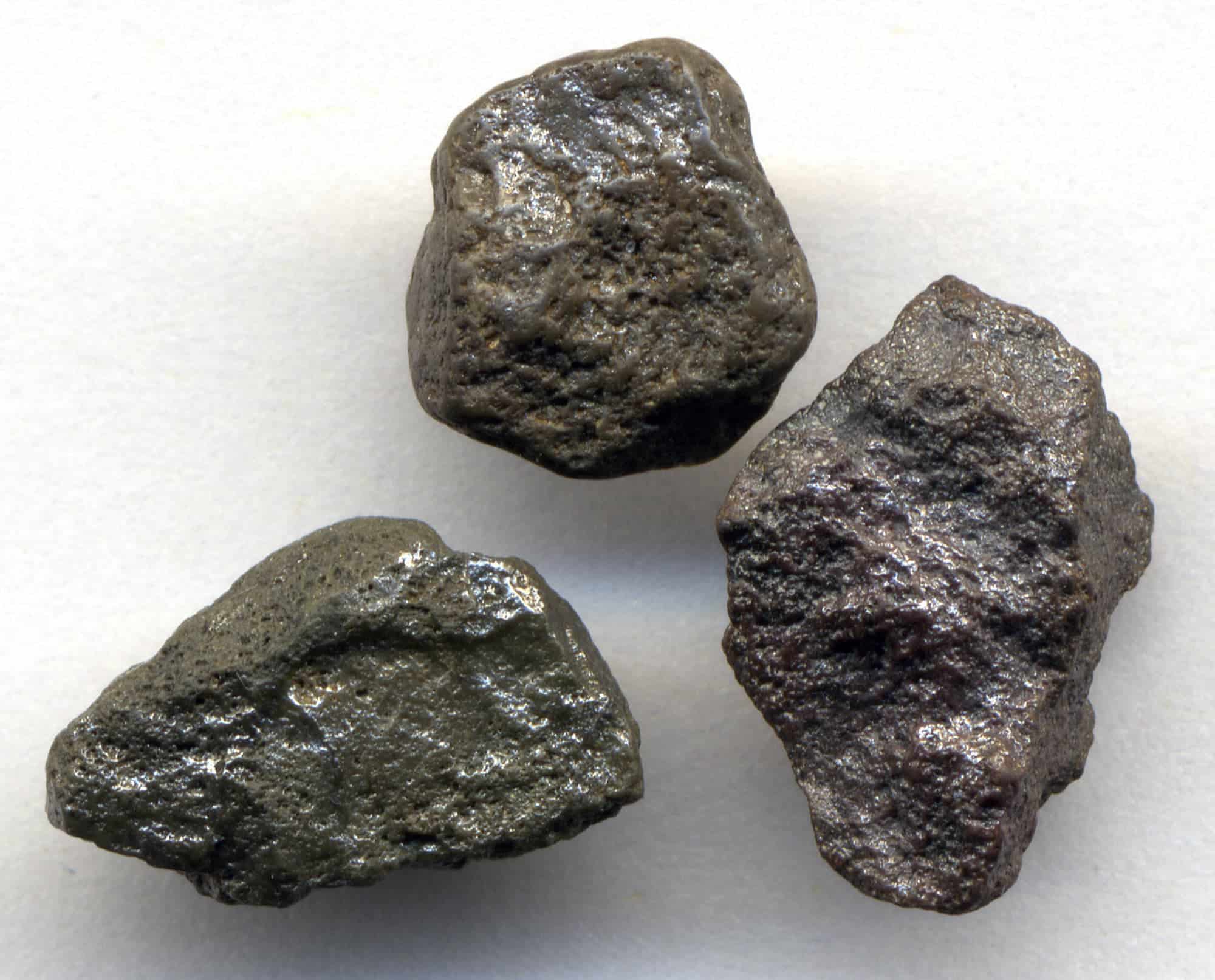
Carbonado diamonds are porous, billion-year-old stones. Their birth dates back to an ancient impact that would have triggered rapid subduction up to the Earth’s mantle.
Imagine picking up a black stone from the bed of an ancient Brazilian river. The surface shimmers like glass, but is dotted with tiny holes. If you smashed it, you wouldn’t find a single crystal inside, but a compact mass of miniature diamonds. Where did such a strange object come from? Is called “carbonado”and it is one of the great mysteries of geology.
Geological clock
These polycrystalline diamonds (made up of many crystals) are found in alluvial deposits in the Central African Republic and the Brazilian state of Bahia. The name was born among Brazilian miners, who coined it in 1840 to distinguish these dark and irregular stones from common diamonds.
No one, however, has ever managed to identify the source rock in which they would have formed. Their age is also surprising: dating based on lead isotopes indicates 2.8-3.6 billion years, older than most other diamonds and much of the geological area in which they are found. Unlike transparent, single-crystalline gems intended for jewelry, carbonado is a porous mosaic of crystals and minerals, each of which may have recorded a different phase in its history. Deciphering them is a bit like reconstructing a journey from the labels and scratches on a suitcase that has traveled around the world.

Space, impact or deep earth?
For decades the hypotheses have been conflicting. The proposed hypotheses, often incompatible with each other, range from extraterrestrial origins to crustal ones and those linked to the mantle. What made us think of a cosmic origin was above all the shiny and glassy surface, which was reminiscent of the fusion crust of a meteorite. Others hypothesized that the diamonds were born in the shock of an impact.
A 2011 research led by Attila Demény, however, had already shifted the balance: analyzes on hydrogen and carbon isotopes made a terrestrial formation appear more plausible, linked to the interaction between mantle rocks or subducted crustal material (i.e. slipped under an Earth plate) and fluids rich in carbon and hydrogen.
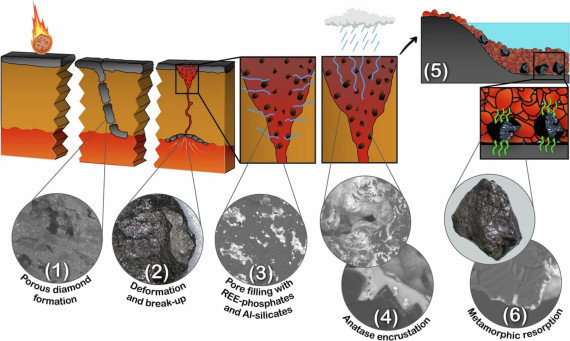
Now a new study proposes a third way: an ancient impact may have played a role, but only as the first act. It would have helped drag carbon-rich material deep into the planet, where diamonds would form in the mantle before rising to the surface. In this story the collision opens the story, but it is not the direct cause of the birth of diamonds.

A clue in the glassy surface
Attila Demény, Péter Németh and colleagues analyzed carbonado samples from the Tombador Formation, Brazil.
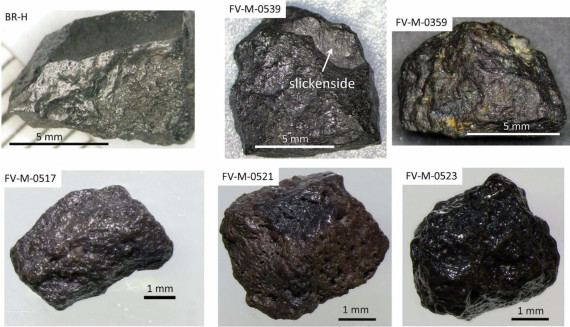
They studied the carbon, scanned the stones with X-rays and examined some grains under an electron microscope. The shiny surface of the carbonado was the first mystery. Many thought it had been produced by an impact, like the shiny crust that forms on a meteorite when it heats up. But a violent impact also leaves marks inside the diamond and the researchers found none: the crystals, observed under the microscope, remained regular up to the surface.
Some stones then had a thin patina of “anatase”, a titanium-based mineral. The decisive detail is that the smooth and shiny surface equally covers both this patina and the places where the diamond is exposed. So the patina was already there before the surface became smooth. “The formation of the glassy surface must have occurred later,” explained Demény.
The hypothesis is that, at a later moment, fluids slightly dissolved both the patina and the underlying diamond, smoothing them together, a bit like water smoothes a pebble. The shine would therefore not be the sign of the birth of the stone, but of a subsequent episode in its history. In short, the order of events sees first the diamond forming, then the deposition of the anatase patina and finally the action of fluids that smooth the surface, giving it a glassy appearance.
Carbon that comes from afar
To understand the origin of carbon, researchers measured the proportions of its different forms (isotopes). In most stones the result was similar to that of carbon left by ancient living organisms. Only one diamond showed an intermediate value between that of the typical carbonado and that of diamonds born in the depths of the earth, a sign of a possible mixture of sources.
One question remains: How can surface material get low enough to turn into diamond? “The only explanation is subduction, which must have been very rapid, otherwise the pores inside the diamond would have had to be eliminated,” observes Demény. A quick descent would explain why the stones are still so full of cavities. What triggered it, the researchers hypothesize, was a large impact on the young Earth. “It is also known that the Earth has been bombarded by extraterrestrial bodies reaching 100-200 km in diameter, which may have induced rapid subduction,” he added.
The story reconstructed, step by step
According to the model, sediments rich in organic matter would have been dragged deep into the mantle, where the immense pressure would have transformed part of the carbon into diamond.
The rising magma would then have shattered the diamond-bearing rock, carrying the fragments upwards. Other minerals would have infiltrated the pores; erosion would have deposited the fragments into the sediments, where fluids would have smoothed the surface. The path coherently connects many peculiarities of the carbonado: the carbon it contains, the pores, the fragmented appearance, the spaces full of minerals.
A previous study had also described a carbonado specimen on which a gem-quality diamond had grown: for Demény, an element in favor of a passage into the mantle. There is also another geographical coincidence that scholars have long remembered: in the Gondwanan era the Brazilian and African areas where carbonado is found formed a single region, separated only by the opening of the Atlantic in the Mesozoic. Which explains why the same, extremely rare material appears on both sides of the ocean.
