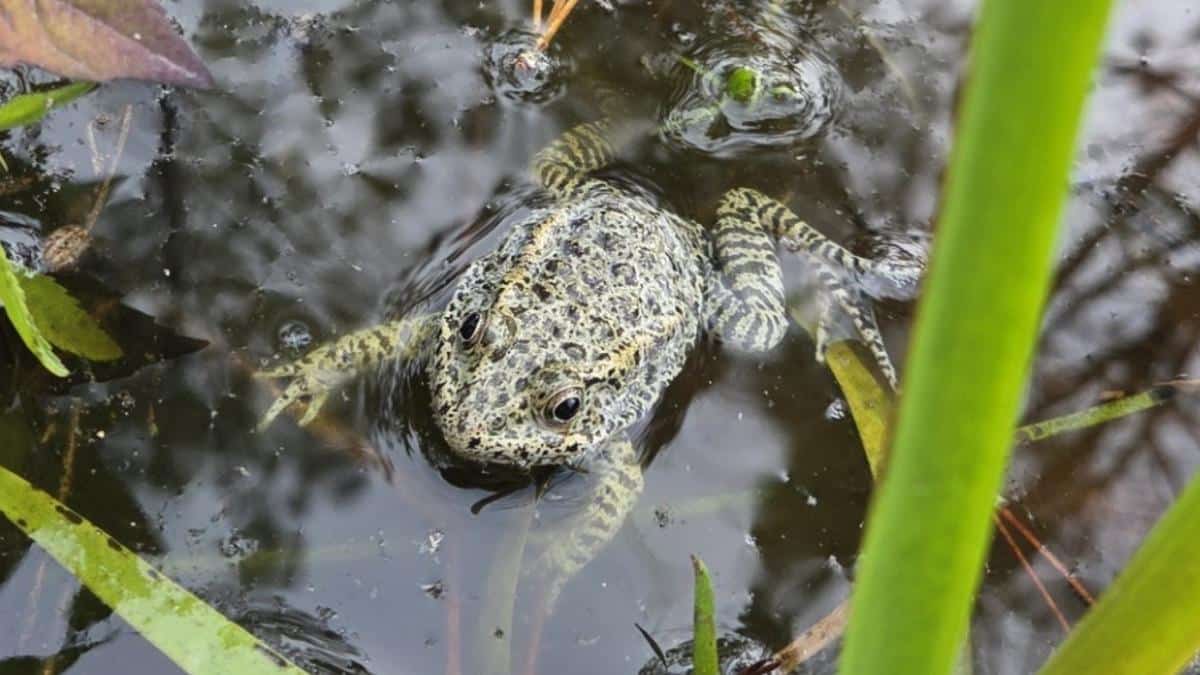
More than 20 years ago, Jim and Laura Currie began reclaiming a degraded piece of land on their property in Mississippi, United States. Their goal was to help a protected species that already lived in the area: the gopher tortoise. What they could not imagine then is that this work would end up turning their property into a new home for one of the most endangered frogs in the country.
In June 2026, conservation teams arrived at Woodland Cottage in Hancock County with a very special mission: release nearly 500 dusky gopher frogs (sevosa frog) bred in captivity. The event, documented by the US Fish and Wildlife Service (FWS), represents a new step in the recovery of a species that was once reduced to a single known population.
For 20 years they recovered a forest that was very degraded
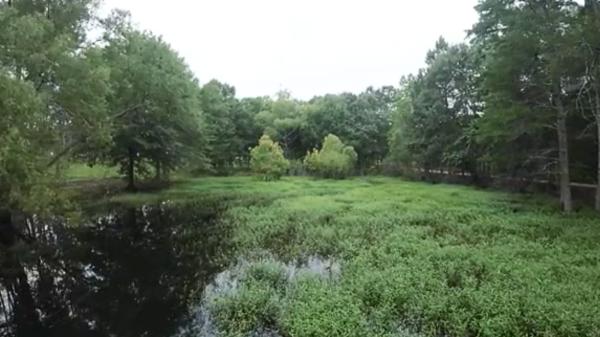
The story of these frogs began long before the first specimens arrived on the property. Jim and Laura Currie had been working for more than two decades with the Partners for Fish and Wildlife program of the United States Fish and Wildlife Service, Wildlife Mississippi and the US Department of Agriculture to recover the ecosystem of their land.
Part of the area had previously been used for grazing and had also suffered logging. The landowners began replanting longleaf pines, a species characteristic of these forests in the southeastern United States, in addition to recovering the communities of native herbs and plants that grow under them.
They also began to use prescribed burning, a fundamental tool to maintain the natural characteristics of this type of ecosystem.
The initial goal was to benefit the gopher tortoise, but the restoration ended up having a much broader scope. The recovered forest began to provide the necessary conditions for numerous species, including migratory birds, pollinators and other animals. And among them was a particularly strange frog.
The frog that once had a single population known throughout the world
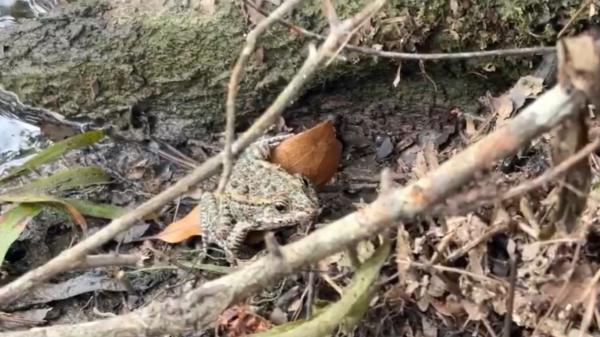
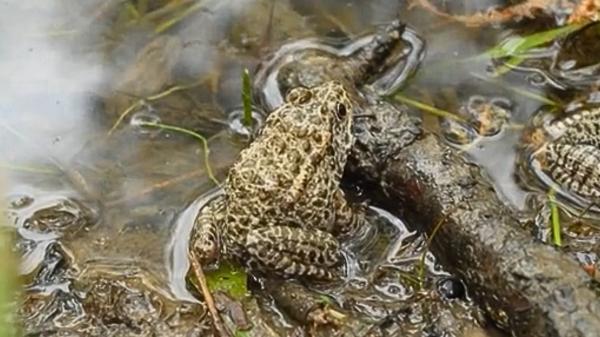
The dusky gopher frog is a small amphibian associated with longleaf pine forests and certain temporary ponds. Its situation is especially delicate because it needs a very specific set of conditions to survive and reproduce.
For decades, the loss and fragmentation of its habitat, changes in land use and the suppression of natural fire deteriorated the ecosystems on which it depended. The decline became so pronounced that between 1988 and 2004, only one surviving population was known, located in a single pond in the De Soto National Forest, in southern Mississippi.
The species is listed as federally endangered in the United States.
One of the keys to its survival is precisely in the relationship between the forest and wetlands. The frog uses temporary ponds to reproduce, while the terrestrial ecosystem that surrounds them must maintain adequate conditions for the specimens to survive.
Plus, there’s another surprising connection: Burrows dug by gopher tortoises can be used by more than 300 different species, including the dusky gopher frog itself.
Therefore, the work that the Curries began thinking mainly about turtles ended up also creating a suitable habitat for frogs and more species.
Then almost 500 captive-bred frogs arrived.
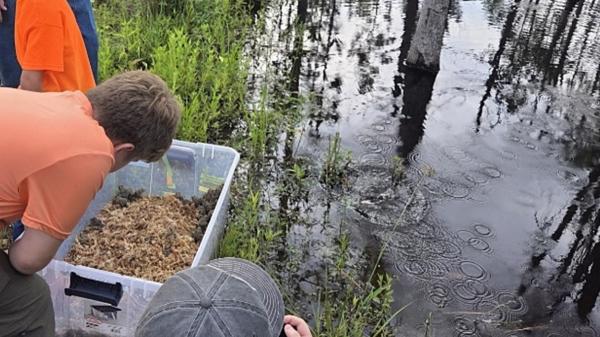
The turning point came in June 2026. Conservation teams moved nearly 500 dusky gopher frogs bred in captivity by the Memphis Zoo to Woodland Cottage. The specimens were released into several ponds on the property, already restored and prepared to host a new population.
It was not just any liberation. According to the U.S. Fish and Wildlife Service, this event created the only known population of this species in Hancock County and also marked the first release of dusky gopher frogs on private working lands as part of this recovery program.
The project brings together several organizations, including the FWS itself, the Mississippi Department of Wildlife, Fisheries and Parks, the Memphis Zoo and Wildlife Mississippi, as well as the landowners.
The release thus represents much more than the arrival of hundreds of amphibians to some ponds: it is an attempt to ensure that a species that was on the verge of disappearing can once again occupy part of its historical territory.
The goal now is to get the frogs to form a stable population
Releasing the animals is just the beginning. Conservation of the dusky gopher frog requires creating new populations and maintaining different breeding groups to reduce the risk that a single problem could affect the entire species. Efforts over the past few years have already established new reintroduction sites in Mississippi.
The Woodland Cottage case also has special significance because it demonstrates the role that private land can play in the recovery of threatened species.
For more than two decades, the Curries slowly restored a landscape that had lost much of its original features. When they started, their goal was to help a turtle. Now, that same work has opened the doors of his property to hundreds of frogs that desperately need new places to live.
The result shows the extent to which recovering an ecosystem can have effects that go far beyond a single species. A forest grows again, ponds regain their function and, two decades later, almost 500 small amphibians have a new opportunity to return to nature.
And this time, the future of one of the rarest frogs in the United States also depends on that restored forest functioning again as a complete ecosystem.
If you want to read more articles similar to A couple from Mississippi spent 20 years rebuilding a forest on their property and this summer conservation agents arrived with 500 rare frogs from the United States to release them, we recommend that you enter our Ecosystems category.
