Queen’s music has filled stadiums around the world, but Brian May has been developing another project far away from the stage for years. The British guitarist decided to invest in the recovery of agricultural land in the south of England and turn it into a space for nature. What began as a reforestation initiative ended up giving rise to a forest with more than 100,000 native trees and shrubs.
The project is located in the county of Dorset, near the town of Bere Regis, and is called May’s Wood. Behind this transformation is an idea that goes beyond planting trees: recovering a landscape that had lost a good part of its natural vegetation and offering wild animals a place where they can once again find food, shelter and space to develop.
From agricultural land to a forest with more than 100,000 trees
The story began in 2013, when Brian May acquired about 63 hectares of agricultural land in Bere Regis, England. For years, that area had been dedicated to crops and other field activities. The musician wanted to change that use and recover part of the forest that, according to the historical background of the project, had occupied the area centuries ago.
To carry it out, he counted on Save Me Trust, the organization dedicated to the protection of wild animals that he founded together with Anne Brummer. On September 28, 2013, the first planting day took place, in which local residents and schoolchildren participated. May himself placed the first oak tree and, during that day, around 600 trees were planted.
The initiative was planned from the beginning on a much larger scale. The objective was to incorporate more than 100,000 trees and shrubs over the following months, with species typical of the British landscape. Among them were oaks, beeches, chestnuts, lindens, wild cherry trees and walnut trees.
The place had initially been named Save Me Woods, but the neighbors began calling it May’s Wood. The name ended up consolidating and today identifies this environmental recovery project.
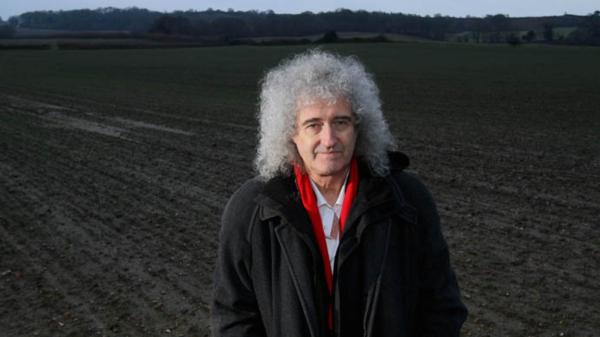
This is May’s Wood, the forest that Brian May created for nature
One of the peculiarities of this initiative is that it is not limited to covering the land with trees. The design also includes wildflower meadows, open areas, bushes and natural corridors that connect different areas of the forest.
This combination is important because an ecosystem does not depend solely on the presence of trees. Flowery spaces, for example, provide resources for pollinating insects, while hedges and denser vegetation offer protection to small animals and birds.
In September 2023, coinciding with the tenth anniversary of the first plantation, the project had reached 101,000 trees and shrubs. The figure is collected on Brian May’s own website, which also documents how the landscape has evolved since that first day.
The change is especially noticeable in the photographs taken over the years. The small specimens planted in 2013 have been growing and shaping an environment much more diverse than the old agricultural fields.
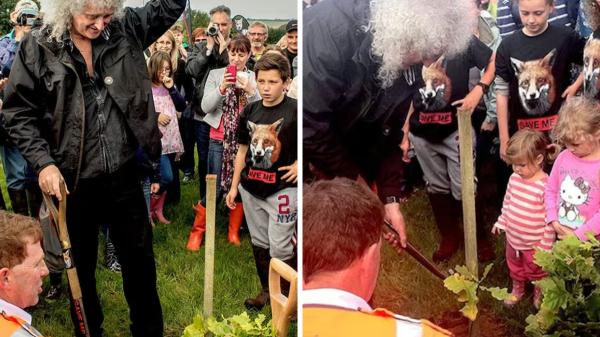
Bees, butterflies and small mammals: the life that has returned to the field
Brian May’s goal was never to get a forest solely for its appearance. The recovery of biodiversity was at the center of the initiative and the results described by those responsible show how the vegetation has been modifying the conditions of the place.
As explained by the May’s Wood team in its tenth anniversary report, the land has begun to attract numerous species of insects, birds, wild plants and small mammals that were not present during the years of cultivation.
The flowery meadows have especially favored the presence of bees and butterflies. Wild plants such as the knapweed and the greater daisy have also reappeared, while the new spaces of vegetation offer food and shelter to different species.
Another important aspect is that no animals have been artificially introduced to populate the reserve. The strategy consists of recovering the natural conditions of the environment and allowing the fauna to return on its own.
With this initiative in England, the Queen guitarist has shown that the recovery of a natural space requires more than just a large plantation. May’s Wood is a project intended to evolve over decades, with the intention that the forest will reach maturity and continue to be a haven for wildlife long after its first trees have grown.
If you want to read more articles similar to Brian May, Queen guitarist, bought a field and planted 100,000 trees in 2013: today it is a refuge for wildlife, we recommend that you enter our Ecosystems category.