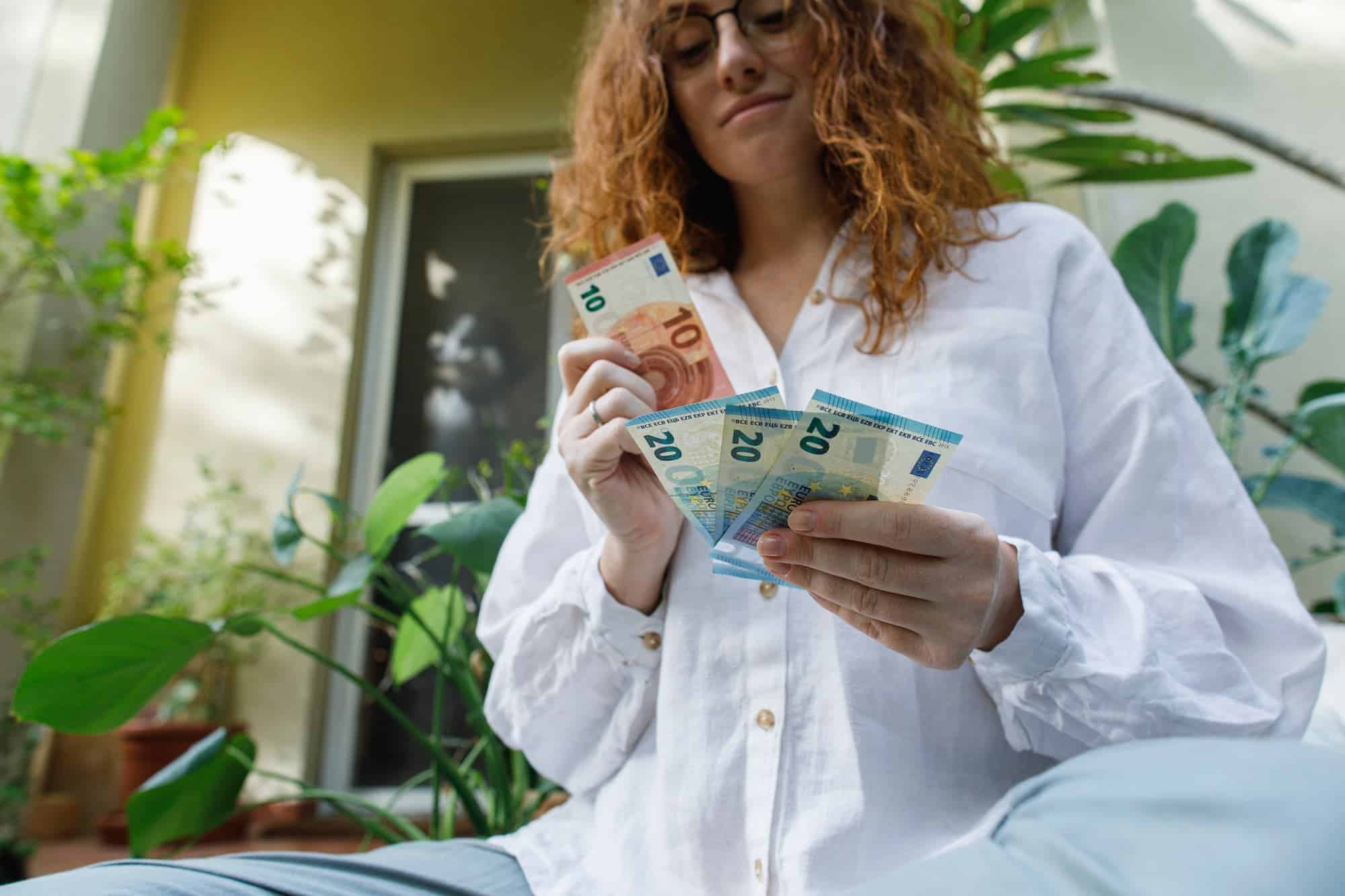
When we give away a banknote, the brain area linked to physical pain is activated, while payments in installments and by card can turn out to be “cognitive traps”: this is how our brain perceives money.
Since last year, New York State, Australia and the United Kingdom have taken steps to increase the use of cash, especially with low-income people, seniors and those without bank accounts in mind..
In Sweden, a financially cutting-edge country where by 2025 only one in 10 purchases was paid for in cash, the Ministry of Defense sent all households a booklet entitled If a crisis or war comesadvising to keep a supply of cash in various denominations at home, to defend against possible hacker attacks on the banking system. Switzerland even introduced cash protection into the constitution with the referendum on 8 March 2026, although this has not yet caused changes in daily life.
Shopping psychology
Regardless of the reasons, however, paying in cash or with electronic payment makes a substantial difference from at least two points of view. It obviously does so from the fiscal side because it reduces the “black” (and in Italy we know this well: from January 1st 2026, when the obligation to connect the POS of merchants to the cash register came into force in 6 months, 9.1 billion euros of taxable income more in collections “magically” appeared compared to the same period in 2025), but it does so above all from a psychological point of view. In fact, research shows that dematerializing money increases the risk of spending more.
The “pain” of paying in cash
The fact is that having to give up banknotes – even in exchange for other objects – causes acute suffering in many: some studies have observed that the act of paying is associated with an increase in the activity of the anterior portion of the insula, a brain region involved in the processing of negative emotions and the perception of pain.. In short, for our brain, spending cash is at least partly equivalent to a small wound: we prefer money in our hands “little, damned and immediately”, as they say.
Even more so if the denomination of the banknote we give away is consistent, due to what a study published on Journal of Experimental Psychology called the “denomination effect”: a psychological mechanism by which we struggle to spend a 50 euro banknote (i.e. with that denomination of value) more than to pay for 5 objects with pieces of 10 euros each, even if in the end the outlay is identical.
The brain in front of digital payments
This is why, when we don’t see the money physically disappear, since we pay with digital means, the pain is less
. And the suffering decreases further if the moment in which we make a purchase is different from the moment in which we start paying for it. In 1998, professors at the Massachusetts Institute of Technology Drazen Prelec and George Loewenstein demonstrated how every purchase opens up in our mind an evaluation between the pleasure of consumption and the pain of the outlay (the so-called “pain of paying“).
How intense that evil is depends on the transparency of the process (it is more acute if we really see the number of banknotes in the wallet dwindling) and, indeed, on the period of time that elapses between the purchase and the payment. The magnetic resonance experiments of Brian Knutson, professor at Stanford University, have given this intuition a precise neural basis: when the payment is close in time to the purchase, the anterior insula is activated, the same area involved in the perception of physical discomfort.
Impulse purchases
Moreover, a study appeared in the specialized journal Advances in Consumer Research certifies that when the wallet is “silent” (because digital payments are used) the consumer significantly increases impulsive purchases and recurring micro-spending.
Exaggerating is easy precisely because we often realize the real payment only weeks after the expense, in a bank statement that waters down that specific pain in a mass of figures. A greater propensity to spend also occurs when the money is dematerialized in the form of a gift voucher: not perceiving the voucher as the equivalent in banknotes, we have the impression of not spending anything.
The auction with card or cash
To demonstrate how the difference in spending is linked to the type of payment, the economist Drazen Prelec, together with his colleague Duncan Simester, simulated an auction for tickets to a Boston Celtics basketball game: half of the participants could participate by paying the bill with card, half in cash. Those who trusted in credit cards offered on average almost double that of those who paid in cash, precisely because they did not immediately feel the pain of getting rid of that amount.
Buy now, pay later
This psychological mechanism is the basis of the system “Buy now pay later” (buy now, pay later), exploited by services such as Klarna, Afterpay or PayPal, which divide the final price into several installments spread over time. In this case, however, what convinces us is not just the fact of moving the payment forward: the installments make the total appear smaller.
It’s called the “numerosity effect” and it’s a cognitive distortion whereby, for example, when faced with four installments of 25 euros instead of 100 euros in a single solution, the mind focuses on the smallest number
. It is as if the brain only heard the word “little at a time” of the concept “little at a time”..
The installment trap and debt risk
This is confirmed by a study published in Journal of Retailing: in a test participants were asked to purchase a $600 refrigerator online and the total price was presented together with the alternative possibility of paying in 4 installments of $150. Well, those who thought they could pay in installments perceived the product as less expensive and were inclined to buy it. The same group did a second experiment that put concert tickets on sale: those who paid in installments chose the most expensive seats. It is proof that installments also push consumers to buy more, thus increasing the “psychological relief” effect due to electronic payment.
The data says that the average virtual cart with installment purchases can increase by up to 60%, often because the most expensive models within the product category are chosen. Research by the Central Bank of Ireland has found that those who use “pay later” formulas spend 4.4% more than traditional consumers, with a +22.2% probability of making unnecessary purchases. And those who go on shopping sessions paying in installments remember the total amount squandered worse (16.2% less) than those who pay, even by card, but in one go. This is not good news, if we think that, according to the Bank of Italy, in our country we have gone from 1 billion euros in installment transactions in 2021 to almost 10 billion in 2025.
Poor financial education also affects Italians’ risk of debt: many consumers think that the balance in the account is available liquidity, forgetting that there are still installments to pay, and so, when they are unable to keep up, they find themselves with additional commissions for the delay or blocking of new loans. “The lack of a minimum payment can trigger additional penalties or interest that leave people without money for the things they really need,” warns cognitive psychologist Abigail Sussman, a marketing professor at the University of Chicago.
Payments from smartphones and the pleasure circuit
Smartphone payments also reduce the pain of disbursement. Various studies show that users of mobile payments are more inclined to accumulate debt or exhibit riskier credit behaviors, although the causal relationship between these two actions is currently still being studied
.
A possible explanation is that integrating the transaction into the same device dedicated to entertainment and social connection stimulates the circuit of pleasure and reward to the detriment of the rational evaluation of risks. Therefore overturning everything that the mind was used to thinking up until now and making spending a pleasure. Confirmation can be found in a study on brain waves recently published in the journal Frontiers in psychologywhich reports a decrease in neural signals associated with hesitation or regret related to making purchases via smartphone. Furthermore, the fluidity of payments generates additional emotional pleasure, creating a positive and rewarding feeling directly linked to the act of purchasing.
Towards greater awareness
What can we conclude? Dematerializing payments is certainly a practical, safe and transparent system. But payment technologies have loosened the brakes that for millennia have prevented us from spending more than we can afford.
And if in our country, where cash is still very widespread, it is desirable that digital transactions increase with the related advantages, but at the same time we need greater awareness in the use of electronic money. Because, to stick to an ancient means of payment, all that glitters is not always gold.