
Offshore wind energy takes advantage of one of the most abundant natural resources on the planet: the wind that blows over the sea. To convert it into electricity, huge wind turbines grouped in wind farms are used, capable of producing energy on a large scale and then sending it to the electrical grid.
These facilities draw special attention due to their dimensions. Some marine turbines exceed 200 meters in rotor diameter and rise more than 100 meters above sea level. But how do they manage to transform wind into electricity and what happens to that energy before reaching land?
Offshore wind energy can be installed on structures fixed to the seabed or through floating platforms in deeper waters. Its operation is similar to that of land-based wind turbines, although sea conditions have forced the development of much larger and more resistant structures.
What is offshore wind energy and how does it use the wind?
Offshore wind energy is a way of generating electricity from wind blowing off the sea. To take advantage of it, wind turbines are installed on structures located on the seabed or floating in deep waters. When the wind moves the wind turbine blades, a generator is activated that transforms that mechanical energy into electricity.
Offshore wind turbines are usually grouped together in what are known as offshore wind farms. These wind farms can be located several kilometers from the coast and are connected to land by underwater cables that transport the generated electricity to the electrical grid.
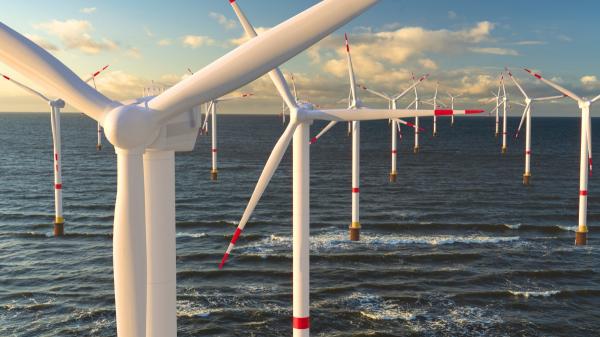
The advantages of generating electricity with the sea wind
Offshore wind energy offers several advantages that make it one of the renewable sources with the greatest potential for the future of the energy system. One of its main benefits is that it allows you to generate clean electricity without emitting carbon dioxide or other polluting gases during its operation. By taking advantage of the wind, a natural and inexhaustible resource, it contributes to reducing dependence on fossil fuels and reducing the impact of climate change.
Another important advantage is that the wind at sea is usually stronger and more constant than on land. Thanks to this, wind turbines operate for more hours per year and produce more electricity. Additionally, offshore wind farms can be installed far from urban areas, reducing visual impact and avoiding land use conflicts.
Finally, the development of offshore wind energy drives technological innovation and job creation in sectors such as engineering, shipbuilding or the maintenance of energy infrastructure.

These are the huge offshore wind turbines
Offshore wind turbines are structures specifically designed to withstand the harsh conditions of the marine environment, such as strong wind, waves, salinity or storms. Although their operation is similar to that of wind turbines installed on land, they are usually much larger and more robust.
Each wind turbine is made up of a tall tower that supports a nacelle on top. Inside this nacelle are the main mechanical components, including the generator that transforms the movement of the blades into electricity. The blades, which can exceed 100 meters in length in the most modern models, rotate when the wind propels them.
At sea, these turbines are installed on different types of structures. In shallow waters they are fixed directly to the seabed using steel or concrete foundations. On the other hand, in deeper areas floating platforms are used that remain anchored to the bottom by cables and mooring systems.
They are also very large in size. Offshore wind turbines have towers that exceed 100 meters in height and rotor diameters of more than 200 meters. This large size allows more energy to be captured from the wind and generate a greater amount of electricity. Thanks to these designs, offshore wind turbines can produce large amounts of renewable energy by taking advantage of favorable offshore wind conditions.
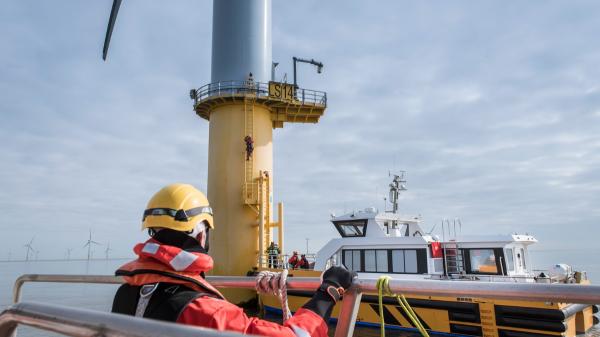
How an offshore wind farm works from the sea to the electrical grid
A wind farm is usually located several kilometers from the coast, where the wind is stronger and more constant. The process begins when the wind moves the blades of the wind turbines. This movement rotates a shaft connected to a generator located in the nacelle, which transforms mechanical energy into electricity.
The electricity produced by each turbine is transported by underwater cables to an electrical substation located within the wind farm itself. There the voltage is raised to facilitate its transport over long distances.
From this substation, electricity travels through underwater cables to a facility on land, where it is integrated into the electrical grid. From that moment on, the energy generated can be used to supply homes, businesses and industries.
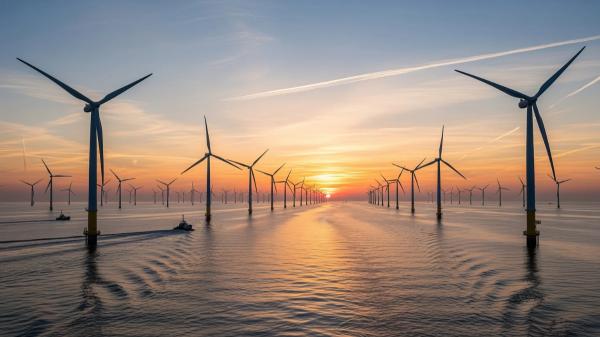
The environmental impact of offshore wind farms
Although offshore wind energy is a renewable and clean source, the installation and operation of offshore wind farms can also generate some environmental impacts that must be taken into account.
One of the main effects occurs during the construction phase. The installation of foundations and structures on the seabed can generate underwater noise and temporarily alter the habitat of some marine species. This noise can especially affect marine mammals such as dolphins or whales, which use sound to orient themselves and communicate.
There is also some concern about the possible impact on seabirds, as some species could collide with the turbines if they pass through the wind farms during their flight paths. However, numerous studies indicate that this risk is usually limited when projects are located in suitable areas and prior environmental assessments are carried out.
On the other hand, the underwater cables that transport electricity to land generate electromagnetic fields, although current research indicates that their effect on marine fauna is usually small.
Despite these possible impacts, many experts consider that the environmental balance of offshore wind energy is positive. Furthermore, in some cases the wind turbine structures can act as artificial reefs, favoring the presence of fish and other marine species around the bases of the turbines.
If you want to read more articles similar to This is how electricity is generated in the middle of the sea: how offshore wind energy works, we recommend that you enter our Renewable energies category.
